*Engaging Readers with Action-Adventure Mystery Books Featuring Native American Influences & Global Cultures.*
Author: DianeOlsenAuthor
Diane Olsen, prolific writer and award-winning author of her debut book release titled; "Ancient Ways: The Roots of Religion, and The Rising Wind Book Series."
Her first book is a thought-provoking and informative look at the development and evolution of religion throughout time and a well-considered concept - the idea of a connective thread of monotheistic faith throughout history from the birth of human creation.
Born in Colorado Springs, Colorado, she now lives in the beautiful Pacific Northwest. Diane was an Undergrad at Colorado State University Ft. Collins: Pre-vet med, Anthropology, then attended and received her BA and MA at the University of Montana, Missoula: Anthropology, Archaeology, and Paleontology. She was a Graduate Teaching Assistant for two years.
Diane has proudly raised two sons Andrew and Gavin, has four grandsons Dylan, Brayden, AJ, and Asher. She is an animal lover and enjoys living in Washington State with her two girls (doggies), "Ladybug and Charlie," along with two ancient "retired" Zebra, finches, one African Black-footed Cat. She has raised sheep and goats and about 40 other species of critter over the decades.
Diane enjoys writing, reading good books, and cooking. A few of her favorite books are 'The Book of Certitude (Kitab-i-Iqan), The Upanishads, and The Great Initiates
On March 22, 1959, Dr.Sage Dalton, Dr. L.W. Baddock, and Gavin Andrews, a linguistics grad student from the university, found themselves flying a rickety plane over the Himalayas with L.W. at the controls – and avoiding the flybys of two MiG-15s.
FIVE DAYS earlier… DR. Mitchell Braddock, the Dean of Anthropology and Archaeology at a Montana University, signed off on travel expenses for three department members to travel to Tibet after much discussion. They were eager to find the next clue in locating a priceless prize, a mysterious holy book known as the “Book of Hope,” which was reportedly left to the world by “The Weeping God,” a Prophet whose followers lived primarily in South America.
”Sage, you fell into a cave tomb while being strafed by an enemy aircraft… You were enchanted by the mural of an Olmec woman, perhaps a royal, and thought she might have been connected with the path of the holy Prophet of South America. Additionally, you brought with you a very nice golden cask from her crypt that must be returned by my niece to her colleagues in the Latin American Research Department, back in Mexico.”
L. W. interrupted, “Actually, I am the colleague in Mexico, and I will take it home myself when I am ready.”
After a rest stop in Tel Aviv, Sage reviewed in his mind what happened next, trying to understand how they wound up leaving the airport without their plane. There were a few haggard passengers who deplaned during a fuel stop to find food and drink during the stopover.
While the aircraft was being serviced and the pilots changed, he and his friends drank copious amounts of water. As he watched in surprise, a man with furtive eyes approached them. He winked at Sage and Gavin, then got way too friendly with L. W.’s behind.
“Dios mio! Perro! Knock it off, you dog.” The leering man growled, “Do not talk to me like that. I will have you removed from your flight and arrested.” “You can’t. You have no grounds for that.” “Who will they believe…you?” “Why not me, and who is ‘they’?” L. W. had slapped the jerk, and an argument ensued. While the guy signaled for backup, we ran for our lives, but when we returned to the tarmac, the stairs had been rolled back, and the door was closed—so, there was no climbing back inside.
Following that disappointment, they’d run at top speed through the streets, and when at last they could see no prying eyes, Sage found a public phone at a store beside a motel. The owner of the phone and the store waited with his palm up for ample compensation. While Sage finished the call and paid up, L. W. and Gavin hailed a makeshift cab. Sage crossed the street to join them. “My friend Hasan and his cousin, Ahmad, have an old biplane they could rent to us for a few days.” “How old?” Sage shrugged.
A few bumpy miles later, the cabby dropped them off in a bleak desert. They told him there would be two return fares if he was willing to wait. There they huddled in the breezy sun, waiting for nearly half an hour. A whine accompanied the arrival of Ahmad’s plane, which was piloted by Hasan himself. They were almost ready after a brief but fond exchange between Sage and Hasan and a monetary gift to Ahmad, who probably could have bought the plane.
L. W. exchanged information with the pilot. The cabby, who had been sulking and smoking, dug his tires out of the sand and took Ahmad and Hasan away. The biplane was backlit by the sun as the three companions ran to the relic. Sage asked L. W. about the rickety craft, “You think you can fly this?”
“As you must know, I flew my husband from meeting to meeting in planes much like this one. I’ll be fine.” Then she noticed and sorted through the equipment. Both Gavin and L. W. would fit inside the two-seater. “Thank God, they left us protective gear. Guys, put on the jackets.”
After they put on hats, wrapped scarves, and overlaid their clothing with parachutes. Sage grabbed the last face mask and asked, “Don’t mean to be rude, but did his heart attack occur while you were flying?” She snapped, “How does that not sound rude to you?”
Then she hopped into the pilot’s seat and put on her headphones. Gavin Andrews tucked himself in the back seat while she flipped switches and yelled, “Okay, now.” Sage jump-started the propeller, then ran to the belly of the craft. Reluctantly, he took his place beneath them by crawling into an elaborate rope harness strapped to the belly. “Hang on. Here we go.”
Sage pleaded, “Please be gentle.” They began their run down the track. He wore goggles, and his flapping hat argued with the strap under his chin. Only then did they see two trucks pulling onto the airstrip to impede the plane from taking off. Because the strong thermal wind allowed for a quick ascent, L. W. ignored the vehicles and deftly rose from the sand after a brief taxi. Sage exhaled once they were airborne. Thank God.
Black and White House Near Mountains – Tibet
Twice, they stopped at airports for fuel, bathroom breaks, and procuring food and water. Eventually, the craft rose over the Himalayas and traveled north along the road through Tengri, toward the Potala in Lhasa, Tibet.
With only a few miles to go, half-frozen Sage turned out of the wind and yelled, “I can’t take this much longer.” L. W. seemed oblivious. Then Gavin yelled, “I have to pee!”
L. W. hollered over the edge to Sage, “This is your fault!” “How could it be my fault? You’re the one who lost us the comfortable plane!” “You should have backed me up!”
“How could I possibly know you were going to slap him?” He turned his head, and after a breath said, “We were lucky my friend’s cousin had any plane to rent out.” Sage reflected, then momentarily, he removed his face mask to yell, “We could be rotting in jail, now, or worse.”
It was March of 1959.
Unexpectedly, two Chinese MiG-15s formed streaking blurs against the sunset as they passed over the biplane. Sage thought, What are the Chinese doing here? Okay, I get it. We’re stuck in an unregistered aircraft, flying over enemy-occupied territory in an antique rental—and it’s almost nighttime.
L. W. dipped in their wakes but recovered. She was gesturing and hollering. “Get down!” Everyone flattened as the planes approached to look them over one more time. She yelled, “They know we are not Tibetan or Chinese.”
“They’ll think we are Western Imperialists,” yelled Gavin. The jet pilots pulled back the controls, diving in pursuit. The guns chattered. “Faster!” yelled Andrews, “Faster!”
“Lower!” yelled Sage simultaneously. “Lower!” Bullets tore through the skin of the plane. L. W. screamed, “The writing is on the wall, boys. You have your chutes. Jump while you still can.” Sage was incredulous as he struggled with the wind and the shuddering plane, which was now irreparably crippled by machine gunfire.
It was difficult to breathe, let alone escape the plummeting transport. He could hear Gavin yell, “Uh-uh. No way. Get back in the plane, L. W., and fly us down!”
L. W. stood on the edge of the wing to help Sage. “I’ll cut the rope.” “Toss me the knife.” She did, but lost her balance. The knife sailed past Sage, who made a grab for it. He couldn’t reach it, but the stress on the bullet-ridden plane caused the wing assembly to break apart, releasing his rigging anyway.
“I’m not jumping,” hollered Andrews. L. W. struggled to grab hold of something, which turned out to be Gavin’s arm and shoulder. Her weight in the wind pulled him out of his seat, headfirst. They barely escaped a new barrage of bullets as their plane twisted into pieces. Sage, still tied to a chunk of the wing, struggled to free himself from the rest of the rope harness. He bashed the strut with his boot, finally releasing himself from the net, and was in free fall… ****************
The last glacial period, often called the “last ice age,” peaked in Europe between 26,500 and 19,000 years ago, with the most severe cold conditions occurring from 26,000 to 20,000 years ago.
This period, known as the last glacial maximum, during the late Pleistocene, saw large ice sheets covering much of northern Europe, including what are now the British Isles, and ice caps in the Alps and Pyrenees.
It did not completely cover Siberia’s north and some of the Arctic Circle, where people had avoided the bitter cold. Gradually, the ice faded, and small family groups moved south, following the melting ice that watered the grass that fed the game animals. People split their travels to the east and west of the Urals as the ice of the snowpack eventually diminished and disappeared. There were no countries, cities, or kingdoms to name or refer to. It was still cool, but the climate changed yet again, water began to disappear, and then the land dried.
Trees and grasses died away, as did the plants and grazing animals. Gradually, even the fish disappeared when the streams and rivers dried up. Floods, dust storms, and fires devastated the remaining natural resources, triggering drought and famine. The various sorts of humans who had survived as hunter-gatherers in greater Asia trembled as famine and eventually, cannibalism became a gruesome and damning necessity.
In painfully slow increments of time, agriculture took hold out of desperation, people gathered into small groups, and then into cities. Trade and law were outcomes that led toward the dawn of civilization.
**************
Morning light cracked through the small Armenian hotel window as Gideon Yellow Thunder brought his wife, a paleontologist and paleoarchaeologist, Secora James, a mug of hot water and a bag of Constant Comment tea with its fragrances of orange and clove. He took a seat with his own cup. They had come here to relax and absorb their feelings while discovering Armenia with their travelling companion, Seamus McGill.
After they had barely taken a sip of the redolent beverage, their eager young Irish friend came into the room and pulled a brochure from his pocket. He eagerly unfolded it. “Hey guys, check this out. I found a map in the free pile at the library. It says we are situated in the Ararat Plain, flanked by Turkey, Iraq, Albania, and Georgia. Smack dab between Asia and Europe. Armenia is bordered on the south and east by Iran and Nachjavan, an Azerbaijan enclave. I’m interested in seeing a pilgrimage site near Mount Ararat, which used to be in Armenia before Turkey swiped it.”
Gideon asked, “Wasn’t this country formerly part of the Soviet Republic?”
Seamus sighed. “Yes, both Turkey and Russia have taken away large chunks of land. Armenia is now a fraction of its original size. Even though the nation has diminished, Armenia is proud to be one of the earliest Christian nations, and it’s defined by spectacular religious sites, including the Greco-Roman Temple of Garni, and four other 4th-century castles, churches, and monasteries. Its capital is Yerevan, where the Mahendran Library houses thousands of ancient Greek and Armenian manuscripts.”
(The above image is the Greco-Roman Temple of Garni today)
“You sound like a walking billboard.” Secora sipped and said, “Did you know that at one time Armenia spread over an area almost as big as mainland China? It was home to the clans and tribes, and civilizations of Airyana Vaeja. Traces of that name still live across Eurasia, like Iran, Eire, Ireland, Iraq, Erin, and Oran.” “How about Armenia?” Seamus enthused. “I mean, we’re looking at “Or”, “Ir”, “Er”, and “Ar” names as clues, right?” Secora rolled her eyes and agreed. “Armenia is special. Interestingly, before Christianity, the earliest Prophet we may have scriptural references for is Lord Yima – Bright Shining as the Sun – from Aryana Vaeja in Eurasia, perhaps in “Greater Armenia” before it was pillaged. Gideon scrunched his face and said,” Earliest Prophet? You’re saying then that this Yima came before Adam? Oh, that’s just wrong!” “He might have been earlier. We will never know all of the dates and times of each First remembered Prophet in a certain region.The “Firsts” of which I am aware, include Rama in Central Asia, Fo-Xi in China, Gayomart in Persian texts, Adam in the area of Mesopotamia, and Lord Yima or Yama, Known as the Son of the Sun.
“The term YIMA, or Yama, and later name versions like Jamshid, pronounced as Yom-shed and then Yima Ksheta, meaning Bright Shining as the Sun – Apollo-like, lasted over several thousands of years, anywhere in time between 22,000 to 10,000 years, or later. His latter manifestation, or more likely a descendant of His lineage, lived until the Bronze Age, – around 5,000 years ago. His name (or lineage) covered a period of several thousands of years – from hunter-gatherer stone age, through the beginning of agriculture and on into civilization as the “Lawgiver”, and beyond.
“He was surrounded by a radiant splendor which burned about Him by divine favor. Some call it ‘Farr’, a shimmering aura that can overwhelm onlookers when a divine being reveals the Word of God. Sometimes it is portrayed as a halo or aura, as with Christ.
“Jamshid (pronounced Yomshed), one of Yima’s latter names, remained humble, but this radiance allowed Him to command mortals, angels, and demons; banishing evil and rewarding good people.
“He was listed under ‘Firsts’ on an ancient tablet found in Persepolis; and because of this interesting answer given by God, known in that time as Ahura Mazda or Ormuzd – to the Persian Prophet Zoroaster’s query in the following passages in the Vendidad: .
“Zoroaster asked Ormuzd, ‘O Ahura Mazda, righteous Creator of the corporeal world, who was the first person to whom You taught these teachings? Who is the first man with whom you conversed?” Then spoke God (Ahura Mazda): “ O righteous Zarathushtra, I first did teach the Aryan religion to Him, (Yima the splendid who watched over His subjects) before you.” – The Vendidad
Gideon fidgeted. “What? That sounds so confusing, Secora.” “Just wait, He may have been the ‘First’ (of that previous age) – but according to tradition, He was not always the Revealer of God’s guidance.
At a subsequent time, Ahura Mazda continued:
“Yima spoke to me, and said he would like to spread the religion among mankind by teaching others. Then, I replied, ” Oh, Yima, you are not created for this task by me. You have not learned enough to increase the religion among mankind. – You are not the Messenger of the religion.
AsI made my pleasure known to Yima, he proceeded south, towards the path of the high sun, increasing the land with his golden plough, conquering and cultivating the lands.”
“This suggests a future agricultural time, as humans moved into lands free of ice. The boundaries of the Aryan kingdom were extended in breadth, one-third greater than before.”
“Ahura Mazda visited him once more, warning him again of overpopulation. Yima, shining with light, faced southwards, once again towards lands freshly freed of ice.”
“Because a slow accumulation of agricultural abundance began to cause overcrowding, God encouraged Yima to proceed in the second great migration of the Aryans, towards the south and the west, even into Europe, thus extending the boundaries of the Aryan kingdom two-thirds greater than before.”
“A third crisis of abundance led to Yima increasing the land with his golden plough, towards the south and west… It became necessary for Yima the Splendid to enjoin righteous order on his subjects. It is said He controlled invisible time itself, making it much larger in size so as to praise and spread His righteous law.”
“This third great migration extended the ancient homeland, Airyana Vaeja (“j” sounds like “y’), the land of the Aryans, by four and a half times towards the south into Afghanistan and even the upper Indus valley..
“Rama or Ram – is likely Yima or Yama’s counterpartin early Hindu traditions, and as such, one Being might be the basis for both the Persian and Hindu Faiths; in the scriptural histories of both the ZendAvesta and the Vedas. He may also be associated with pieces of the Atrahasis and Gilgamesh stories in Babylonia and Mesopotamia.”
Gideon sighed and rubbed his forehead. “How does that fit into history?”
“Well, these vast migrations displaced other local groups, or bands of ancient human forms, who were also struggling to make a living – especially in the light of massive climate changes from icepack, to plenty, to deadly drought. Some encounters with giants are remnants of legends and scripture.”
Seamus asked, “What else?”
“One of Yima’s most wonderful miracles occurred at Ahura Mazda’s (God’s) bidding. He ordered the people to build a vara underground settlement to avoid freezing and hunger. It would house hundreds of people, as well as the animals and plant crops. Such an underground city with thirteen levels still exists in Derinkuyu, Turkey. And people in parts of Asia and Siberia still move underground during winter cold spells.”
Gideon’s face was torqued with confusion. “So, what about Adam? Where does He fit in?”
Secora smiled. “Dear, the truth is that man has had guidance from his Creator since immemorial. Adam, whom we now recognize as the First Prophet of the last Age, is another example. He is also referred to as the First Mortal. However, it seems likely that Adam and Eve hunted and gathered relatively plentiful food before the Great Starvation, which actually may have taken their lives when the resources (Eden) disappeared.
“The couple may have suffered famine at the end of the time of plenty as represented by the Garden. However, they lived prior to the stage of domestication, where Cain and Abel were a farmer and a herdsman. Seth might have come at a later time, when earlier villages might have required the establishment of law and the beginnings of civilization. So they were possibly descendants rather than children of Adam.”
“Similar layers can be found for all of the Earliest Prophets we can recall. The first mortal, the first Prophet, the first agricultural king, the first lawgiver, etc. Obviously, specific dates and names don’t really matter.
“There is no way we can remember the dates of these Prophets’, or every layer of God’s Revelations throughout the millions of years of human development. We have relied on scriptural scraps, and tantalizing bits of wisdom, as well as fables, and parables from the most ancient times until the traces of Revelatory guidance could be recorded in writing.
“It is tempting to think that the begats of the Bible may be an attempt to remember the genealogy of the prophets, which would inhibit such overlap.”
Seamus snickered, then teased,“What, no amoeba, fish, or turtle guidance?”
She paused, looked at her cup, and then took a sip. “Oh yeah! You’re getting the idea.” Seamus and Gideon laughed. “Go ahead, laugh, but ask a Baha’i or a Hindu. We were guided throughout Creation. We even have shreds of wise advice on family and morality from a very early female educator – could be around Australopithecine times.”
“I’m so confused – I’ve never heard of any of them.” Gideon set his teacup down on a side table and shook his head as he mumbled, “This is what I get for marrying you, Secora.” He reached over and kissed her. Then Seamus stood up and headed for the door as he said, “Let’s grab some breakfast.
Secora James wiped sweat out of her eyes while running from cave to cave on the Ennedi Plateau. The melted formations which were part of the mesa she was racing across seemed surreal, like shrouded statues, anthills, or dung heaps. She stopped at the first cave.
“I thought I heard a man screaming. It sounded like it could have been Mosa, the water witcher. Or maybe I just imagined it.”
There was nobody in the first cave, only the tracks of small rodents and the snakes that followed them. Just two more to check. She recalled that Anthony, the tracker, had mentioned three distinct caves near their job site. Her mouth and throat were parched, and she prayed she wouldn’t sprain an ankle as she ran on through the rugged terrain looking for another cave.
Suddenly, she noticed she wasn’t alone. Where did these dogs come from? Why are they running with me like they know me? The beasts resembled thin pointers or small greyhounds, with pale dun pinto spots on a mostly white background. Their eyes focused ahead as they ran between and around her legs. I’m gonna trip for sure.
She cautiously approached the entrance to the second overhang, taking a moment to arm herself with a Maglite and a can of pepper spray from her belt. The dogs stopped in their tracks, listening. What could these dogs possibly eat or drink out here, and why didn’t this cat eat them? As if in answer, they moved forward, wagging their tails in a playful manner. That’s a good sign.
“Hello, anyone there? Mosa? Hello?”
There was only silence and shimmering heat. Secora rallied and stepped inside the cave entrance, playing the flashlight around and illuminating the small room. There were large bones mixed with the cave dust, but the remains were not human – and they were not from recent kills. She called again, “Mosa? Anyone in here?”
She listened intently for a response. Could it be that she heard the water witcher’s faint voice? She shook her head and then turned to leave to find the third and final cave. Anthony had cautioned the crew about a “Shadow Cave”, the lair of a large, strange cat that had been picking off calves and young camels from the flocks of the wandering Toubou nomads. In the distance, a dust cloud drew her eyes. Squinting, through a sandstone arch, she thought she saw her husband, Gideon Yellow Thunder, and her grad student, Tarkio Cyr, in a jeep headed toward the base of the formations of twisted rocks – many of which resembled mushroom caps, or cloaked stone-people on top of the mesa.
She imagined it would take them several minutes to race up to her position. What she did not expect was the humongous tiger materializing from behind bushes not ten feet directly in front of her. The cat was longer than the distance between them. She slowly replaced the Maglite on her belt. Its eyes were calculating her every move, waiting for Secora to flinch. That wasn’t going to happen.
With no chance for escape, Secora stepped forward as she lifted the camera from around her neck. She was fascinated by this beast, a relative of the great saber-toothed cats of the past. Its shape was more like that of a cave hyena, taller in the shoulders, with a sloping back, shorter back legs, and a stubby tail. Most notably, its canine teeth were flattened like knife blades, and only protruded a few inches beneath the lower jaw.
They weren’t quite as long or round as the ones on Smilodon, or a bull walrus skull. This animal was extremely large, and had short reddish-brown fur with vertical white stripes. She couldn’t see any black stripes like on a Bengal or Siberian tiger. Long fur surrounded its toes and padded the feet. She guessed it helped the animal to walk more easily across shifting sand, or to protect its toes from sharp rocks.
The phrase “scimitar toothed cat” popped into her mind as she snapped several photos. The mechanical noise made by the automatic film advance caused the beast to blink, and the dogs, emboldened by that reaction and her advance, backed up Secora’s legs with low growls and exposed teeth. They stepped toward the beast in a stalking manner.
The unanticipated results were more than the cat could take. It wheeled and sprang down from a pinnacle, disappearing about thirty feet below their position. “Secora, wait.” The guys were catching up fast. The dogs whirled to face them and yelped a sharp warning.
Gideon pleaded, “Weah Witco,” Crazy Woman, in Lakota. “What are you doing in that cave?” “I think Mosa, our water witcher, is up here somewhere. I heard a voice that sounded like he was calling for help.” Anthony, the team tracker and translator, said, “Not likely, madam. Unless he is in the kingdom of the unseen. Only the voices of the dead are carried through these rocks by the caressing winds – You can hear them all around this area.” She sighed. “I can understand that, but Anthony, I’m sure it was Mosa. Do you know where these dogs came from? Surely they can’t live out here alone in this dry desert.”
Everyone became quiet. Eventually, Gideon gently asked, “Dogs? What dogs…?” Secora looked around with increasing concern, then saw no dogs and immediately fainted. She roused back at camp, thinking she’d had an awful dream. “What happened?” she asked. Gideon, Tarkio, and Anthony anxiously surrounded her. Her husband responded gently, “You fainted, dear.” “Where is the water witcher? Is Mosa okay?” Anthony responded, “He must be around somewhere.”
Secora said plaintively, “No, I heard his voice calling for help. It was very faint at first, but clearer as I closed in on the second of the three caves you told us about. There was nothing inside the first one except for the tracks of small rodents and snakes. I heard a faint voice at the second cave entrance but saw only a few dried antelope bones. When I turned around to get to the last cave, a mountain tiger stepped from behind some shrubs and would have attacked me if it wasn’t for those snarling dogs that were protecting my legs.” “The animals must have been your imagination,” Anthony suggested.
Secora thought his smile looked a bit patronizing. “I’m not sure exactly how large this cat was, but I took pictures – even though I won’t be able to develop them until I am back in my lab. If it wasn’t just a spirit beast, there should be a clear image of an ancient tiger that looked about eleven feet long and stood as tall as my chest.”
“I believe there are tales of a legendary Ennedi Tiger. But it is a spirit beast. So don’t be too surprised if nothing shows in the photo but rocks.”
“Fine, but we still have to go back and check out that third cave.”
Anthony cautioned, “Not interested. Those caves belong to the spirit cat.”
Tarkio asked, “You mean, the cat you just told us was imaginary?
Secora, what are these dogs you’re talking about?”
She didn’t feel like answering that question, as concern for Mosa was her priority. “Has anybody heard from Mosa since I left for the caves?” Tarkio said, “Not that I know, but maybe he left to go home since he had staked out all of the areas that were above subterranean aquifers.”
Gideon agreed, “That makes sense. I doubt anyone would stay here after their part was done. Even Raffique left for Afghanistan yesterday after he finished setting up the collectors at the wadi.”
“But,” Secora insisted, “Can anyone confirm that Mosa went home?”
Her persistent concern prompted a trek with the others to the third cave.
There they found Mosa’s torn robes and bones mostly cleaned of flesh, among the vestiges of camels and calf heads. Remembering the large cat, Secora felt forlorn, realizing she couldn’t have saved his life even if she had made it to the third cave. Suddenly she flashed on a memory of the crew eating breakfast at a restaurant. It had been one of Mosa’s favorite occasions, rare, and to be savored.
The image made her smile, a comforting contrast to the way she felt inside while looking at what was left of her friend’s mortal remains inside the cave. Mosa? Is this you trying to keep me from being morbid? She smiled. It would be just like you. Safe passage, my friend. Go with God.
On the way down the rocks, Anthony carried poor Mosa’s remains while explaining that although he’d always believed the Ennedi Tiger was a spirit beast, there were persistent legends of cave-dwelling cats, mountain tigers in the Tibesti and Ennedi mountains of Chad. “It was supposedly larger than a lion, perhaps twelve feet long, with short reddish-brown fur marked with vertical white stripes.” Secora responded, “Well, they are more than spirits if they’re stealing animals from the Toubou at the drinking wells, and are willing to attack people during the light of day.”
The Photographs
After returning from the trip to Chad to work with a “water seeking” project during summer break, Secora groaned as she sat back at her office desk. With a coffee in hand rather than her usual tea, she called one of her grads, Bill Hoffmann, and asked him to stop by the office to develop a roll of film with images from the desert.
“Okay… see you in five.”
A few hours later, Bill popped back into the office bearing a handful of prints as if they were golden treasure. He handed them over as Secora set her files aside. She savored the first few images, but was shocked when the last few shots showed two snarling dogs stepping toward a scimitar cat – plain as day! Bill asked, “What’s all this about? Did you pick up a few pets while you, Gideon, and Tarkio worked on that water project in Africa?”
Tarkio bounced in, dumped his backpack on the desk, and sidled up to peek over Bill’s shoulder at the photos. “Dang! What… the heck is that!?”
Secora pushed her desk chair back to answer, but choked on a sip of coffee. When she could speak, she responded, “It’s an Ennedi scimitar toothed tiger, and two snarling, spirit dogs.”
Bill remarked, “Spirit dogs! Looks like a fang flashing orgy?”
Tarkio wordlessly shook his head from side to side, his eyes wide and his lower jaw sagging.
Secora calmly said, “I think the dogs may have been some spirit guardians of sorts because until now, I thought I was the only one who saw them. No one else believed they were real.”
Bill squeaked, “Where was this?”
Near the second in a series of three taboo caves in the Ennedi Mountains. I’d thought I heard the water witcher cry out for help, and followed the faintest voice up that hillside to the place our guide, Anthony, told us about.”
Bill said admiringly, “Hey, you managed to get a tail shot as he left. That tiger was definitely a boy. How come you were taking pictures? Looks like that thing could have reached out and licked you to death.”
“Maybe. It was impossible to run – what would you have done?”
Tarkio considered. “She’s got a point, Bill. You’d have taken the pictures too.”
“Guess that’s true,” Bill smirked. “Those courageous dogs remind me of the old mama cat back home. She was brave enough to hunt in the forest with whatever lived there, Bear Dogs included!
“Good comparison. Surprised she lived through that – and the Sasquatches.”
“Right,” Bill reminded, “I remember that older guy made it clear that we weren’t to leave that place with his mugshot.
“Hey, did you know I brought Mamma Cat with me so she would be safe when I moved to Missoula?”
Tarkio queried, “Is she bored to death?”
Bill did a double-take. “What, you mean living in town? No, she’s a princess now – spends her time curled up on the couch or my bed.”
“What a slacker.”
Bill made ready to leave. “Hey Secora, I’ve got about half an hour before class. Tell me more about the scimitar cat and what happened to that water witcher guy?” “Long story short, Bill, the water witcher was beyond my ability to help. We found his remains in the third cave. But I wasn’t eaten, and all three of us were able to attend his funeral. I’ll tell you more another time.” Bill smirked, “Gonna hold you to that.” Then he wandered out the office door… ****************
As I continue this new chapter of writing and sharing my stories, please leave me your thoughts or feedback in the “comment” section of each new post. I thank you for stopping by and visiting my literary corner of the world, avid readers!
The Pine Ridge teenagers exited the transport vehicles at the trailhead parking area and began the short hike to the ledge directly beneath a cliff array.
As they found available rocks for seating, Gideon Yellow Thunder was introduced to the eleven juvenile detainees who either sullenly stared at him or inspected the ground.
After introductions, Gideon stood to his full height, and the chatter started after Gideon opened with, “You may not have carried the knife that injured my best friend, Jimmy Lizardeye, but you did nothing to stop the attack.”
“Why should we listen to you? Some call you heyoka, but you’re a real estate agent. You’ve got money, wheels, and income. How can you relate to us?”
“If you’re one of us…, shouldn’t you be wearing our bear claw sign? You’re nothing like us.”
Gideon sighed. “Of course I’m not. Gangs are family. You have each other’s backs, right? But families grow up, and kids move on with their lives.” There was some shuffling in the ranks. “Think about your own future families.”
“So, Yellow Thunder, what do you want from us?”
“Nothing. You are warriors. You should want to protect your children and all other tribal children. In fact, it is time to think about protecting all the children of our planet.”
“Why should we listen to you?”
“You’re an outsider, see those rain clouds forming? It’s a sign that we don’t need to listen to you. I hear the clouds saying, ‘chase him away.’. The clouds respect us – you do not!”
Policeman Clive stood and sighed. “Let me ask you something. At the moment you die, will egotistical power and perceived street respect seem more important to you than submission to the Great Being when He calls?” After a moment of stunned silence, Gideon began again, “Shift your vision a little to the side to get a clearer view. I speak only to the purity of your beings, your souls, not to the scars placed on you in this world.” His eyes glowed with a magical intensity.
Some detainees became uncomfortable; they sneered and shuffled around as they listened to him speak of this sacred matter. But a strange wind began to rise, and through it a wail, a piercing shriek was heard. Those who looked to the sky saw an enormous bird descend to a nearby crag, flapping her wings neatly into place.
The effect on all present was a shocked silence, jaws gaped in fear or awe. Three boys even fell to their knees, touching their foreheads to the earth. “It is the Great Thunderbird.”
“Maybe he is Heyoka.”
Gideon wasn’t at all surprised. He focused inside himself, recalling the voice of the ancient Wakinyan Tanka, and the changes her words brought within.
“This bird is known as ‘White Feather’, but my first vision experience was with her mother, the Great Thunderbird, Wakinyan Tanka, the Winged One, the Thunderstorm. Wakinyan’s glance was lightning, her voice, thunder. She used the night and clouds as robes to hide herself, but if you saw her, she was terrifying to behold.
“At first, I was traumatized, but I believe now that she was calling me to become ‘akecheta heyoka’. Grandmother Ursula told me that heyoka is the alternate personality of Wakinyan, a contrary warrior called by the sacred Thunder Beings. Sometimes, those individuals did things in reverse, laughed inappropriately, or acted like clowns during serious situations to get people to think outside their ruts.
“Each heyoka finds their way to serve a spiritual purpose – to look with a different slant, to free themselves from outdated traditions – spiritual doubts, and religious superstition with its deceptions.” Responding to the rising undercurrent of disagreement, Gideon continued, “Not all traditions should change – only those that keep us attached to failure instead of moving us into a better reality.” He paused, then said, “You kids get me? We’re all spirits living here in an illusion.” Gideon sat on his heels and practically whispered. “One dark night, I felt drawn to climb a scree slope and struggled to look up at the cliff top in front of me.
Something shimmered, almost like it was cloaked. A huge beast dropped silently from its eyrie, and I saw something like a four-foot snake sliding through the stars, spiraling toward me. I froze in terror. Closer, closer, the thing came, until the end of it drove into the rocks in front of my face. I was confused and squinted as the object flopped lamely back and forth next to me in the night breeze. It was a tailfeather. Recently, this bird, White Feather, has also given me a plume as a gift.”
Yellow Thunder turned to look at White Feather, whose glare was withering. “I remember Wakinyan Tanka said something like this: “For your kind, change is difficult. Two-leggeds hold onto vestiges of the past as sacred, often with total disregard for the sacredness of the now. It is not wise for you and me to cling to remnants of our pasts until shriveled meanings become useless, senseless, or lost in mythical dimness. All times and places are sacred.”
Gideon couldn’t tear his eyes from the stunning young bird that was three times the size of a large male ostrich. Shoulders around eight feet tall, head at nearly twelve feet. A band of blue-black skin ran from behind the beak to encompass her bright orange-gold eye. White Feather returned Gideon’s stare, raising quills as long as a man’s forearm.
The crest ran from the top of her head down two-thirds of her sooty slate-gray neck. Her black and white crest feathers were tipped with bright crimson as they extended to their full height. Her beak opened, and she nailed each of the offenders with savage eyes. An ancient croak rumbled from a beak the size of a grizzly bear’s skull. The teens, one and all, got up and backed away.
“Now, each of you has had an encounter with this enigma. Like us, she is only a servant of the Creator. What will you do with the little piece of life that is left to you? How will you help our Oglala people, our children? Your eyes have seen things around you that must change; now, make those changes while there is still time. People here are willing to assist in your efforts. You hold the future of our people in your minds and hearts. That is all I have to say.”
Rain began to fall. The teens stared as the giant bird, a rare Argentavis Magnificens, spread her thirty-foot wings and soared until she caught an updraft, and then disappeared from sight. Like her mother before, she sent back a shriek of departure as she vanished. **********************
Happy to announce my New Book Release The Unique Settled History of Sweetwater Canyon Above Colorado Springs, Kindle Edition by Diane Olsen (Author), Catherine Townsend-Lyon (Editor) 5.0 out of 5 stars – 1 rating
A Rough Trip Through The Mountain: Part Two by Award-Winning Author Diane Olsen
“Okay, everybody, it’s our turn. I have the Dalai Lama’s old Mala.” The others ran down the steps. Halfway down, their ears were assailed by a thunderous roaring. They heard popping and cracking as if the walls above were straining to hold together. The floor trembled and vibrated as the wayfarers shrieked and struggled to keep their footing. Then, it stopped, and again, there was complete silence. After a few breaths, Eliot asked, “Yes, well?”
“I think we, uh ….” Andrews joined. “You’re right! Let’s go.” Sage raced over to the altar. Eliot and Guanaco jumped down the final steps. Sage halted, and the others fell in beside him. “It’s now or never.” L. W. asked, shaking, “What do we do?” Eliot suggested, “We do better than the last guys did. So, it has to be the prayer beads, right?” Sage double-checked, “Eliot, are you sure that mala belonged to His Holiness the Dalai Lama?” “Well, yes. Technically, they all belonged to His Holiness.”
Sage gave the bag to Eliot, who quickly but reverently opened the decorated pouch and withdrew the Mala. “It belongs … I’m sure it belonged to His Holiness.” Eliot unwrapped the banner and translated it. “The enemy hand that seizes beads of the Dalai Lama shall know the searing pain of his error.” Sage shrugged, “So, why you? You still haven’t given us an explanation about those beads.” L. W. asked, “What’s the deal with you being able to hold the mala when it burns everyone else?”
Eliot gulped as he considered the beads in his hand, wondering why they didn’t brand him. “If His Holiness has passed on from the stress of the transition and his illness from the journey, I imagine he no longer requires them?” Guanaco chimed in, “His Holiness passed on? You’re thinking the Dalai Lama has passed on?” Eliot was surprised, “Well, possibly, quite likely, yes. We were so sad. Oh, dear. Perhaps it was allowed because I tried everything in my power to defend Him and his people from the Red Chinese in Lhasa.” Sage shook his head.
“I don’t think that’s it, Eliot. Lots of folks there gave their all.” The Bolivian shook his head, bemused. “Do not torment yourself. The word is that he made a successful if treacherous escape from Tibet to safety in Northern India, and although he was very sick at first, and it was touch and go, his condition has improved, and he is still very much in charge of his nation in the eyes of his people.” Everyone was overjoyed, jumping and dancing around. Sage laughed.
“He’s gonna want his Mala back. Let’s get on with this.” “Quite true.” Eliot reddened and heaved a sigh. “Oh, maybe it was because I didn’t wash my hands.” Eliot looked at his hands with a new appreciation. “I never washed my hands!” L. W., however, looked disgusted. “Why are you so happy? That’s Gross! And to think I almost shared your horehound candies… yuck!” She looked like she would be ill. A slow smile spread across Sage’s face.
“You shook his hand. You touched him, and you didn’t wash your hands before you picked up the Mala?” Eliot’s head bobbed in glee as he held the Mala boldly up. “I took his hand in both of mine and kissed it.” There were more sounds of breaking wood and stone. Guanaco looked nervous. “It is time to put ’em up on the altar.” Eliot smiled. “I do suppose so.” He offered the beads to Sage, who shrank back.. “No thanks. You do it.”
Finally, the Brit approached the altar, looking back at his friends for confirmation. They nodded, and he placed the Mala into the maroon-colored stone scale plate. The altar slid apart, and a small pedestal rose from it. The stand was topped with a gold, jewel-encrusted chest similar in appearance but larger than the chest that had contained the sash. Everyone moved forward, closer to Eliot at the altar.
An inscription became visible on the case. L. W. squinted. “It is written in glyphs. Must have been made after Kon-Tiki’s departure.” She stepped closer to translate. “Welcome, servant of God, receive now the Book of Hope.” She tried to raise the lid, but it wouldn’t open. There are no locks or devices. However, upon closer inspection, they saw that it had been welded shut. Guanaco stepped back, “It is not for us to open.” Gavin Andrews helped Sage with the awkwardly heavy chest. L. W. decided they must leave the Favorahar. “Maybe we should leave the chest as well.”
Eliot retrieved the Mala and banner while Guanaco took a few final pictures of the historic religious monument. Guanaco said, “I think not. The only time this book will likely become available to humanity.” Sage noted a problem, “Guys, the walls are weeping. Water is seeping down those amazing murals.” Everyone was cramming their film, cameras, binoculars, and notebooks into their plastic-lined bags and satchels. Suddenly, they froze.
The ceiling had become a waterfall, draining the pond above them. Guanaco shouted as he grabbed the chest and led them, racing up the stairs, “The purpose of this chamber has been fulfilled.” Pillars and timbers creaked and groaned. The whole chamber shuddered as they picked up the rest of their gear and sprinted for the entrance doorway and the viaduct beyond.
At the gateway, the statues of the protective guardians were toppling into an “X” formation across their path. They had to set everything down. Sage suggested, “It’s going to take all of us to move these statues.” “Maybe we can use one of these temple guardians for a sled.” Guanaco pointed to the one on the left, which had fallen on top of the right-hand one. Water was quickly spilling into the temple from the surrounding lake and flowing into the aqueduct tunnel ramp, as well. They stood behind the upper figure and tried to shove it over the lower one.
“It won’t budge until the water rises enough to lift it.” Sage roped the sentinel’s head with the long roping rein and tied it around the feet on the pedestal. “We can hang on to this rope so we don’t fall off and get brushed away.” Water began to dash and swirl around them. They were afraid, but they persevered in their quest to load and protect the equipment. Finally, the four-and-a-half-foot broad base of the wooden statue rose above the top of the lower Guardian. It thudded into the rock as they attempted to guide it and push it ahead, pointing it into the passage, which would eventually lead up and out.
As the water began to lift the wood up into the aqueduct, L. W. said, “I’m using the last of our parachute cord to lash this case on.” Sage and Gavin set the chest on top of the Guardian’s ankles. When they had done a decent job with the task, Sage and Guanaco took their places at the head of the figure. “Okay, everybody, sit astride this thing and hang on to the rope.” L. W. climbed aboard. There was room for two up in front of the head and three behind. Guanaco pulled off his serape. He and Sage held it over themselves to form a small tent to protect themselves from flotsam and scrapes.
“Not much of a shield, but certainly better than nothing.” The statue was already floating up the tunnel. Guanaco warned, “No matter what happens, don’t let go.” All five gripped the icon in fear. Behind them, there was a crushing rumble. Air squished volumes of water into the tunnel, and it slammed into the base of the Guardian, which then rushed forward with a jolt. Gavin helped L. W. to stay attached after she was knocked loose by the blast. They rocketed through the torrent, and the Guardian was submerged several times, threatening to twist one way and another, but it always succeeded in righting itself.
At times, it bounced off the side walls and even the ceiling. When the log neared the top, it diverted from the aqueduct. L. W. lost her grip and was shoved out ahead of the log. Sage grabbed her ankle and reeled her back in—praying she was good at holding her breath. As awful as the ride was, it only lasted a few minutes before they shot out of the entrance on the side of the hill, around the bend from where they had first entered. The wooden statue came to a halt on the edge of what had once been a charming little spring basin with lovely foliage. Now, it was a lake with angry, filthy water raging through it. Water continued to stream past the makeshift sled, which landed on the side of the stream, the humans strewn on it or nearby. Sage felt beyond tired and closed his eyes.
When he regained consciousness and could finally manage to lift himself from the muck, he saw that Guanaco’s former serape was literally slithering with wildlife: Snakes, fish, and bugs. Those who were able were shaking themselves free of the pile and heading for safety. Dalton stumbled around, checking everyone’s status. Several muddy, indecipherable rodents and other critters fell off the loaded sled as Gavin and Eliot’s heads peeked out from under a piece of the tattered blanket. “Are you two okay?” They groaned in response. Sage glanced to the side and noticed the litter of bones from the panther den.
In fact, there was even a full-grown puma beside the sled. Wet and bedraggled, it appeared to be dead. Spiders scurried around everywhere, even over the cat’s eyeball, dodging the light of day while many curious birds were trying to pick them off. Gavin sat up and groaned, “Oh, no, no, this isn’t good.” Eliot and Andrews cleaned themselves off, and Sage helped pry Guanaco from the sled and checked out his worst wounds, even though the duffels that held the medicine and bandages to treat them seemed to be lost. L. W. screamed when she lifted her head, which was now a tangle of hair and living things.
Then she noticed the cat. Its eyes were glazed, and its tongue was hanging out of its mouth as it lay on its side. Then it twitched. “It’s still alive.” She screamed again as she stepped off the statue onto a giant constrictor. Feeling the squishiness of the animal, she jumped to the side. All the while, things were sliding from her body. “Dios mio! Oh, my God! What a nightmare.” Sage tried not to laugh. “What’s the problem? It’s only a snake.” She yelped and ran several feet away from the sled into the shelter of nearby bushes.
“I am never going anywhere with you again, Sage Dalton.” “I don’t blame you, L. W. I’m done too.” The crew pulled themselves together and finished taking stock of their major injuries. Guanaco said, “Thankfully, none of our wounds seem to be life-threatening.” Gavin said, “I can’t even tell what injuries are from this morning because there are so many options now.”
They found clean rocks to rest on while remnants of the wildlife vanished into the slopes, the brush or slithered back into the water. Sage and Eliot removed the chest from the ropes on the sled, but no one felt like trying to carry it anywhere. Then the men noticed L. W. was returning, but her bruised arms were stiffly raised. “Hey, guys… we have another problem.” Everyone turned to look. Behind her, they saw the two bandaged Germans with rifles trained on them. Johan turned to his buddy. “Hey, Blitzer, it seems like we are back where we started. Dr. Dalton is trying to steal a golden case from an underground hideaway.” Blitzer responded, “It does feel a little familiar. Only this time, Dalton dies.” He cocked the weapon and began to squeeze the trigger.
Gavin, who had his back to L. W., suddenly pivoted, hurling the wet remains of Guanaco’s serape with the squirming puma in it right at Blitzer. L. W. ducked, and Blitzer’s shot went wild. The Germans took the cat in the face. Both men and the puma hurtled down the thirty-foot drop to the torrent pooling below. “Dammit, Gavin! Are you crazy?” L. W.’s face was red. “You didn’t even warn me.” He smirked and panted, “You’re welcome, L. Dub.”
Sage and the others hurried to the edge and watched as the bodies eventually bobbed up out of the water below. The puma was riding atop one of them like a raft. It jumped across to the other, then out of the water, lumbering toward higher ground. Eliot clambered down the side of the hill to verify their status. He hollered, “This time, Johan and Blitzer’s souls have indeed fled to Valhalla.” Gavin went down and helped Eliot drag them from the water.
They were both weary and sore and had a great deal of difficulty with the task. Guanaco and Sage took their time in joining them. L. W. sat on a rock and watched them from above. Over about an hour, they buried the bodies under a pile of rocks. Guanaco offered a prayer for the advancement of their souls. Sage praised their dedication to duty, adding, “Though I’m glad you men didn’t succeed. Perhaps, now, you can focus on yourselves for once. Rest easy.” They passed by and took a final look at the pond, whose waters were now receding, and were astonished to see that two of the duffels had been revealed. Sage asked, “Guanaco, what was it your people called this pond place?” “A place of certain death.”
Shadows were lengthening as the Exhausted and bruised wayfarers left the crags of the “Place where the Sun First Arose,” now adorned with an enormous reclining puma statue … After they copied the photographic prints and collated a set of the pictures and drawings they had gathered to go along with a full written story of their fateful trip, the documents were sealed in plastic and taped securely inside the golden case. It seemed decided that the golden cask should stay with the descendants of Kon-Tiki/Vira Cocha’s followers. It would be best to house the cask on Isla del Sol in the temporary trust and care of Guanaco and his wife, Rocio. Presumably, the Andean healers began their service as his servants and emissaries.
This particular Revelation, whether or not its teachings had survived intact, was meant to continue in South America. Eliot summed up, “What we would probably find if we had been able to translate the scrolls is a renewal of God’s holy scriptures for that age. There are several newer editions of teachings given to us by Gautama Buddha, Jesus Christ, Mohammad, the Bab, and Baha’u’llah, which continue to reflect how humanity should behave towards one another, as well as towards animals, plants, and the earth itself.Is that a fair synopsis?”
Sage nodded and watched as they placed the cask in a secure location. Then, the travelers left with heartfelt goodbyes, smiles, and hopes for ‘good futures’ for everyone there. . .
*****************
Happy to announce my New Book Release The Unique Settled History of Sweetwater Canyon Above Colorado Springs, Kindle Edition by Diane Olsen (Author), Catherine Townsend-Lyon (Editor) 5.0 out of 5 stars – 1 rating
The Rising Wind Book Series is a fictional mystery series with a blend of an action-packed cross-genre thrill ride!” If you enjoy reading about Native American culture, world religions, history, and extinct beasts, this series is for you! These exciting action, adventure, and mystery stories take place in multicultural settings around the world, spanning books one through six.The series has been awarded 5-star Editorial Book Reviews by Book Influencers and Reader’s Favorite and has won several book awards to date, including the Book Excellence Award and the Christian Illumination Award, among others.
A Rough Trip Through The Mountain: Part One of Two by Award-Winning Author Diane Olsen
After Sage discovered an ancient text in a Mexican desert tomb, he led L.W. and a group of fellow explorers to Tibet, where they found themselves in the middle of a war. Even with danger at every turn, they still managed to discover secret caves beneath Lake Titicaca in Bolivia that led them toward an elusive yet powerful Book of Hope….
Slowly, they clambered inside the underground chamber, which was dimly lit from cracks in the rocks high above. The wooden doors had been propped open, and faded maroon paint still shone on them. The script was emblazoned for all to see. L. W. observed, “Look, there’s writing across the tops of the doors.”
“It’s more of that Cretan,” stated Gavin, a linguistics grad student, who was almost drooling with excitement. “It means God of the Sun, or God of Fire. Kon-Tiki! Yeah, this has gotta be it!” “Wait till I get a photograph,” said Eliot, the former BBC reporter, while hauling out a camera. Sage Dalton cautiously guided their way through the solid doors and into a broad chamber. He cautiously touched one of the walls. The gilt décor on the walls inside the temple was resplendent. Eliot chuckled as he flashed several pictures. “Even the rivets are golden.” The crew carefully stacked their gear and backpacks in a heap on a decoratively painted table. Some took out sandwiches. L. W. stood in awe. “The pigments are still so beautiful, red, green, and white.”
“Here are rumors of past glory,” whispered Sage as L. W. moved smoothly up beside him. She added, “The masonry is perfect. No wonder this temple has been able to withstand so many tectonic assaults.” Sage held the lantern aloft as they proceeded around the chamber to the right. Awestruck, they peered at each mural. Guanaco took a Kodak camera and flash attachment from his duffel, placing it around his neck and over his serape. Gavin and Eliot took out Brownie cameras and a pack of flashbulbs, and they began to snap black-and-white shots of everything.
While scrutinizing a mural map, Sage paused at a featured inset of an island. He muttered, “It’s Tollan. A ‘place of reeds’.” Nearby, there was a miniature portrait of the lovely Olmec woman he had seen once before. “It’s her”. “Her, who?” Eliot elicited. Sage answered as he stared at L. W, “Oh, the lady I met in the Olmec tomb.” L. W. responded, “You mean the one with the sash?” She stepped close and followed his gaze. Thoughtfully, she touched the figure, which could easily have been her self-portrait. Then, she looked back at Dalton. “I see what you mean. Wish Uncle Mitchell were here to see this.” His look acknowledged her sentiment. “Me too,” Guanaco said reverently, “She must have been very important in her day to be so honored from Mexico to Bolivia.”
Gavin piped up, “Quetzalcoatl’s voyage, by means of marvelous ships, is documented in these paintings.” L. W. commented, “Looks like they stopped at various ports, populated by a bewildering array of people from the coasts of the Mediterranean to Africa and across to North, Central, and South America.”
Eliot munched a sandwich, then asked, “If we know Kon-tiki means the Son of the Sun, Bochia—the white mantle of light, and that Quetzalcoatl and Kukulkan refer to the Feathered Serpent, none of that tells us for sure where He came from. Who was this strange, pious man, this divine traveler, Kon-Tiki? Can we trace him directly back to the Middle East? Where was He born?” Sage said, “I definitely do think the rainbow sash is a clue—very Zoroastrian.” Sage mused. “The reflection of the Sun was also used as a reference for Lord Zoroaster. I remember from Mitchell’s religion class that ‘Zoroaster,’ AKA ‘Zarathustra,’ or ‘Zar dosht’ are names derived from the ancient Persian word Zarat, which means ‘Golden. His teachings enlightened the entire Persian Empire with parables like the one about the fire in the wood.” “Never heard of it,” L. W. Sage dismissed. “Once dried, a spark in decayed wood can produce heat and light.” Likewise, the soul of a human must be sparked by the Word of God for a person to achieve their most enlightened self.
In the case of both wood and human, the opposite state would be darkness, ignorance, and a cold, material nature. These twin potentials are represented by the symbols of ‘Yin and Yang,’ light and its opposite.” Guanaco brightened and mentioned, “That’s like the ‘sun’ and the ‘moon’ in Latin America. Both are part of human nature and are sacred symbols.” A doorway at the back led to a stairway that disappeared down into the dark. “Get a load of the sunken altar down there! There must be at least ten concentric circular stairways leading to the central platform. Kind of like a sunken stage in a theater,” observed Gavin in the light of his lantern, held aloft. “Enough history. Let’s move down the stairs and check out the altar,” encouraged Sage. Eliot added, “Right-e-o, everybody, grab our bags, and let’s get down there.”
As they moved into the room with the stairs, L. W. remarked, “Hey, guys, there is a scent in this room which smells faintly sweet, like incense, sandalwood. How can it seem so fresh?” Guanaco admitted, “If this were only my first trip to this temple, I wouldn’t be much of a guide, would I?” Sage turned around and looked at the Kallawaya healer.“So, you’ve been here before? You’re the one who burned the sandalwood?” “Well, not the only one.” Everyone eyed him with renewed respect, including Sage, who bowed slightly as he continued to look him straight in the eyes.
Always the pragmatist, Gavin said, “Good, that means you probably know more than one way out of here.” “We can only hope.” Guanaco took his eyes away from Dalton and led the way down the sets of stairs toward the altar, explaining. “Here in the Andes, our Prophet was a peaceful, benevolent being with strong healing powers. His people brought new wisdom to our agricultural interests, such as terracing and camellones–our insulating water canals.
As mentioned by Sage, He banished blood sacrifice and lived a compassionate life, calling for us to cherish the earth and all of its creatures. He was wise and kind.” Guanaco paused and closed his eyes for a moment. Sage thought he must be praying. Then he began walking again toward the altar. “Travelers came to visit him from distant lands to hear His sacred message. He started the order of healers, the Kallawayas, like myself.” Eliot pointed excitedly toward the shrine table. “Oh, oh, see there, under the Prophet’s feet… It’s the image of a golden case, probably stuffed with scrolls.” Andrews moved in closer, “That’s gotta be His Book of Hope.” “Gotta be.” Sage agreed. “I was beginning to think we were on a fool’s errand, to quote L. W. The chance of any documents being readable, at this point, is unlikely.”
He frowned and moved out of the healer’s way, changing the subject. “As in your tale of the Prophet of the Americas, Central Asia’s Zoroaster believed in truth, justice, and compassion for all living things, even the soil.” Guanaco asked, “When did Zoroaster teach?” “Well, dates are more than a little shaky. We see references to His birth in Azerbaijan, in northern Iran, approximately between 1,200 and 1,800 BC, at the earliest. That would make about 3,200-3,800 years ago.” Guanaco hunkered down.
“The same rough dates apply to both Kon-Tiki and Quetzalcoatl. You could be right. Could be the same Prophet.” “Righto,” cheered Eliot. L. W. chimed in,“The Mayans carried His revelation into Central America.” “She’s right,” Guanaco confirmed as he changed the film in his camera. “Many chose to serve him. From the Olmecs on the peninsula to Tollan, also called Teotihuacan—even to Tierra del Fuego. The golden age of Mesoamerican civilization thrived for almost two thousand years.” L. W. concurred, “Yes, He, or at least His legend, did get around. That’s why he was well known by literally dozens of names, each with one or two different variations everywhere. He stopped.
Kukulkan, Gucamatz, Volan, and Quetzalcoatl, etc.” Guanaco said, “It’s true. “He was depicted in some places around the Andes as the Weeping God.” A frieze in Tiahuanaco depicts a figure with tears running down his face; he was forced to leave his beloved disciples behind and continue the journey.
But now, the message has been garbled and overtaken by dramatic stories of gods and demons, much like paganist devolution found everywhere. The fading and changing of the message over time is a real part of revealed religion. ‘The Yang which offsets the Yin.’ It is why God sends a renewal of His message from one generation to the next.
Funny. Humans don’t recognize the same spiritual truths given back to us each time—they want to focus more on the differences.” Sage noticed that the Kallawaya moved in for an extreme close-up shot of the smaller winged-man icon. “Another Favorahar.” He also took a shot of a balance scale on the altar with two weighing plates, one gold and one maroon. Guanaco stopped and said thoughtfully, “It is similar to Christ, who spoke to us of God. Now we talk of Christ and worship Him and His Mother and various saints and visions—but Christ asked us only to worship One God. People are interesting.”
All of them congregated in silence around the altar base, each with thoughts of the great Prophets, past and present. Guanaco turned sharply to listen. He then snapped his friends out of their reveries. “We must finish this and leave soon. I feel something is about to happen.” Sage, along with Gavin’s help, deciphered the inscription on the altar. It was also in the form of a banner beneath the Favorahar. When he said it out loud, the translation echoed throughout the entire chamber.
“To receive the Great Gift, the Book of Hope, place a worthy offering from the holiest master on this altar, and await the Glory of your Lord.” They backed away from the platform, considering their next move. L. W. sighed and said, “Hurry, let’s find the bag that holds the sacred objects.” Sage said, “That won’t be necessary. I have everything here.” He reached inside his shirt to pull out the pouch and the banner. Then, he looked up and froze in disbelief. (Break?) “Now, here’s a surprise! General Djinn, who wanted to kill Sage and his friends in Tibet, towered from an upper circular level, along with an archaeologist dressed in adventurer’s gear and a half-dozen Chinese soldiers, each with a rifle poised.
The archaeologist reached into a soft leather pouch and withdrew the Tibetan Favorahar, which he hefted a couple of times for emphasis. Djinn chuckled, “One man’s trash …” Sage was shocked. “Where’d you find that?” Then chastened, he said, “Oh… I remember.” Djinn sneered. “I found it casually tossed aside near the site of the plane crash back in Tibet. I was surprised. Imperialists seem to throw away everything! Sometimes things that tend to be of great value.” He smiled and moved forward toward the altar. Descending the remaining steps with his men, he shooed Sage and his companions away. They backed about halfway up the stairs to watch the demonstration.
Djinn motioned for his archaeologist to place the Favorahar in the indicated receptacle, a scale plate that appeared to be covered in pure gold. The other plate was plain by comparison. Hefting the Favorahar one final time, the assistant was confident he had the key, and he placed it gently on the scale. Djinn grinned up the stairs. “I’ll allow you to live long enough to see what you’ve missed.” There was a clunk as if something dropped into place. A deep, hidden rumble stiffened everyone in their tracks. The Favorahar was weighed on the golden scale. Djinn and the soldiers stepped forward, their faces full of anticipation. At first, nothing happened. “This can’t be good.” Sage looked concerned.
Then, he crouched and snapped his head around, expecting trouble from every direction. L. W. was also scanning the temple. “Oh, no.” Below, Sage and his friends, the air began to hiss into the altar basin as vents opened in the stair risers. It flushed out a number of rats and snakes. They blew all over Djinn and his men, who crowded near the altar. After the air was exhausted, water slammed out of the openings, effectively turning the recessed altar pit into a roiling cauldron. It quickly engulfed the reptiles, rodents, and terrified humans. Eliot boomed out, “Good show, gents!” “Dios Mio!”
L. W. was first to the edge of the basin, reaching in to try to help the frightened soldiers. Sage grabbed her to keep her from falling in as a rat scrambled up her arm to relative safety. The others joined the effort. Guanaco saved a few bedraggled rats and two snakes, which flung themselves up his arm to hide behind his alpaca wool hat on his shoulders. Gavin and Eliot were able to grab the fingertips of one soldier for a few moments, but the swirling water never seemed to bring the men close enough to the edge of the steps to be rescued.
To make matters worse, the terrifying altar was raised up on stilt-like mechanisms, exposing a large gap beneath it that drew a vacuum. The shaft became a vortex, quickly sucking everything down an unseen portal. The Chinese men screamed their way down the drain and were gone. The altar lowered, sealing the exit, and the vents closed. Everything became very quiet. Sage and the others above didn’t even breathe for a few horrifying moments. Then they began to sob.
At length, their emotions subsided. When he could speak, Gavin said. “Okay, that was really weird.” L. W. had to ask, “Where do you suppose they went?” Eliot snorted, “I … don’t suppose this would be an appropriate time to reassign the invention of the water closet.” “The what?” Andrews asked. “You know, the loo,” Eliot explained. Gavin shook his head, befuddled. Dalton cleared his throat. “The latrine, kid. We don’t have time for this. Let’s go.” Guanaco added, “Actually, there were toilets in Tiahuanaco where the effluent was carried away by water…”
Sage’s face was serious, and he quietly said as he started trotting back to the altar, “I believe you.” Gavin followed, asking, “So, what happened to the Reds?” Everyone remained stunned and silent until Eliot babbled, “I thought this Quetzalcoatl was a nonviolent fellow.” Guanaco said, “He did not build this temple to Himself. He was more of an itinerant preacher like Christ. This was built later.
Even so, I imagine they have been transported to some other exit. I just hope, for their sakes, it opens close enough for them to make it to the shore.” “Right, if the opening isn’t fully blocked by debris.” Not wanting to bring everyone down again, Eliot had another thought. When he spoke, he sounded a bit relieved. “They’ll probably beat us to Copa for cocktails.” Sage roused from the dramatic event and was ready to go. . .
“The Rising Wind Book Series is a fictional mystery series with a blend of an action-packed cross-genre thrill ride!”
If you enjoy reading about Native American culture, world religions, history, and extinct beasts, this series is for you! These exciting action, adventure, and mystery stories take place in multicultural settings around the world, spanning books one through six.
The series has been awarded 5-star Editorial Book Reviews by Book Influencers and Reader’s Favorite and has won several book awards to date, including the Book Excellence Award and the Christian Illumination Award, among others.
Archaeologist Sage Dalton tried to shake off his fall into the dark. As he slowly rose to step out of the rubble, he looked back at the disaster he had caused, checking himself to see if any wood splinters had impaled him. Once he was satisfied that he was mostly in one piece, except for the bleeding bullet wound in his right arm. He tied his neckerchief around the damage with his left hand and his teeth.
As his eyes adjusted with the dim sunlight making its way through the hole in the earth above him, he noticed a faint glint of gold metal peeking through the fragments of the coffin that had softened his fall, when he’d blindly jumped into the hidden opening on the side of the cliff to avoid being strafed by the chattering gun on the the enemy aircraft above. The German crew didn’t believe the war was over, even though it was 1959!
Sage was exhausted, but he picked up a splintered section of the casket and held it for a closer inspection. Squinting, he could make out a design: broad, black lines, which formed wings that had wrapped around the entire sarcophagus. “These are extraordinary! Similar to the Wings of Isis, or the Zoroastrian Favorahar, or even the Egyptian depiction of Horus.” He thought about the aspect of this god, with either his red crown or double headdress made of feathery plumes, and his colorful wings of turquoise, coral, and jet. “Like our Navajo jewelry.” He took a small spiral notebook from his pouch and made a drawing with his good hand.
He remembered Horus had gripped a Nile Cross in one talon and a red ball in the other, with his tail hanging down between them. Hmm. Not unlike the great seal of the United States, a powerful bird grasping the olive branch in one talon and arrows in the other, its wings spread and tail hanging in between its legs. He smiled and wagged his head as he thought, Humankind is definitely in love with this symbol in one form or another.
New pain erupted from the bullet injury, demanding his urgent attention. Ow! He winced as he inspected his bloody limb. “Guess I’ll live. But OW!” The wound was dirty with the dust and sand of his fall, but the bullet had passed through. Though the blood was plentiful, it oozed, rather than gushing. Taking another bandana from the leather pouch hanging from his belt, he wiped off a little of the sand and blood, and then rewrapped the gash, covering it with a comparatively clean piece of the cloth. I could sure use an extra hand to help tie this thing. His eyes landed on the carpus of a skeletal hand poking through the splintered wood around him. “Okay, not literally.”
He cocked his head as he became aware of the distant rush and tumble of a cave river pouring over boulders from a rockslide outside and to the left of the little crypt. He peeked out the doorway at the back of the chamber. His flashlight didn’t help much. When his eyes became more adjusted to the dark, he strained to make out two dim shapes drawn up on the nearby shore. Stepping out cautiously from the burial chamber toward them, he thought, I don’t believe it. Boats. Totora reed boats!
Like the ones used by the Bolivians at Puna on Lake Titicaca. Sage gingerly hopped back up to the crypt, scoping the walls of the chamber he had fallen into. With the aid of the dim flashlight and glimmers of light, which peeked in from the gap where he and Santos entered the wall high above. He became aware of a polychromatic mural on a plastered wall of the ancient Mexican crypt and approached the two-paneled fresco on the far side of the fractured wooden box.
A holy man, whose image was bathed in glorious light, was handing a luminous, rainbow-colored sash to a regal, black-haired woman wearing a traditional Olmec dress tunic. Her long, thick hair had been tied up and was surrounded by a woven headband that sprouted four red and green feather plumes. Her jewelry was limited to earrings and arm bracelets. Sage touched the mural, focusing now on her radiant face. Incredible. She looks so familiar. How can that be? Olmec… She was Olmec…? The holy man appeared to be a Prophet because a golden shimmering aura surrounded him. He was a tall man with a long forehead and long earlobes. His shoulders were adorned with shoulder-length, ash-blond hair and a red-tinged beard.
His eyes were like a gray-blue storm. The regal young man wore a graceful tunic girded by a second rainbow sash and a white robe. On his head sat a red two-tiered turban hat, decorated with a wrap-around thunderbolt design. To top it off, the hat was trimmed with a few white feather plumes. Almost reverently, Sage rubbed his brow and whispered, “Must be the old Feathered Serpent Himself!” His voice trailed off, but he couldn’t help but think, This must be Viracocha, or Quetzalcoatl, as He was called in Mexico, but why does He remind me so much… of Zoroaster, the inspiration of the magi?
His hand moved along the second panel. The beguiling woman carefully placed the end of the dazzling gift into a tiny, bejeweled golden chest. Sage craned around to the broken Russian doll-shaped coffin. “Gold. Didn’t I see…”
Prying apart the splintered wood that had been the lid, he saw bones that had once been lovingly wrapped in layers of exquisite textiles and a headdress that might have belonged to the mural woman herself. Awed, he touched the sad bones thoughtfully. After a few moments, he searched among the burial gifts and noticed the small golden cask. He tried to move the unbelievably heavy little chest, but the exertion snapped something in his injured arm, causing it to bleed severely. He cried out in pain and lost his grip. The chest fell back at an angle so that the lid flopped open against the bones. Resting inside was the rainbow sash! It nearly glowed from within for a few moments after exposure to the world beyond the box. For a moment, Sage could see the mural emblazoned in full color, and it etched itself in his mind. He looked back at his arm. It was a bloody mess.
“Lord Quetzalcoatl, I really hate to do this.” He closed his eyes for a moment. After a brief mental struggle, he pragmatically extracted the sash and wrapped it around his arm for a tourniquet and used his teeth to help tie off the dripping wound. “I mean no disrespect. Using a beautiful relic like this almost hurts worse than the bullet – almost.” He made an attempt to keep the loose ends of the artifact away from the bleeding. I appreciate the help, he sighed. The bleeding slowed considerably, so he closed the chest using only his good arm this time. Accidentally, the weighty lid slammed down on a piece of the skeleton’s ulna, causing a bone fragment to fall into the case. “Great! Didn’t mean to do that either. Sorry.“
THE LIGHT FROM THE HOLE IN THE WALL ABOVE DIMMED, AND A ROPE dropped through the gap. Blitzer and his sidekick, Johan, must be blocking the sun; Sage thought… When they began their descent, Johan shouted in English, “Dalton, you’re dead!
Sage heard them drop from the ledge to root around Santos’ body, looking for the book. Dalton wasn’t going to wait around for them to realize it wasn’t there. He made an awkward one-armed grab for the little chest, scooped it against his side, and dodged out of the tomb toward the water.
He ran with the flashlight in his teeth as bullets shredded the silence following Sage until he was out of range. He set the chest on the shore and shoved one of the reed boats toward the stream before grabbing the treasure and heaving himself into the boat. As he propelled the craft off the bank with the pole he’d found inside, he noticed a thin layer of ice that covered the water near the shore. Unexpectedly, water began pouring through the weave of the hull, and the boat sank quickly. So did Sage’s hope for a speedy escape.
He was shivering, and he lost the flashlight as his teeth began to chatter. He pulled himself together and reached through the cold, murky water to salvage the chest. Oh, God, no wonder Santos bought it.His heart couldn’t take the shock of moving from 113 degrees into freezing water.
His knee bumped the remaining vessel, and he almost dropped the golden cask. There was barely time to shove out the second boat and dive into it head first with the case. Sink or swim! To his great relief, it floated, and he silently drifted deep into the dark cavern. He tried to remain sane in the complete darkness, while the gunmen stranded behind him did the best to have the last words carried in the mouths of unseen bullets.
Sage closed his eyes to pretend he had some control over the darkness, and for protection in case a spider or debris should fall into his face. He estimated he had traveled the dark river for about twenty minutes before he peeked and saw the promise of sunlight beyond. He felt hungry, really hungry.
Then he remembered the peanut butter and jelly sandwich he had in the pouch. Sage ate about half, then re-wrapped the remnant and stuffed it back inside the leather bag, which he closed securely with an antler tine. In the dim light, he took comfort in examining the beaded design on its gray suede exterior, a patch depicting the four directions mostly done in blue beads with accents of red, white, black, and yellow. Because of the increasing brightness, his attention was drawn to a profusion of spider-encrusted foliage hanging from the ceiling. Using his good arm, he ripped a path through the clusters of arachnids until the sun dazzled his dilated eyes as he passed out of the cavern into a jungle marsh.
When his eyes were sufficiently adjusted, he peered around warily. There were no immediate signs of two-legged trouble. However, an enormous spider plopped into the boat and faced the man with its myriad bulging eyes. Sage snagged a branch from the vines above and removed it gingerly. His eyes dropped to the boat floor, searching for other hitch-hiking spiders. He didn’t see any, but his gaze traveled to the golden case. He couldn’t take in its details because the reflected sunlight was too dazzling. It was then, he noticed, with shock, that his wounded arm was completely healed.
His eyes widened, and his jaw dropped. Sage swallowed hard. How did that happen?And the textile is perfectly clean! He carefully removed the sparkling sash and respectfully folded it, then placed it back into the elegant case, closing the lid reverently with both hands. Finally, for the first time in several days, he could relax, as he floated down the quiet river in isolated peace.
He thought about Santos’ death, the book, and the horrible men who were unlikely to forgive or forget.
******************
More About Book 3 — The Weeping God and The Book of Hope
The Weeping God and the Book of Hope, part three in the Rising Wind series, is actually a prequel to the first two books, so it’s not necessary to have read those first. The lead characters, Sage Dalton and L.W., are the parents of the main character in the other Rising Wind books. Although the characters are different and it is set in an earlier period for the tone of the book is very similar. , This time, they discover an ancient text in a Mexican desert tomb that leads Sage, L.W., and a group of fellow explorers to Tibet, where they find themselves in the middle of a war. Even with danger at every turn, they still manage to discover secret caves that lead them toward an elusive yet powerful Book of Hope. First and foremost, her books have a superb cast of characters that readers can easily relate to. They care about each other, work together to achieve a common goal, laugh together, and cry together. Second, her stories revolve around rare ancient discoveries found all over the world.
Much like the great Indiana Jones films, each new discovery comes with an element of danger. The third common theme is an embracing of all world religions. Religion is somehow intertwined with each rare find that the characters make. I appreciate the way Ms. Olsen always characterizes the religious elements in her stories in a positive light, as the hope of mankind, rather than the way most works of fiction portray religion in a negative sense as mankind’s biggest problem.
“This is a fun read filled with colorful characters and lots of action. I recommend it for fans of character-driven adventure who like to learn about science, ancient civilizations, and world religions along the way.“ Scott Cahan for Readers’ Favorite


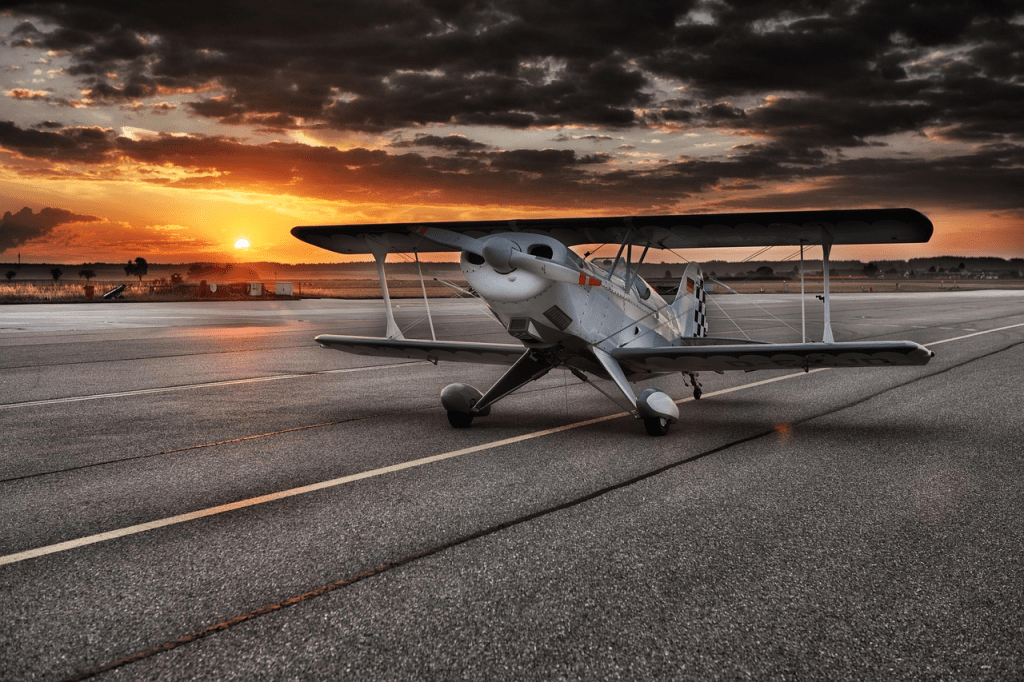


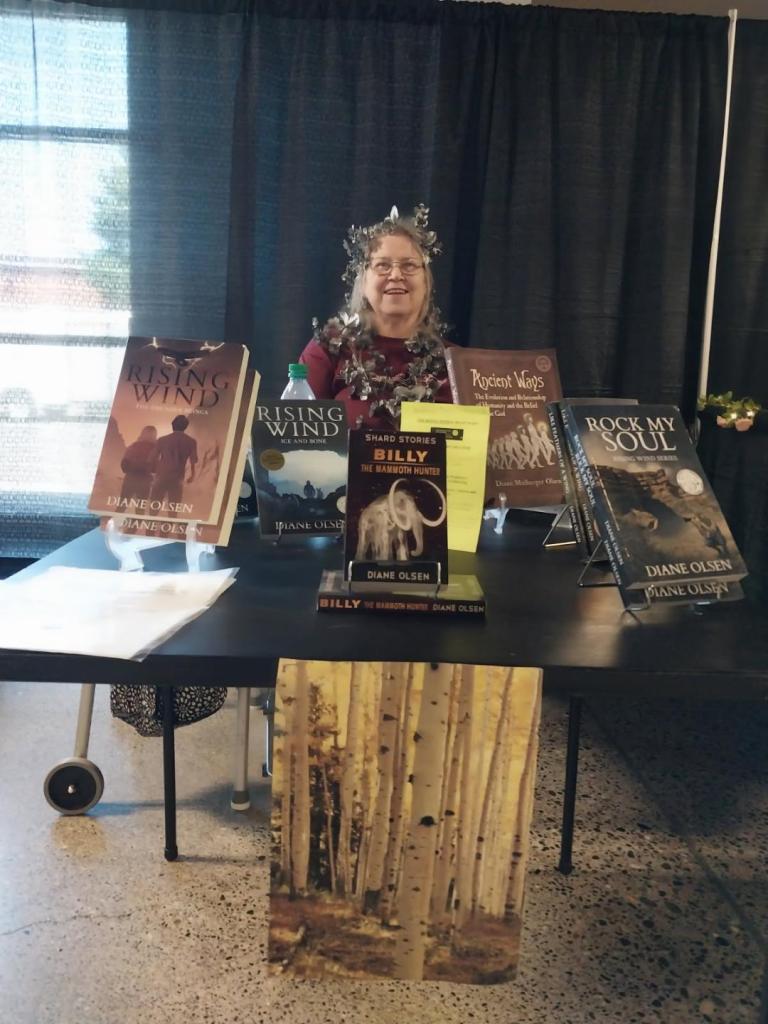





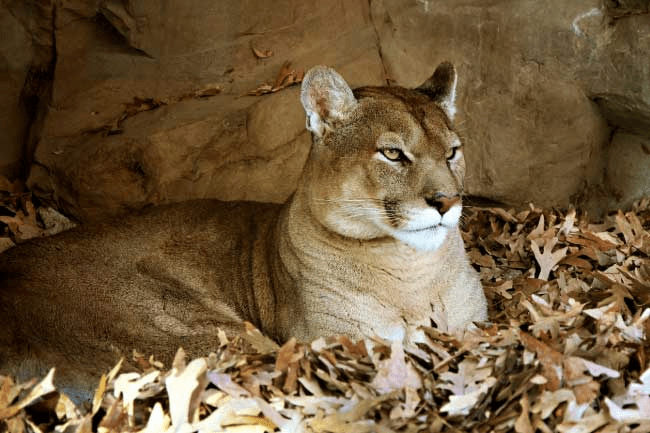


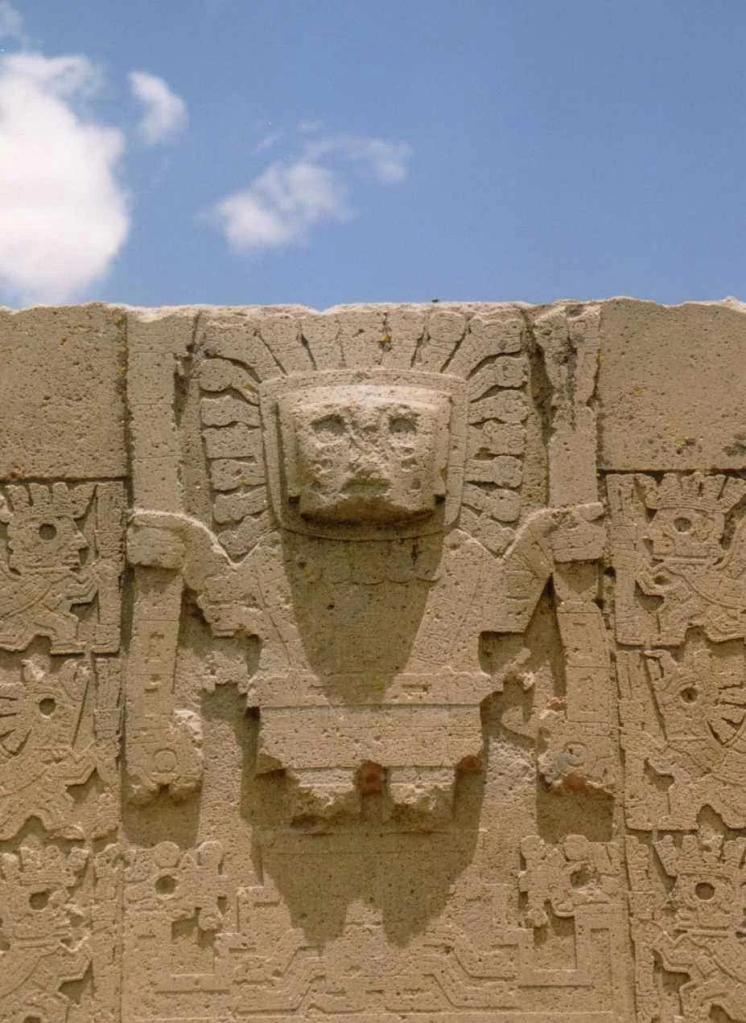




 Diane Olsen Author, Books, & Stories