

A WORLD OF FIRSTS
In the earliest pre-flood accounts, there are tatters of sacred memory
that appear to precede Adam as He is presented in Genesis. The story of
Adam is not unique. There are other stories about Creation and the “First
Man,” in other parts of the world, which are also truly amazing.
All have similarities. Differences arise within mankind. Some
distortions occur from the passing of vast ages, and rumors that spread
over time, and across vast spaces. Others occur from people twisting the
Revelations to suit their particular desires for power and or greed.
Man’s developmental history covers seven million years – at least.
However, the beginning of the last Revelatory Age may have begun
somewhere between 22,000 and 13,000 years ago.
A time when different physical versions of humanity interacted. . .
A “First (named or remembered) Being” or quite probably a
The multiplicity of holy Beings is referred to by people from all over this planet.
There are threads that connect all of the names we will explore to the title
“First,” but it is quite obvious that most of the stories contain combinations
of three or more unique Manifestations, or Revealers of God’s Word, whose
tales and exploits cover a number of divergent stages of human development.
For instance, the “First” may begin His Revelation at the dawn of time,
and then in a cave, and continue through domestication, even into the Iron Age.
This is confusing at the outset. But, it becomes clear that several
event lines have been woven together, and one remembered name is
applied to the actions of several.
Since all Revealers or Manifestations of God’s Word are enabled by
means of the Holy Spirit to mediate between God and man, the teachings
really are a continuum. These several Prophets combined appeared to live
for many thousands of years.
Obviously, there are several separate times and cultural event lines involved, but
the individual accounts get blenderized into a Saga.
One example is the story of Yima, whose tale spans well over 3,600
or up to 12,000 years. A succession of several Great Prophets combined,
so Yima appears to live for thousands of years.
Or consider Adam, said to be the first man, so of course, he preceded
the domestication of plants and animals. Yet He is credited with siring
offspring (most likely descendants) thousands of years later, in
agricultural times, and in cities.
Adam might have been the reference given to the first Man of a New Age.
Perhaps there is an “Adam” at the outset of every Age of man.
The name Adam, as given in the Bible, likely refers to His entire
lineage instead of a single man in a single time or place. When we read
that Adam begot Seth – it could actually mean that Seth built the obelisks
much later, but came from the line of Adam. So some confusion concerning
timing and lineage surrounds Seth, Enoch, and the other “begats.” Yet the
sequence of names was an effective verbal, then written historical aid,
which allowed men to recall and honor some of the Prophets of old.
A very similar case involves Gayomart (Q-mers in Persian) in the
pre-Zoroastrian, Avestan Bundahishn. The tale includes a son, Siamak, and
a “grandson,” Hooshang. They may not be a child and grandchild, but
actually successive Prophets.
Blending also crops up in Egyptian and Greek philosophical texts.
Some of the original names and individual divine purposes have faded or
been destroyed by crises like the flood. Their boundaries have blended
over time, devolved with forgetfulness, or worse, have been re-explained in
terms that made sense only to the tellers. Some elements were dumbed
down to the point, or they bore little, if any, relation to the Revealer or the
Message. Nobody remembers which one of three said what, and is it really
important? They become like a Janus figure, with multiple faces. In the end,
it is only what is given to the world of humanity that is relevant.
As was suggested at the beginning, we have never been without
guidance, nor can we know the exact names and times of all of God’s
previous Messengers. So – now we can relax. Speaking of names, there is
another problem (well, at least one more). People of different regions refer
to the same Prophet by a variety of names. So a prophet like Enoch may
have several names, identities, and attributes, depending on how far away
the story is, in time or space, from its source. Although the Hebrews refer to
Enoch,” Baha’u’llah and Mohammad refer to the same Prophet as ‘Idris.”
The Greeks called Him “Hermes,” and He is also “Thoth,” the Egyptian Scribe.
You catch the drift. These distractions can make identities muddy at
first, but remember why they came; it’s not just their names and what
people chose to remember about them that matters.
This way, we might not get so bogged down in the differences.
Taken together, remembrances of these primal Heavenly Kings give us
an accumulated history of our beginnings, which has built up
in layers of traditional lore like Shrek’s onion.
Today, many of these prophets have been demoted, dumbed down,
and nearly forgotten. Some are labeled and re-labeled as gods, titans,
goddesses, demi-gods, and heroes. But if one takes the time to peel the
onion, a special unicity becomes apparent. There are similarities between
various recollections of events or people, yet there are some very
surprising dichotomies which I am sure you will appreciate in the following
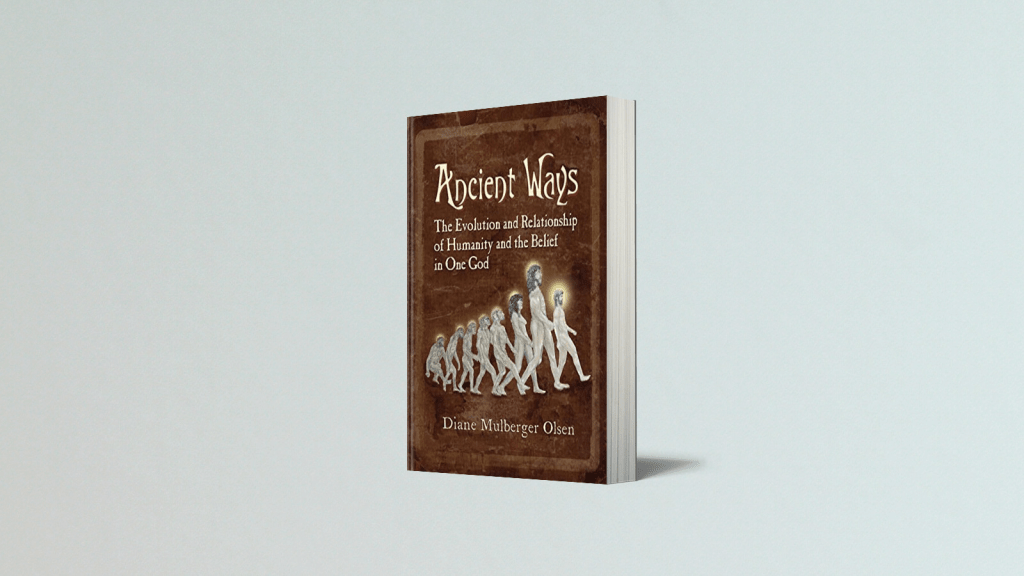
renditions of this book, Ancient Ways. Most of them explain the overall
period of time before the flood.
“Creation” Stories share four concepts: 1) Creation of heavens and
earth; 2) proto-human or pre-physical existence; 3) man becomes
embodied on the earth as some form of human to begin the fight of good
versus evil, light opposed to darkness; and 4) the rise of agriculture, helping
to stave off famines, and increase health and prosperity.
This leads to communal living and the need for laws
and governance – the dawn of civilization.
Now let’s enjoy exploring the picture of the “First” Manifestation of the
last Age, as pieced together from many peoples, languages, and
backgrounds. In order of presentation: 1. Nu Wa, 2. Fu-Xi, Shennong,
Huangdi 2. Adam, Seth, Enoch 3. Adapa or Uan and 4. Ram or Rama,
Yama, Yima, or Jamshid, 5. Asclepius/ Aesculapius and Abaris,
6. Melchizedek, 7. Gayomart, Siamak, Hooshang.
Also, please keep in mind that these revealers of God’s word
came to a variety of early human branches – not just Homo sapiens.
***********
All My Books Are Available
From Amazon Books!
https://www.amazon.com/stores/author/B01LWDB4K7/allbooks

 Diane Olsen Author, Books, & Stories