


A Rough Trip Through The Mountain: Part One of Two
by Award-Winning Author Diane Olsen
After Sage discovered an ancient text in a Mexican desert tomb, he led L.W. and a group of fellow explorers to Tibet, where they found themselves in the middle of a war. Even with danger at every turn, they still managed to discover secret caves beneath Lake Titicaca in Bolivia that led them toward an elusive yet powerful Book of Hope….

Slowly, they clambered inside the underground chamber, which was dimly lit from cracks in the rocks high above. The wooden doors had been propped open, and faded maroon paint still shone on them. The script was emblazoned for all to see. L. W. observed, “Look, there’s writing across the tops of the doors.”
“It’s more of that Cretan,” stated Gavin, a linguistics grad student, who was almost drooling with excitement. “It means God of the Sun, or God of Fire. Kon-Tiki! Yeah, this has gotta be it!” “Wait till I get a photograph,” said Eliot, the former BBC reporter, while hauling out a camera. Sage Dalton cautiously guided their way through the solid doors and into a broad chamber. He cautiously touched one of the walls. The gilt décor on the walls inside the temple was resplendent. Eliot chuckled as he flashed several pictures. “Even the rivets are golden.” The crew carefully stacked their gear and backpacks in a heap on a decoratively painted table. Some took out sandwiches. L. W. stood in awe. “The pigments are still so beautiful, red, green, and white.”
“Here are rumors of past glory,” whispered Sage as L. W. moved smoothly up beside him. She added, “The masonry is perfect. No wonder this temple has been able to withstand so many tectonic assaults.” Sage held the lantern aloft as they proceeded around the chamber to the right. Awestruck, they peered at each mural. Guanaco took a Kodak camera and flash attachment from his duffel, placing it around his neck and over his serape. Gavin and Eliot took out Brownie cameras and a pack of flashbulbs, and they began to snap black-and-white shots of everything.
While scrutinizing a mural map, Sage paused at a featured inset of an island. He muttered, “It’s Tollan. A ‘place of reeds’.” Nearby, there was a miniature portrait of the lovely Olmec woman he had seen once before. “It’s her”. “Her, who?” Eliot elicited. Sage answered as he stared at L. W, “Oh, the lady I met in the Olmec tomb.” L. W. responded, “You mean the one with the sash?” She stepped close and followed his gaze. Thoughtfully, she touched the figure, which could easily have been her self-portrait. Then, she looked back at Dalton. “I see what you mean. Wish Uncle Mitchell were here to see this.” His look acknowledged her sentiment. “Me too,” Guanaco said reverently, “She must have been very important in her day to be so honored from Mexico to Bolivia.”
Gavin piped up, “Quetzalcoatl’s voyage, by means of marvelous ships, is documented in these paintings.” L. W. commented, “Looks like they stopped at various ports, populated by a bewildering array of people from the coasts of the Mediterranean to Africa and across to North, Central, and South America.”
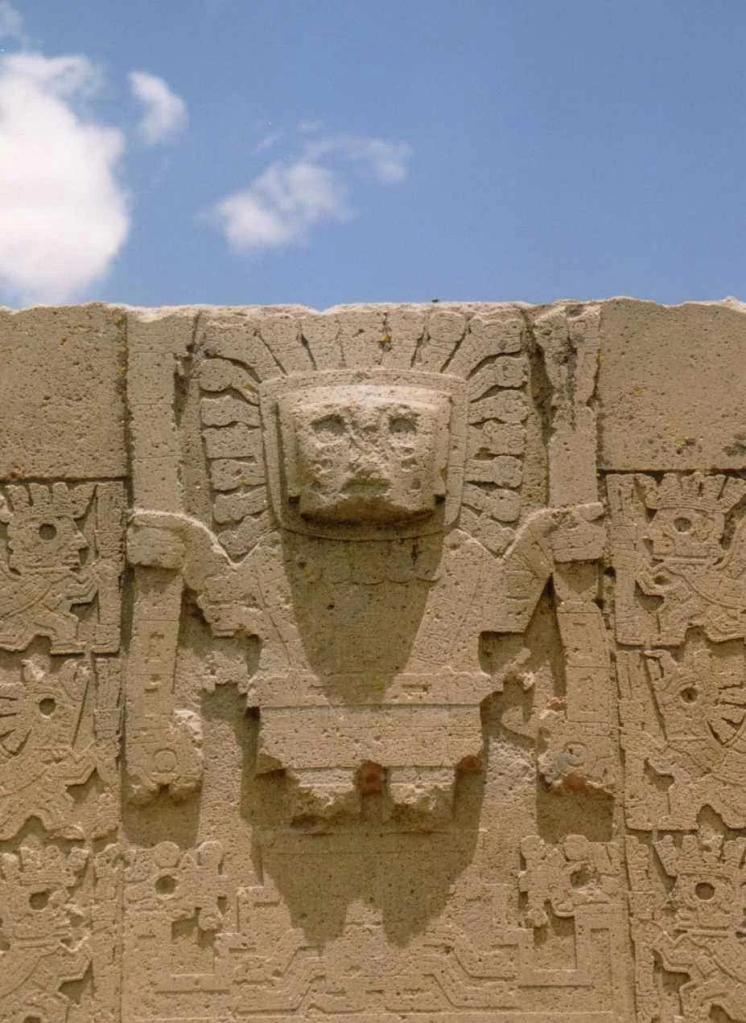
Eliot munched a sandwich, then asked, “If we know Kon-tiki means the Son of the Sun, Bochia—the white mantle of light, and that Quetzalcoatl and Kukulkan refer to the Feathered Serpent, none of that tells us for sure where He came from. Who was this strange, pious man, this divine traveler, Kon-Tiki?
Can we trace him directly back to the Middle East?
Where was He born?”
Sage said, “I definitely do think the rainbow sash is a clue—very Zoroastrian.” Sage mused.
“The reflection of the Sun was also used as a reference for Lord Zoroaster. I remember from Mitchell’s religion class that ‘Zoroaster,’ AKA ‘Zarathustra,’ or ‘Zar dosht’ are names derived from the ancient Persian word Zarat, which means ‘Golden. His teachings enlightened the entire Persian Empire with parables like the one about the fire in the wood.”
“Never heard of it,” L. W. Sage dismissed. “Once dried, a spark in decayed wood can produce heat and light.” Likewise, the soul of a human must be sparked by the Word of God for a person to achieve their most enlightened self.
In the case of both wood and human, the opposite state would be darkness, ignorance, and a cold, material nature. These twin potentials are represented by the symbols of ‘Yin and Yang,’ light and its opposite.” Guanaco brightened and mentioned, “That’s like the ‘sun’ and the ‘moon’ in Latin America. Both are part of human nature and are sacred symbols.” A doorway at the back led to a stairway that disappeared down into the dark. “Get a load of the sunken altar down there! There must be at least ten concentric circular stairways leading to the central platform. Kind of like a sunken stage in a theater,” observed Gavin in the light of his lantern, held aloft. “Enough history. Let’s move down the stairs and check out the altar,” encouraged Sage. Eliot added, “Right-e-o, everybody, grab our bags, and let’s get down there.”
As they moved into the room with the stairs, L. W. remarked, “Hey, guys, there is a scent in this room which smells faintly sweet, like incense, sandalwood. How can it seem so fresh?” Guanaco admitted, “If this were only my first trip to this temple, I wouldn’t be much of a guide, would I?” Sage turned around and looked at the Kallawaya healer.“So, you’ve been here before? You’re the one who burned the sandalwood?” “Well, not the only one.” Everyone eyed him with renewed respect, including Sage, who bowed slightly as he continued to look him straight in the eyes.
Always the pragmatist, Gavin said, “Good, that means you probably know more than one way out of here.” “We can only hope.” Guanaco took his eyes away from Dalton and led the way down the sets of stairs toward the altar, explaining. “Here in the Andes, our Prophet was a peaceful, benevolent being with strong healing powers. His people brought new wisdom to our agricultural interests, such as terracing and camellones–our insulating water canals.
As mentioned by Sage, He banished blood sacrifice and lived a compassionate life, calling for us to cherish the earth and all of its creatures. He was wise and kind.” Guanaco paused and closed his eyes for a moment. Sage thought he must be praying. Then he began walking again toward the altar. “Travelers came to visit him from distant lands to hear His sacred message. He started the order of healers, the Kallawayas, like myself.” Eliot pointed excitedly toward the shrine table. “Oh, oh, see there, under the Prophet’s feet… It’s the image of a golden case, probably stuffed with scrolls.” Andrews moved in closer, “That’s gotta be His Book of Hope.” “Gotta be.” Sage agreed. “I was beginning to think we were on a fool’s errand, to quote L. W. The chance of any documents being readable, at this point, is unlikely.”
He frowned and moved out of the healer’s way, changing the subject. “As in your tale of the Prophet of the Americas, Central Asia’s Zoroaster believed in truth, justice, and compassion for all living things, even the soil.” Guanaco asked, “When did Zoroaster teach?” “Well, dates are more than a little shaky. We see references to His birth in Azerbaijan, in northern Iran, approximately between 1,200 and 1,800 BC, at the earliest. That would make about 3,200-3,800 years ago.” Guanaco hunkered down.
“The same rough dates apply to both Kon-Tiki and Quetzalcoatl. You could be right. Could be the same Prophet.” “Righto,” cheered Eliot. L. W. chimed in,“The Mayans carried His revelation into Central America.” “She’s right,” Guanaco confirmed as he changed the film in his camera. “Many chose to serve him. From the Olmecs on the peninsula to Tollan, also called Teotihuacan—even to Tierra del Fuego. The golden age of Mesoamerican civilization thrived for almost two thousand years.” L. W. concurred, “Yes, He, or at least His legend, did get around. That’s why he was well known by literally dozens of names, each with one or two different variations everywhere. He stopped.
Kukulkan, Gucamatz, Volan, and Quetzalcoatl, etc.” Guanaco said, “It’s true. “He was depicted in some places around the Andes as the Weeping God.” A frieze in Tiahuanaco depicts a figure with tears running down his face; he was forced to leave his beloved disciples behind and continue the journey.
But now, the message has been garbled and overtaken by dramatic stories of gods and demons, much like paganist devolution found everywhere. The fading and changing of the message over time is a real part of revealed religion. ‘The Yang which offsets the Yin.’ It is why God sends a renewal of His message from one generation to the next.
Funny. Humans don’t recognize the same spiritual truths given back to us each time—they want to focus more on the differences.” Sage noticed that the Kallawaya moved in for an extreme close-up shot of the smaller winged-man icon. “Another Favorahar.” He also took a shot of a balance scale on the altar with two weighing plates, one gold and one maroon. Guanaco stopped and said thoughtfully, “It is similar to Christ, who spoke to us of God. Now we talk of Christ and worship Him and His Mother and various saints and visions—but Christ asked us only to worship One God.
People are interesting.”
All of them congregated in silence around the altar base, each with thoughts of the great Prophets, past and present. Guanaco turned sharply to listen. He then snapped his friends out of their reveries. “We must finish this and leave soon. I feel something is about to happen.” Sage, along with Gavin’s help, deciphered the inscription on the altar. It was also in the form of a banner beneath the Favorahar. When he said it out loud, the translation echoed throughout the entire chamber.
“To receive the Great Gift, the Book of Hope, place a worthy offering from the holiest master on this altar, and await the Glory of your Lord.” They backed away from the platform, considering their next move. L. W. sighed and said, “Hurry, let’s find the bag that holds the sacred objects.” Sage said, “That won’t be necessary. I have everything here.” He reached inside his shirt to pull out the pouch and the banner. Then, he looked up and froze in disbelief. (Break?) “Now, here’s a surprise! General Djinn, who wanted to kill Sage and his friends in Tibet, towered from an upper circular level, along with an archaeologist dressed in adventurer’s gear and a half-dozen Chinese soldiers, each with a rifle poised.

The archaeologist reached into a soft leather pouch and withdrew the Tibetan Favorahar, which he hefted a couple of times for emphasis. Djinn chuckled, “One man’s trash …” Sage was shocked. “Where’d you find that?” Then chastened, he said, “Oh… I remember.” Djinn sneered. “I found it casually tossed aside near the site of the plane crash back in Tibet. I was surprised. Imperialists seem to throw away everything! Sometimes things that tend to be of great value.” He smiled and moved forward toward the altar. Descending the remaining steps with his men, he shooed Sage and his companions away. They backed about halfway up the stairs to watch the demonstration.
Djinn motioned for his archaeologist to place the Favorahar in the indicated receptacle, a scale plate that appeared to be covered in pure gold. The other plate was plain by comparison. Hefting the Favorahar one final time, the assistant was confident he had the key, and he placed it gently on the scale. Djinn grinned up the stairs.
“I’ll allow you to live long enough to see what you’ve missed.” There was a clunk as if something dropped into place. A deep, hidden rumble stiffened everyone in their tracks. The Favorahar was weighed on the golden scale. Djinn and the soldiers stepped forward, their faces full of anticipation. At first, nothing happened. “This can’t be good.” Sage looked concerned.
Then, he crouched and snapped his head around, expecting trouble from every direction. L. W. was also scanning the temple. “Oh, no.” Below, Sage and his friends, the air began to hiss into the altar basin as vents opened in the stair risers. It flushed out a number of rats and snakes. They blew all over Djinn and his men, who crowded near the altar. After the air was exhausted, water slammed out of the openings, effectively turning the recessed altar pit into a roiling cauldron. It quickly engulfed the reptiles, rodents, and terrified humans. Eliot boomed out, “Good show, gents!” “Dios Mio!”
L. W. was first to the edge of the basin, reaching in to try to help the frightened soldiers. Sage grabbed her to keep her from falling in as a rat scrambled up her arm to relative safety. The others joined the effort. Guanaco saved a few bedraggled rats and two snakes, which flung themselves up his arm to hide behind his alpaca wool hat on his shoulders. Gavin and Eliot were able to grab the fingertips of one soldier for a few moments, but the swirling water never seemed to bring the men close enough to the edge of the steps to be rescued.
To make matters worse, the terrifying altar was raised up on stilt-like mechanisms, exposing a large gap beneath it that drew a vacuum. The shaft became a vortex, quickly sucking everything down an unseen portal. The Chinese men screamed their way down the drain and were gone. The altar lowered, sealing the exit, and the vents closed. Everything became very quiet. Sage and the others above didn’t even breathe for a few horrifying moments. Then they began to sob.
At length, their emotions subsided. When he could speak, Gavin said. “Okay, that was really weird.” L. W. had to ask, “Where do you suppose they went?” Eliot snorted, “I … don’t suppose this would be an appropriate time to reassign the invention of the water closet.” “The what?” Andrews asked. “You know, the loo,” Eliot explained. Gavin shook his head, befuddled. Dalton cleared his throat. “The latrine, kid. We don’t have time for this. Let’s go.” Guanaco added, “Actually, there were toilets in Tiahuanaco where the effluent was carried away by water…”
Sage’s face was serious, and he quietly said as he started trotting back to the altar, “I believe you.” Gavin followed, asking, “So, what happened to the Reds?” Everyone remained stunned and silent until Eliot babbled, “I thought this Quetzalcoatl was a nonviolent fellow.” Guanaco said, “He did not build this temple to Himself. He was more of an itinerant preacher like Christ. This was built later.
Even so, I imagine they have been transported to some other exit. I just hope, for their sakes, it opens close enough for them to make it to the shore.” “Right, if the opening isn’t fully blocked by debris.” Not wanting to bring everyone down again, Eliot had another thought. When he spoke, he sounded a bit relieved. “They’ll probably beat us to Copa for cocktails.” Sage roused from the dramatic event and was ready to go. . .
************************
Part Two Will Be Posted Soon!
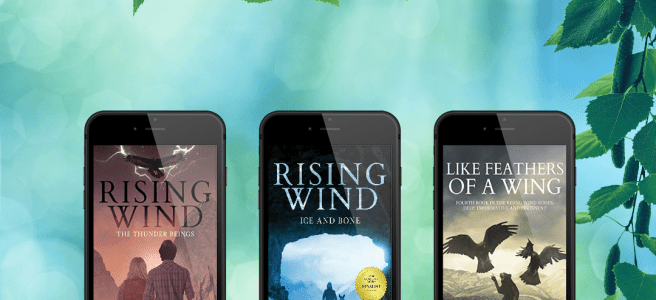
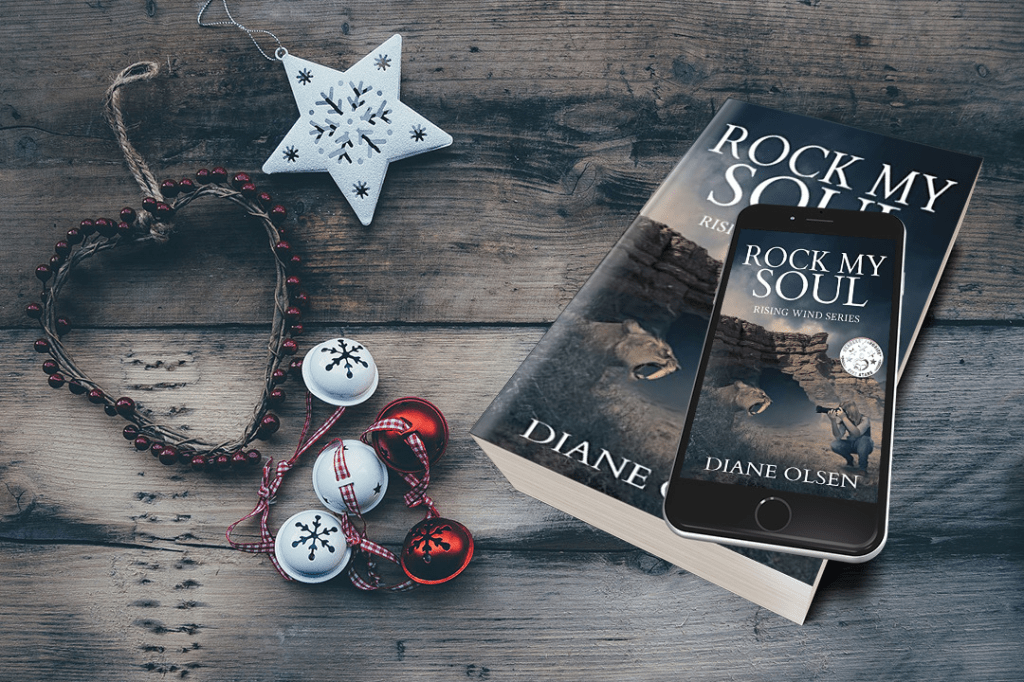
In the meantime, visit my Amazon Author Page to learn more about the ‘Rising Wind series’ of novels, like book three, Rising Wind: The Weeping God and The Book of Hope (Rising Wind Series) by Diane Olsen (Author)
“The Rising Wind Book Series is a fictional mystery series with a blend of an action-packed cross-genre thrill ride!”
If you enjoy reading about Native American culture, world religions, history, and extinct beasts, this series is for you! These exciting action, adventure, and mystery stories take place in multicultural settings around the world, spanning books one through six.
The series has been awarded 5-star Editorial Book Reviews by Book Influencers and Reader’s Favorite and has won several book awards to date, including the Book Excellence Award and the Christian Illumination Award, among others.
















 Diane Olsen Author, Books, & Stories