The Camp in the Karakum – Part 1
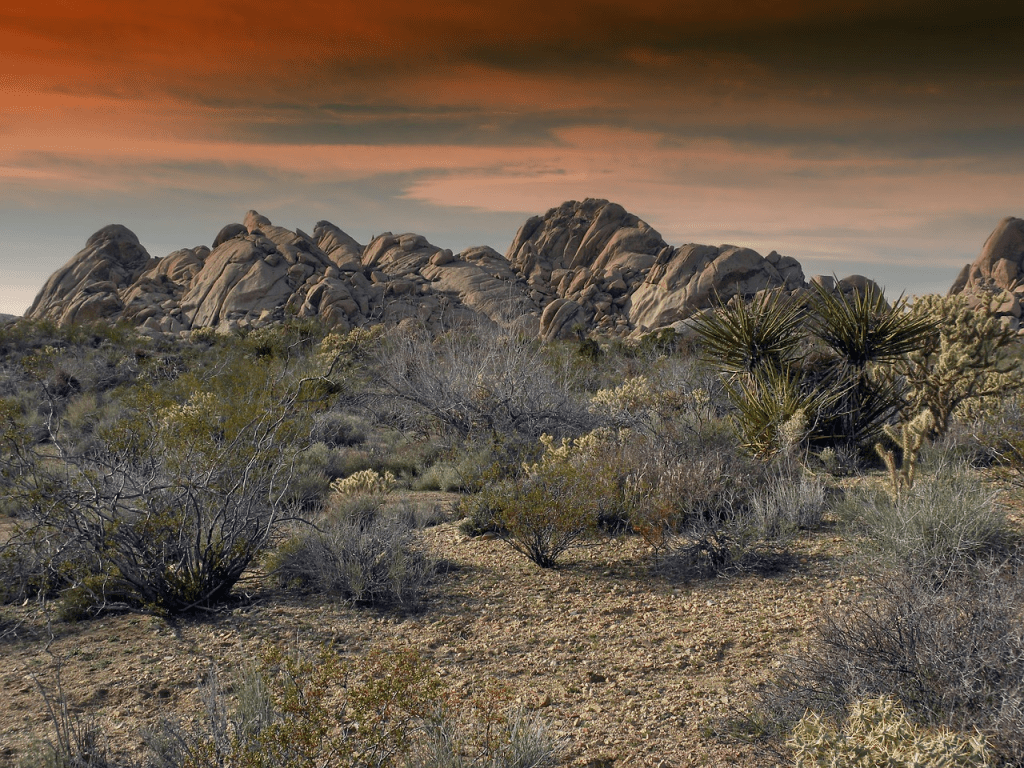
Stars were blinking into view by the time Secora James, Gideon Yellow Thunder, and their Jeep driver, Seamus McGill pulled up near a small campfire in the Karakum Desert near the Afghanistan foothills.
Four curious men arose and shaded their eyes from the glare of the headlights, inspecting the newcomers in a process of labeling them as friend or foe. They recognized Seamus, who had worked with them on a water capture project, but nor Secora and Gideon. The strangers were humbly greeted.
“I am Raffique,” said the first to offer his hand.”
Secora noticed his small red cap was beautifully covered with designs of white stitched lines and glittering little silver stars. The front of it resembled the top of a doorway arch in a mosque. The next man to introduce himself, Gullah, wore a similar cap, but it had a dark taupe background with beige squiggle outlines, gold star designs, and little pieces of mirror embroidered into it. So elegant, thought Secora.
Sher Rahm grasped her hand next. He wore a thinner, bright orange head wrap tightly around his head, giving the delightful impression of an orange sherbet. Finally, Manzoor stood smiling before her. He had a thickly wrapped cream-colored turban. All of the men wore beards. Manzoor’s was heavily streaked with silver accents.
They bade their guests sit on stones around the grill, and pointed to a meal they had prepared of tender Roti, a circular unleavened bread, and stewed vegetables that included greens, tomato, onion, herbs, potato, and squash in a spicy gravy. A teapot rested to the side of the grate.
Gideon pulled out paper cups from his backpack. Manzoor grinned and filled three of them with tea for their guests. After a delicious dinner of something akin to flavorful dessert tacos, Secora and Gideon unpacked the ingredients of a decadent dessert: whipped cream, semisweet chocolate, and butterscotch morsels, two bags of marshmallows, and two boxes of graham crackers.
“Want to try something new?” Secora pressed the nozzle of one of the whipped cream cans, and the men’s eyes became wide.
“Manzoor asked, “Shaving cream?”
Secora giggled and put a fingerful into her mouth. In no time at all they had consumed messy versions of s’mores, and were washing the sugary treat down with tea.
Moments later, they wrapped up in thick jackets for the air had chilled. With flashlights in hand, they walked over to see the fog catcher. This was part of a joint project they shared with Seamus. Secora and Gideon were new to the Karakum desert, and they carefully followed in Gullah’s exact footsteps so as not to step on some creature, or fall into a divot.
They watched the formation of dew across the netting. Droplets ambled down to the drip tray that resembled the chalk tray of an old blackboard. Then the little stream trickled into the five-gallon capture bucket. While they waited, they talked.
With a down jacket wrapped securely around him, Seamus said to Secora, “I was at one of those talks given by your father, and I’m pretty sure he would be fascinated by the history of this area. Manzoor hails from Termez on the northern border.” Seamus gestured. “He’ll tell you.”
Secora hunkered down, reaching for her russet leather backpack, and pulled out a tape recorder, a tablet, and a pen. Turning to Manzoor, she asked, “May I record our conversation?”
He nodded. “First, let’s go back and sit on the rocks around the fire if you don’t mind.”
When she was seated near the fire coals, she looked up to the silver-bearded man’s face. The deep, dark eyes were careworn for someone who might have been in his early fifties.
“Sir, could you tell me about that place, Termez?”
“I come from ancient Termez, one of Central Asia’s oldest town ruins. It is located a few kilometers northwest of here along the Amu Darya river, near the border with Uzbekistan. They say its roots go back over 5,000 years. Later, it might have been a center to the Achaemenids, a Persian Empire founded in 730 BC. The Shahnameh validates its early existence.”
Secora bowed slightly as she looked into his eyes. “I am familiar with some portions of the Shahnameh. The Persian Book of Kings, written by Abolqasem Ferdowsi.”
He noted her statement. “Impressive my new friend. However, you probably didn’t know that in April 2002, a newer version of the city was built nearby, and the residents recently celebrated its 2,500th anniversary. Hey, any reason for a celebration out here is a good one.” They all laughed with Manzoor.
Sher Rahm, a twenty-something young man, said, “You have no idea. We party at the drop of a hat – so to speak.”
Gullah, Raffique, and Manzoor nodded and had another laugh.
Gideon asked as he poured cups of Constant Comment from a large thermos and offered them around, “Weren’t there slaves in North and South Carolina who were descended from people known as Gullah in West Africa?”
Their hosts shrugged.
Seamus, who had a Wi-Fi reading of two bars, was scrolling with the aid of a local cell phone. “No link to Arabic from what I can see on the internet.”
For a moment, they were quiet as they sat drinking and listening to the occasional trickle of water as it hit the drip bucket below the mist catcher. It seemed to Secora that the number of drops was noticeably increasing as the temperature fell. Makes sense, she thought.
Manzour continued, “All that’s left of Old Termez these days is part of a wall on a hill. It looks like a long boat, maybe like part of Noah’s ark, or perhaps a chain of boats on top and off the side of an arid hill. A few scrub bushes and the occasional conifer surround it.”
“You know we’re not that far from Ararat,” Gideon offered. “Maybe some people could mistake it for the Ark.
“True, some probably have.” Manzoor chuckled.
Secora said distractedly, “It is probably already the subject of some program on YouTube, or Ancient Aliens.”
Raffique asked, “What’s ansinliens? We’re not familiar with that.”
Gideon answered, “It is a television show that seeks to find the causes of mysterious things and places. Often, they suggest it might have been the work of space men,” he pointed toward the stars. “From the sky, traveling in metal ships.”
Raffique responded with a grin. “Oh, those guys.”
That piqued Seamus’s curiosity.“The guys on the television show, or in the ships?”
“Seamus, we don’t have televisions.”
Secora lifted her eyebrows. “You’ve seen the ships?”
Sher Rahm and Gullah nodded at Secora, then said, “Several times, yes.”
A few minutes later, they rose to check the water collection depth against the lines painted on the bucket. Seamus mentioned to Secora and Gideon that the two young men were brothers.
Manzoor continued, “In 329 BC, Alexander the Great of Macedonia conquered Sogdia, as the land in upper Afghanistan was then known. Some say Old Termez was the site of Alexandria on the Oxus River, which we call the Amu Darya. Others say Alexandria was a place called Ai-Khanoum, which means “Lady Moon” in Bactrian.
Seamus asked, “Lady Moon? Is that similar to the Goddess Diana?”
Manzoor looked puzzled. “I’ve never thought of that. But the Greeks were deeply intertwined in our history. The early Kushan Empire spoke Ionian Greek as the official language, especially for administrative purposes. Later, they began using the Bactrian language at the end of the Tocharian period. It would be hard to say what was the origin of ‘Lady Moon’.”
He pointed to Sher Rahm. “My friend Sher is the archaeologist. You should ask him.”
Gideon stirred the dirt around the grill with a stick. “Where did the Bactrian language originate?”
The older man answered, “It is now extinct, but it was an Eastern Iranian language spoken by people who lived in southern valleys. The same valleys that are the womb for the Amu Darya, whose waters melt down from the Tian Shan and the Pamirs. Without their massive glaciers, the Amu Darya would not exist.
“Those mountains, like our mist nests, collect atmospheric moisture that otherwise would escape elsewhere. It rarely rains in these arid lowlands. The annual rainfall is twelve inches or less. Thank God. Even though the river’s course has shifted in the past few thousand years, it is still powerful enough to flow across the Karakum Desert. We need to learn how to collect water before the glaciers leave, or people who depend on the life-giving waters of the Darya will exist no more.”
Gideon said respectfully, “I pray this small beginning can become a lifeline for the desert people.”
“For us, it has to.” Manzoor stood and began to clear the dishes, washing them in the sand.
Secora came alive. “Wait, wait, wait. Manzoor, can you tell me more about the Tocharians? I’m curious about the Taklimakan mummies from the Tarim Basin, which I think might have been Tocharian. Some of the mummies had reddish blonde hair and light skin.
“When Sher gets back, he can tell you.”
Gullah and Sher Rahm returned and sat again. Gullah announced, “We are at eight liters, already.”
“My God, already eight liters?” Gideon whistled softly. “Sher will you please tell Secora about the Tocharians?”
The youth continued the tale. “Tocharian refers to a language and a people; however, the inhabitants probably referred to themselves as Agni, as did Manzoor’s family. Or, perhaps Kuchi, similar to the words Agniya, and Kuchiya from old Sanskrit texts found in on the northern edge of Tarim Basin.”
After a pause, his brow creased, then he continued, “The earliest mummies I know of date from around 1800 BC, nearly four thousand years ago. The corpses may, or may not be connected to the “Tocharians”, a name given to the region’s Indo-European languages in the early 1900s, by scholars who perhaps mistakenly identified the local Aryans, with a people known from ancient Greek sources as the Tókharoi, who inhabited Bactria 2,200 years ago – Just before Christ, and a little over a hundred years after the passing of Gautama Buddha.”
Secora’s eyes were wide with astonishment. “Wow! Sher, you really know your history.”
Gullah laughed, then said with a proud smile, “Our family reduced the number of their sheep and sold three cows so that Sher could receive a college education and become an archaeologist.”
Sher Rahm countered, “As an educator, Gullah has taught me more about love and service to others than a university ever could.”
Gideon replied, “Gullah, that’s the most important kind of education.”
Sher Rahm smiled and grasped his brother’s shoulder before continuing, “Some of us believe that the Indo-European origin of the so-called Tocharians is more likely associated with the bands of light-skinned Yueh-chih, who migrated from northwestern Xinjiang and Gansu China to settle in ancient Bactria around 300 BC, between the Tien Shan, and Altai Mountains.
Seamus shook his ginger locks and said, “I’m having a hard time picturing that.”
“They came from far northwestern China, just beneath Mongolia, bordering on Central Asia. Let me see your phone for a moment.”
He explained, “Here it is on a map.”
Secora looked at what he had found. “I see, thank you. So, actually, these were all Indo-European cousins. Scythia and Parthia together could be a map of the Achaemenid Empire, and the entire map encompasses the holy lands of hundreds of unremembered Prophets. I can see that the sacred Tigris and Euphrates Rivers, located in northwest Parthia and Turkey, were accessible to all of these tribes. (Map is the featured image).
The Camp in the Karakum – Part 2
“Yes,” agreed Sher Rahm. “
Agricultural communities appeared in the oases of the northern Tarim, at least 2,000 BC, settled by early Eurasian nomads. They spoke an Indo-European language known as Iranic from 3500–2500 BC, all over Greater Siberia, and Inner Asia at that time.”
Secora thought a moment. “That would make sense. It defines a path of entry for the earliest Aryans from the Arctic, through Siberia, and into Central Asia.”
“Right. Slightly later, the Central Asian Bronze Age settlements of the Tarim, or Oxus River, flourished in from 2250 -1700 BC. They became city-states, but were often overshadowed by nomadic peoples from the North and Chinese empires to the East.
Manzoor agreed, “That is true.” Then he picked up the conversation by asking, “So, Miss Secora, when was Buddha’s time?”
“He is said to have lived from 563 BC to 483 BC.”
“Well, here’s the reason Buddha is very significant to our people, specifically to my family and heritage. Kucha was a settlement fed by the waters flowing down from the Tian-Shan peaks. It became the largest of the northern cities, and eventually, it became an ancient Buddhist kingdom on the northern branch of the Silk Road that ran along the Tarim Basin. Like other cities along the northern edge of the Taklimakan Desert, Kucha served as a trading way-station. A viable option to the more southern route of the Silk Road, that ran along the Amu Darya, out of Termez.”
Secora sighed, “Guess that helps but I feel a little lost in the midst of such a massive history.”
Sher laughed heartily. “Anyone would. I have made it my life’s study, because I am interested in the Kafirs Pagan-like non Muslims, as well as, Krishna, and of course, Gautama Buddha.”
Gideon was amazed. “Your range of knowledge is marvelous. I’m so mesmerized by the flow of religious traditions in this region. Please continue.”
“Besides being at the center of trade with Greece and the Han Dynasty of China, the Kushans had diplomatic relations with the Roman Empire, the Persian Sasanians, and the Aksumites of northeast Africa.”
Gideon said, “Okay, whoa. Never heard of Aksumites.”
Sher asked politely, “What is ‘whoa’?”
“It’s what we used to say, to stop our horses.”
Laughter flowed. Raffique said, “We sit back and lightly pull the reins.”
Now everyone laughed. Gideon reddened and said, “We do that too.”
Sher continued, “Ah, I see. The Aksumite Empire was an Ethiopian kingdom that included Eritrea, upper Ethiopia, much of eastern Sudan, and southern and eastern Yemen at its peak. Its capital was Aksu.”
Gideon brightened. “Ah, I get it. Basically, Kushan was a nexus, a real hub. The center of the world. Were they the ones who started the Silk Road?”
“Maybe. Only God knows. Certainly, the Kushan Empire was the center point of trade relations between the Roman Empire and China. And for those people it was a golden age. Philosophy, art, and science blossomed within its borders. Yet, the only lasting record of its history comes from inscriptions and accounts in other languages, mostly in Chinese.
“By 200 AD the Kushan Empire had fragmented into semi-independent kingdoms that fell easily to Sasanian invaders from the West.
“Around 300 AD an Indian dynasty, the Guptas, pressed in on Kushan from the east. Though most of those people supported the religious ideas and icons in the Greco-Bactrian tradition, their leader also followed Hinduism. He was a devotee of the Hindu god, Shiva. Later, Emperor Kanishka even observed elements of Zoroastrianism.”
“What an unusual blend.” When Secora saw the questioning eyes, she corrected, “I mean to say mingling of ideas.”
“Indeed, the Kushans were spiritually attuned, and that is why they became early devotees of the Buddha, after Zoroaster’s time. Did you know they actually played an important role in the spread of Buddhism from India into Central Asia?”
Gideon shook his head. “I think I speak for all of us when I say we had no idea. But that kind of receptivity gives us a better understanding of the wellspring of religious diversity in this area.”
Raffique commented, “Yes, it is rather stunning when one thinks of it.”
Manzoor responded sagely, “That’s not all. Kanishka sent armies north of the Karakoram Range, on a direct road from Pakistan to China. For more than a century, travel and trade over the mountains diffused Mahayana Buddhism into CHINA.
It was during this period that Termez, referred to as Ta-li-mi by Chinese sources, became an important center of Gautama Buddha’s teachings, a mere century and a half after His death.”
Gideon’s jaw dropped. “Are you kidding me? The Kushans taught Buddhism to the Chinese?”
Sher chuckled. “They had to hear it from somebody. Am I right?”
Loving appreciation blossomed inside Secora. “Bless you for your big, welcoming hearts. I am moved at the way your people continually gravitate to new Prophets, by the grace of God.” Lost in thought, she yawned and stared with awe into the tiny flames beneath the hearth.
“My head is spinning right now. We grew up in America thinking our country was the greatest melting pot of cultures. You men exemplify the phrase ‘Unity in Diversity.’ Bless all of you. Secora checked her recorder. “Thank you, Seamus, for bringing these four new friends to our attention.”
Seamus responded, “It’s rare to find someone like Manzoor – not Muslim in Afghanistan. He’s accepted by his Muslim friends: Gullah, Raffique, and Sher – without the slightest irritation or pressure.”
Raffique said, “That is exactly how Muhammad would wish for us to behave.”
Gideon’s eyes shone in appreciation, “The history of Afghanistan takes the cake. I mean, it’s the crowning example of inclusion.”
Seamus added, “It’s pivotal! The entire world should hear about this.”
Manzoor smiled, acknowledging their amazement. “Yes, they probably should.”
*****************
All My Books Available On Amazon
https://www.amazon.com/dp/B093PRX88L