The Pine Ridge teenagers exited the transport vehicles at the trailhead parking area and began the short hike to the ledge directly beneath a cliff array.
As they found available rocks for seating, Gideon Yellow Thunder was introduced to the eleven juvenile detainees who either sullenly stared at him or inspected the ground.
After introductions, Gideon stood to his full height, and the chatter started after Gideon opened with, “You may not have carried the knife that injured my best friend, Jimmy Lizardeye, but you did nothing to stop the attack.”
“Why should we listen to you? Some call you heyoka, but you’re a real estate agent. You’ve got money, wheels, and income. How can you relate to us?”
“If you’re one of us…, shouldn’t you be wearing our bear claw sign? You’re nothing like us.”
Gideon sighed. “Of course I’m not. Gangs are family. You have each other’s backs, right? But families grow up, and kids move on with their lives.” There was some shuffling in the ranks. “Think about your own future families.”
“So, Yellow Thunder, what do you want from us?”
“Nothing. You are warriors. You should want to protect your children and all other tribal children. In fact, it is time to think about protecting all the children of our planet.”
“Why should we listen to you?”
“You’re an outsider, see those rain clouds forming? It’s a sign that we don’t need to listen to you. I hear the clouds saying, ‘chase him away.’. The clouds respect us – you do not!”
Policeman Clive stood and sighed. “Let me ask you something. At the moment you die, will egotistical power and perceived street respect seem more important to you than submission to the Great Being when He calls?” After a moment of stunned silence, Gideon began again, “Shift your vision a little to the side to get a clearer view. I speak only to the purity of your beings, your souls, not to the scars placed on you in this world.” His eyes glowed with a magical intensity.
Some detainees became uncomfortable; they sneered and shuffled around as they listened to him speak of this sacred matter. But a strange wind began to rise, and through it a wail, a piercing shriek was heard. Those who looked to the sky saw an enormous bird descend to a nearby crag, flapping her wings neatly into place.
The effect on all present was a shocked silence, jaws gaped in fear or awe. Three boys even fell to their knees, touching their foreheads to the earth. “It is the Great Thunderbird.”
“Maybe he is Heyoka.”
Gideon wasn’t at all surprised. He focused inside himself, recalling the voice of the ancient Wakinyan Tanka, and the changes her words brought within.
“This bird is known as ‘White Feather’, but my first vision experience was with her mother, the Great Thunderbird, Wakinyan Tanka, the Winged One, the Thunderstorm. Wakinyan’s glance was lightning, her voice, thunder. She used the night and clouds as robes to hide herself, but if you saw her, she was terrifying to behold.
“At first, I was traumatized, but I believe now that she was calling me to become ‘akecheta heyoka’. Grandmother Ursula told me that heyoka is the alternate personality of Wakinyan, a contrary warrior called by the sacred Thunder Beings. Sometimes, those individuals did things in reverse, laughed inappropriately, or acted like clowns during serious situations to get people to think outside their ruts.
“Each heyoka finds their way to serve a spiritual purpose – to look with a different slant, to free themselves from outdated traditions – spiritual doubts, and religious superstition with its deceptions.” Responding to the rising undercurrent of disagreement, Gideon continued, “Not all traditions should change – only those that keep us attached to failure instead of moving us into a better reality.” He paused, then said, “You kids get me? We’re all spirits living here in an illusion.” Gideon sat on his heels and practically whispered. “One dark night, I felt drawn to climb a scree slope and struggled to look up at the cliff top in front of me.
Something shimmered, almost like it was cloaked. A huge beast dropped silently from its eyrie, and I saw something like a four-foot snake sliding through the stars, spiraling toward me. I froze in terror. Closer, closer, the thing came, until the end of it drove into the rocks in front of my face. I was confused and squinted as the object flopped lamely back and forth next to me in the night breeze. It was a tailfeather. Recently, this bird, White Feather, has also given me a plume as a gift.”
Yellow Thunder turned to look at White Feather, whose glare was withering. “I remember Wakinyan Tanka said something like this: “For your kind, change is difficult. Two-leggeds hold onto vestiges of the past as sacred, often with total disregard for the sacredness of the now. It is not wise for you and me to cling to remnants of our pasts until shriveled meanings become useless, senseless, or lost in mythical dimness. All times and places are sacred.”
Gideon couldn’t tear his eyes from the stunning young bird that was three times the size of a large male ostrich. Shoulders around eight feet tall, head at nearly twelve feet. A band of blue-black skin ran from behind the beak to encompass her bright orange-gold eye. White Feather returned Gideon’s stare, raising quills as long as a man’s forearm.
The crest ran from the top of her head down two-thirds of her sooty slate-gray neck. Her black and white crest feathers were tipped with bright crimson as they extended to their full height. Her beak opened, and she nailed each of the offenders with savage eyes. An ancient croak rumbled from a beak the size of a grizzly bear’s skull. The teens, one and all, got up and backed away.
“Now, each of you has had an encounter with this enigma. Like us, she is only a servant of the Creator. What will you do with the little piece of life that is left to you? How will you help our Oglala people, our children? Your eyes have seen things around you that must change; now, make those changes while there is still time. People here are willing to assist in your efforts. You hold the future of our people in your minds and hearts. That is all I have to say.”
Rain began to fall. The teens stared as the giant bird, a rare Argentavis Magnificens, spread her thirty-foot wings and soared until she caught an updraft, and then disappeared from sight. Like her mother before, she sent back a shriek of departure as she vanished. **********************
Happy to announce my New Book Release The Unique Settled History of Sweetwater Canyon Above Colorado Springs, Kindle Edition by Diane Olsen (Author), Catherine Townsend-Lyon (Editor) 5.0 out of 5 stars – 1 rating
A Rough Trip Through The Mountain: Part Two by Award-Winning Author Diane Olsen
“Okay, everybody, it’s our turn. I have the Dalai Lama’s old Mala.” The others ran down the steps. Halfway down, their ears were assailed by a thunderous roaring. They heard popping and cracking as if the walls above were straining to hold together. The floor trembled and vibrated as the wayfarers shrieked and struggled to keep their footing. Then, it stopped, and again, there was complete silence. After a few breaths, Eliot asked, “Yes, well?”
“I think we, uh ….” Andrews joined. “You’re right! Let’s go.” Sage raced over to the altar. Eliot and Guanaco jumped down the final steps. Sage halted, and the others fell in beside him. “It’s now or never.” L. W. asked, shaking, “What do we do?” Eliot suggested, “We do better than the last guys did. So, it has to be the prayer beads, right?” Sage double-checked, “Eliot, are you sure that mala belonged to His Holiness the Dalai Lama?” “Well, yes. Technically, they all belonged to His Holiness.”
Sage gave the bag to Eliot, who quickly but reverently opened the decorated pouch and withdrew the Mala. “It belongs … I’m sure it belonged to His Holiness.” Eliot unwrapped the banner and translated it. “The enemy hand that seizes beads of the Dalai Lama shall know the searing pain of his error.” Sage shrugged, “So, why you? You still haven’t given us an explanation about those beads.” L. W. asked, “What’s the deal with you being able to hold the mala when it burns everyone else?”
Eliot gulped as he considered the beads in his hand, wondering why they didn’t brand him. “If His Holiness has passed on from the stress of the transition and his illness from the journey, I imagine he no longer requires them?” Guanaco chimed in, “His Holiness passed on? You’re thinking the Dalai Lama has passed on?” Eliot was surprised, “Well, possibly, quite likely, yes. We were so sad. Oh, dear. Perhaps it was allowed because I tried everything in my power to defend Him and his people from the Red Chinese in Lhasa.” Sage shook his head.
“I don’t think that’s it, Eliot. Lots of folks there gave their all.” The Bolivian shook his head, bemused. “Do not torment yourself. The word is that he made a successful if treacherous escape from Tibet to safety in Northern India, and although he was very sick at first, and it was touch and go, his condition has improved, and he is still very much in charge of his nation in the eyes of his people.” Everyone was overjoyed, jumping and dancing around. Sage laughed.
“He’s gonna want his Mala back. Let’s get on with this.” “Quite true.” Eliot reddened and heaved a sigh. “Oh, maybe it was because I didn’t wash my hands.” Eliot looked at his hands with a new appreciation. “I never washed my hands!” L. W., however, looked disgusted. “Why are you so happy? That’s Gross! And to think I almost shared your horehound candies… yuck!” She looked like she would be ill. A slow smile spread across Sage’s face.
“You shook his hand. You touched him, and you didn’t wash your hands before you picked up the Mala?” Eliot’s head bobbed in glee as he held the Mala boldly up. “I took his hand in both of mine and kissed it.” There were more sounds of breaking wood and stone. Guanaco looked nervous. “It is time to put ’em up on the altar.” Eliot smiled. “I do suppose so.” He offered the beads to Sage, who shrank back.. “No thanks. You do it.”
Finally, the Brit approached the altar, looking back at his friends for confirmation. They nodded, and he placed the Mala into the maroon-colored stone scale plate. The altar slid apart, and a small pedestal rose from it. The stand was topped with a gold, jewel-encrusted chest similar in appearance but larger than the chest that had contained the sash. Everyone moved forward, closer to Eliot at the altar.
An inscription became visible on the case. L. W. squinted. “It is written in glyphs. Must have been made after Kon-Tiki’s departure.” She stepped closer to translate. “Welcome, servant of God, receive now the Book of Hope.” She tried to raise the lid, but it wouldn’t open. There are no locks or devices. However, upon closer inspection, they saw that it had been welded shut. Guanaco stepped back, “It is not for us to open.” Gavin Andrews helped Sage with the awkwardly heavy chest. L. W. decided they must leave the Favorahar. “Maybe we should leave the chest as well.”
Eliot retrieved the Mala and banner while Guanaco took a few final pictures of the historic religious monument. Guanaco said, “I think not. The only time this book will likely become available to humanity.” Sage noted a problem, “Guys, the walls are weeping. Water is seeping down those amazing murals.” Everyone was cramming their film, cameras, binoculars, and notebooks into their plastic-lined bags and satchels. Suddenly, they froze.
The ceiling had become a waterfall, draining the pond above them. Guanaco shouted as he grabbed the chest and led them, racing up the stairs, “The purpose of this chamber has been fulfilled.” Pillars and timbers creaked and groaned. The whole chamber shuddered as they picked up the rest of their gear and sprinted for the entrance doorway and the viaduct beyond.
At the gateway, the statues of the protective guardians were toppling into an “X” formation across their path. They had to set everything down. Sage suggested, “It’s going to take all of us to move these statues.” “Maybe we can use one of these temple guardians for a sled.” Guanaco pointed to the one on the left, which had fallen on top of the right-hand one. Water was quickly spilling into the temple from the surrounding lake and flowing into the aqueduct tunnel ramp, as well. They stood behind the upper figure and tried to shove it over the lower one.
“It won’t budge until the water rises enough to lift it.” Sage roped the sentinel’s head with the long roping rein and tied it around the feet on the pedestal. “We can hang on to this rope so we don’t fall off and get brushed away.” Water began to dash and swirl around them. They were afraid, but they persevered in their quest to load and protect the equipment. Finally, the four-and-a-half-foot broad base of the wooden statue rose above the top of the lower Guardian. It thudded into the rock as they attempted to guide it and push it ahead, pointing it into the passage, which would eventually lead up and out.
As the water began to lift the wood up into the aqueduct, L. W. said, “I’m using the last of our parachute cord to lash this case on.” Sage and Gavin set the chest on top of the Guardian’s ankles. When they had done a decent job with the task, Sage and Guanaco took their places at the head of the figure. “Okay, everybody, sit astride this thing and hang on to the rope.” L. W. climbed aboard. There was room for two up in front of the head and three behind. Guanaco pulled off his serape. He and Sage held it over themselves to form a small tent to protect themselves from flotsam and scrapes.
“Not much of a shield, but certainly better than nothing.” The statue was already floating up the tunnel. Guanaco warned, “No matter what happens, don’t let go.” All five gripped the icon in fear. Behind them, there was a crushing rumble. Air squished volumes of water into the tunnel, and it slammed into the base of the Guardian, which then rushed forward with a jolt. Gavin helped L. W. to stay attached after she was knocked loose by the blast. They rocketed through the torrent, and the Guardian was submerged several times, threatening to twist one way and another, but it always succeeded in righting itself.
At times, it bounced off the side walls and even the ceiling. When the log neared the top, it diverted from the aqueduct. L. W. lost her grip and was shoved out ahead of the log. Sage grabbed her ankle and reeled her back in—praying she was good at holding her breath. As awful as the ride was, it only lasted a few minutes before they shot out of the entrance on the side of the hill, around the bend from where they had first entered. The wooden statue came to a halt on the edge of what had once been a charming little spring basin with lovely foliage. Now, it was a lake with angry, filthy water raging through it. Water continued to stream past the makeshift sled, which landed on the side of the stream, the humans strewn on it or nearby. Sage felt beyond tired and closed his eyes.
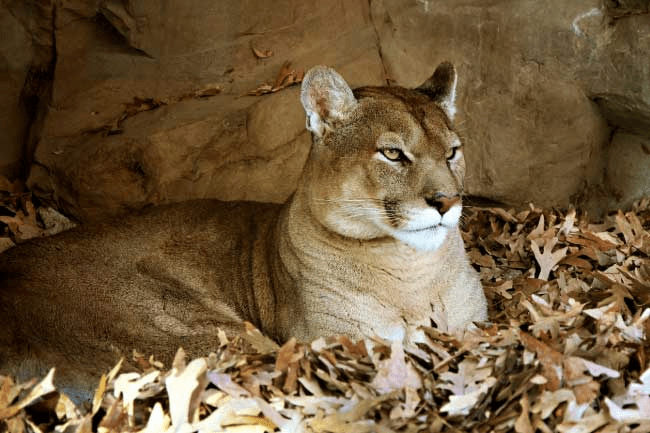
When he regained consciousness and could finally manage to lift himself from the muck, he saw that Guanaco’s former serape was literally slithering with wildlife: Snakes, fish, and bugs. Those who were able were shaking themselves free of the pile and heading for safety. Dalton stumbled around, checking everyone’s status. Several muddy, indecipherable rodents and other critters fell off the loaded sled as Gavin and Eliot’s heads peeked out from under a piece of the tattered blanket. “Are you two okay?” They groaned in response. Sage glanced to the side and noticed the litter of bones from the panther den.
In fact, there was even a full-grown puma beside the sled. Wet and bedraggled, it appeared to be dead. Spiders scurried around everywhere, even over the cat’s eyeball, dodging the light of day while many curious birds were trying to pick them off. Gavin sat up and groaned, “Oh, no, no, this isn’t good.” Eliot and Andrews cleaned themselves off, and Sage helped pry Guanaco from the sled and checked out his worst wounds, even though the duffels that held the medicine and bandages to treat them seemed to be lost. L. W. screamed when she lifted her head, which was now a tangle of hair and living things.
Then she noticed the cat. Its eyes were glazed, and its tongue was hanging out of its mouth as it lay on its side. Then it twitched. “It’s still alive.” She screamed again as she stepped off the statue onto a giant constrictor. Feeling the squishiness of the animal, she jumped to the side. All the while, things were sliding from her body. “Dios mio! Oh, my God! What a nightmare.” Sage tried not to laugh. “What’s the problem? It’s only a snake.” She yelped and ran several feet away from the sled into the shelter of nearby bushes.
“I am never going anywhere with you again, Sage Dalton.” “I don’t blame you, L. W. I’m done too.” The crew pulled themselves together and finished taking stock of their major injuries. Guanaco said, “Thankfully, none of our wounds seem to be life-threatening.” Gavin said, “I can’t even tell what injuries are from this morning because there are so many options now.”
They found clean rocks to rest on while remnants of the wildlife vanished into the slopes, the brush or slithered back into the water. Sage and Eliot removed the chest from the ropes on the sled, but no one felt like trying to carry it anywhere. Then the men noticed L. W. was returning, but her bruised arms were stiffly raised. “Hey, guys… we have another problem.” Everyone turned to look. Behind her, they saw the two bandaged Germans with rifles trained on them. Johan turned to his buddy. “Hey, Blitzer, it seems like we are back where we started. Dr. Dalton is trying to steal a golden case from an underground hideaway.” Blitzer responded, “It does feel a little familiar. Only this time, Dalton dies.” He cocked the weapon and began to squeeze the trigger.
Gavin, who had his back to L. W., suddenly pivoted, hurling the wet remains of Guanaco’s serape with the squirming puma in it right at Blitzer. L. W. ducked, and Blitzer’s shot went wild. The Germans took the cat in the face. Both men and the puma hurtled down the thirty-foot drop to the torrent pooling below. “Dammit, Gavin! Are you crazy?” L. W.’s face was red. “You didn’t even warn me.” He smirked and panted, “You’re welcome, L. Dub.”
Sage and the others hurried to the edge and watched as the bodies eventually bobbed up out of the water below. The puma was riding atop one of them like a raft. It jumped across to the other, then out of the water, lumbering toward higher ground. Eliot clambered down the side of the hill to verify their status. He hollered, “This time, Johan and Blitzer’s souls have indeed fled to Valhalla.” Gavin went down and helped Eliot drag them from the water.
They were both weary and sore and had a great deal of difficulty with the task. Guanaco and Sage took their time in joining them. L. W. sat on a rock and watched them from above. Over about an hour, they buried the bodies under a pile of rocks. Guanaco offered a prayer for the advancement of their souls. Sage praised their dedication to duty, adding, “Though I’m glad you men didn’t succeed. Perhaps, now, you can focus on yourselves for once. Rest easy.” They passed by and took a final look at the pond, whose waters were now receding, and were astonished to see that two of the duffels had been revealed. Sage asked, “Guanaco, what was it your people called this pond place?” “A place of certain death.”
Shadows were lengthening as the Exhausted and bruised wayfarers left the crags of the “Place where the Sun First Arose,” now adorned with an enormous reclining puma statue … After they copied the photographic prints and collated a set of the pictures and drawings they had gathered to go along with a full written story of their fateful trip, the documents were sealed in plastic and taped securely inside the golden case. It seemed decided that the golden cask should stay with the descendants of Kon-Tiki/Vira Cocha’s followers. It would be best to house the cask on Isla del Sol in the temporary trust and care of Guanaco and his wife, Rocio. Presumably, the Andean healers began their service as his servants and emissaries.
This particular Revelation, whether or not its teachings had survived intact, was meant to continue in South America. Eliot summed up, “What we would probably find if we had been able to translate the scrolls is a renewal of God’s holy scriptures for that age. There are several newer editions of teachings given to us by Gautama Buddha, Jesus Christ, Mohammad, the Bab, and Baha’u’llah, which continue to reflect how humanity should behave towards one another, as well as towards animals, plants, and the earth itself.Is that a fair synopsis?”
Sage nodded and watched as they placed the cask in a secure location. Then, the travelers left with heartfelt goodbyes, smiles, and hopes for ‘good futures’ for everyone there. . .
*****************
Happy to announce my New Book Release The Unique Settled History of Sweetwater Canyon Above Colorado Springs, Kindle Edition by Diane Olsen (Author), Catherine Townsend-Lyon (Editor) 5.0 out of 5 stars – 1 rating
The Rising Wind Book Series is a fictional mystery series with a blend of an action-packed cross-genre thrill ride!” If you enjoy reading about Native American culture, world religions, history, and extinct beasts, this series is for you! These exciting action, adventure, and mystery stories take place in multicultural settings around the world, spanning books one through six.The series has been awarded 5-star Editorial Book Reviews by Book Influencers and Reader’s Favorite and has won several book awards to date, including the Book Excellence Award and the Christian Illumination Award, among others.
A Rough Trip Through The Mountain: Part One of Two by Award-Winning Author Diane Olsen
After Sage discovered an ancient text in a Mexican desert tomb, he led L.W. and a group of fellow explorers to Tibet, where they found themselves in the middle of a war. Even with danger at every turn, they still managed to discover secret caves beneath Lake Titicaca in Bolivia that led them toward an elusive yet powerful Book of Hope….
Slowly, they clambered inside the underground chamber, which was dimly lit from cracks in the rocks high above. The wooden doors had been propped open, and faded maroon paint still shone on them. The script was emblazoned for all to see. L. W. observed, “Look, there’s writing across the tops of the doors.”
“It’s more of that Cretan,” stated Gavin, a linguistics grad student, who was almost drooling with excitement. “It means God of the Sun, or God of Fire. Kon-Tiki! Yeah, this has gotta be it!” “Wait till I get a photograph,” said Eliot, the former BBC reporter, while hauling out a camera. Sage Dalton cautiously guided their way through the solid doors and into a broad chamber. He cautiously touched one of the walls. The gilt décor on the walls inside the temple was resplendent. Eliot chuckled as he flashed several pictures. “Even the rivets are golden.” The crew carefully stacked their gear and backpacks in a heap on a decoratively painted table. Some took out sandwiches. L. W. stood in awe. “The pigments are still so beautiful, red, green, and white.”
“Here are rumors of past glory,” whispered Sage as L. W. moved smoothly up beside him. She added, “The masonry is perfect. No wonder this temple has been able to withstand so many tectonic assaults.” Sage held the lantern aloft as they proceeded around the chamber to the right. Awestruck, they peered at each mural. Guanaco took a Kodak camera and flash attachment from his duffel, placing it around his neck and over his serape. Gavin and Eliot took out Brownie cameras and a pack of flashbulbs, and they began to snap black-and-white shots of everything.
While scrutinizing a mural map, Sage paused at a featured inset of an island. He muttered, “It’s Tollan. A ‘place of reeds’.” Nearby, there was a miniature portrait of the lovely Olmec woman he had seen once before. “It’s her”. “Her, who?” Eliot elicited. Sage answered as he stared at L. W, “Oh, the lady I met in the Olmec tomb.” L. W. responded, “You mean the one with the sash?” She stepped close and followed his gaze. Thoughtfully, she touched the figure, which could easily have been her self-portrait. Then, she looked back at Dalton. “I see what you mean. Wish Uncle Mitchell were here to see this.” His look acknowledged her sentiment. “Me too,” Guanaco said reverently, “She must have been very important in her day to be so honored from Mexico to Bolivia.”
Gavin piped up, “Quetzalcoatl’s voyage, by means of marvelous ships, is documented in these paintings.” L. W. commented, “Looks like they stopped at various ports, populated by a bewildering array of people from the coasts of the Mediterranean to Africa and across to North, Central, and South America.”
Eliot munched a sandwich, then asked, “If we know Kon-tiki means the Son of the Sun, Bochia—the white mantle of light, and that Quetzalcoatl and Kukulkan refer to the Feathered Serpent, none of that tells us for sure where He came from. Who was this strange, pious man, this divine traveler, Kon-Tiki? Can we trace him directly back to the Middle East? Where was He born?” Sage said, “I definitely do think the rainbow sash is a clue—very Zoroastrian.” Sage mused. “The reflection of the Sun was also used as a reference for Lord Zoroaster. I remember from Mitchell’s religion class that ‘Zoroaster,’ AKA ‘Zarathustra,’ or ‘Zar dosht’ are names derived from the ancient Persian word Zarat, which means ‘Golden. His teachings enlightened the entire Persian Empire with parables like the one about the fire in the wood.” “Never heard of it,” L. W. Sage dismissed. “Once dried, a spark in decayed wood can produce heat and light.” Likewise, the soul of a human must be sparked by the Word of God for a person to achieve their most enlightened self.
In the case of both wood and human, the opposite state would be darkness, ignorance, and a cold, material nature. These twin potentials are represented by the symbols of ‘Yin and Yang,’ light and its opposite.” Guanaco brightened and mentioned, “That’s like the ‘sun’ and the ‘moon’ in Latin America. Both are part of human nature and are sacred symbols.” A doorway at the back led to a stairway that disappeared down into the dark. “Get a load of the sunken altar down there! There must be at least ten concentric circular stairways leading to the central platform. Kind of like a sunken stage in a theater,” observed Gavin in the light of his lantern, held aloft. “Enough history. Let’s move down the stairs and check out the altar,” encouraged Sage. Eliot added, “Right-e-o, everybody, grab our bags, and let’s get down there.”
As they moved into the room with the stairs, L. W. remarked, “Hey, guys, there is a scent in this room which smells faintly sweet, like incense, sandalwood. How can it seem so fresh?” Guanaco admitted, “If this were only my first trip to this temple, I wouldn’t be much of a guide, would I?” Sage turned around and looked at the Kallawaya healer.“So, you’ve been here before? You’re the one who burned the sandalwood?” “Well, not the only one.” Everyone eyed him with renewed respect, including Sage, who bowed slightly as he continued to look him straight in the eyes.
Always the pragmatist, Gavin said, “Good, that means you probably know more than one way out of here.” “We can only hope.” Guanaco took his eyes away from Dalton and led the way down the sets of stairs toward the altar, explaining. “Here in the Andes, our Prophet was a peaceful, benevolent being with strong healing powers. His people brought new wisdom to our agricultural interests, such as terracing and camellones–our insulating water canals.
As mentioned by Sage, He banished blood sacrifice and lived a compassionate life, calling for us to cherish the earth and all of its creatures. He was wise and kind.” Guanaco paused and closed his eyes for a moment. Sage thought he must be praying. Then he began walking again toward the altar. “Travelers came to visit him from distant lands to hear His sacred message. He started the order of healers, the Kallawayas, like myself.” Eliot pointed excitedly toward the shrine table. “Oh, oh, see there, under the Prophet’s feet… It’s the image of a golden case, probably stuffed with scrolls.” Andrews moved in closer, “That’s gotta be His Book of Hope.” “Gotta be.” Sage agreed. “I was beginning to think we were on a fool’s errand, to quote L. W. The chance of any documents being readable, at this point, is unlikely.”
He frowned and moved out of the healer’s way, changing the subject. “As in your tale of the Prophet of the Americas, Central Asia’s Zoroaster believed in truth, justice, and compassion for all living things, even the soil.” Guanaco asked, “When did Zoroaster teach?” “Well, dates are more than a little shaky. We see references to His birth in Azerbaijan, in northern Iran, approximately between 1,200 and 1,800 BC, at the earliest. That would make about 3,200-3,800 years ago.” Guanaco hunkered down.
“The same rough dates apply to both Kon-Tiki and Quetzalcoatl. You could be right. Could be the same Prophet.” “Righto,” cheered Eliot. L. W. chimed in,“The Mayans carried His revelation into Central America.” “She’s right,” Guanaco confirmed as he changed the film in his camera. “Many chose to serve him. From the Olmecs on the peninsula to Tollan, also called Teotihuacan—even to Tierra del Fuego. The golden age of Mesoamerican civilization thrived for almost two thousand years.” L. W. concurred, “Yes, He, or at least His legend, did get around. That’s why he was well known by literally dozens of names, each with one or two different variations everywhere. He stopped.
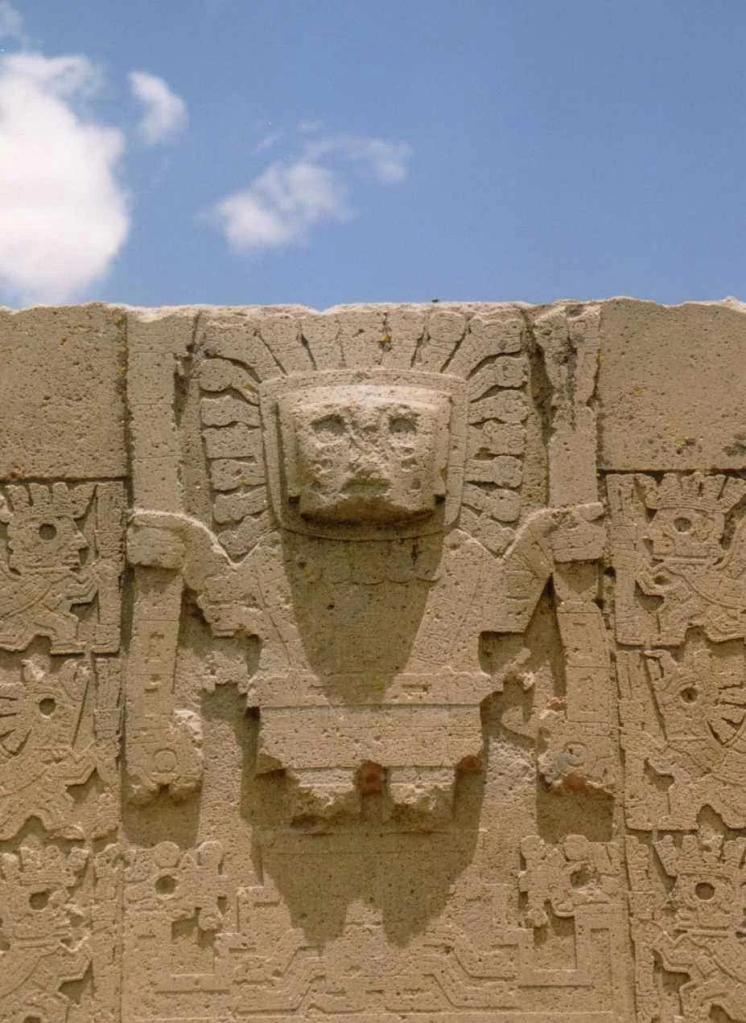
Kukulkan, Gucamatz, Volan, and Quetzalcoatl, etc.” Guanaco said, “It’s true. “He was depicted in some places around the Andes as the Weeping God.” A frieze in Tiahuanaco depicts a figure with tears running down his face; he was forced to leave his beloved disciples behind and continue the journey.
But now, the message has been garbled and overtaken by dramatic stories of gods and demons, much like paganist devolution found everywhere. The fading and changing of the message over time is a real part of revealed religion. ‘The Yang which offsets the Yin.’ It is why God sends a renewal of His message from one generation to the next.
Funny. Humans don’t recognize the same spiritual truths given back to us each time—they want to focus more on the differences.” Sage noticed that the Kallawaya moved in for an extreme close-up shot of the smaller winged-man icon. “Another Favorahar.” He also took a shot of a balance scale on the altar with two weighing plates, one gold and one maroon. Guanaco stopped and said thoughtfully, “It is similar to Christ, who spoke to us of God. Now we talk of Christ and worship Him and His Mother and various saints and visions—but Christ asked us only to worship One God. People are interesting.”
All of them congregated in silence around the altar base, each with thoughts of the great Prophets, past and present. Guanaco turned sharply to listen. He then snapped his friends out of their reveries. “We must finish this and leave soon. I feel something is about to happen.” Sage, along with Gavin’s help, deciphered the inscription on the altar. It was also in the form of a banner beneath the Favorahar. When he said it out loud, the translation echoed throughout the entire chamber.
“To receive the Great Gift, the Book of Hope, place a worthy offering from the holiest master on this altar, and await the Glory of your Lord.” They backed away from the platform, considering their next move. L. W. sighed and said, “Hurry, let’s find the bag that holds the sacred objects.” Sage said, “That won’t be necessary. I have everything here.” He reached inside his shirt to pull out the pouch and the banner. Then, he looked up and froze in disbelief. (Break?) “Now, here’s a surprise! General Djinn, who wanted to kill Sage and his friends in Tibet, towered from an upper circular level, along with an archaeologist dressed in adventurer’s gear and a half-dozen Chinese soldiers, each with a rifle poised.
The archaeologist reached into a soft leather pouch and withdrew the Tibetan Favorahar, which he hefted a couple of times for emphasis. Djinn chuckled, “One man’s trash …” Sage was shocked. “Where’d you find that?” Then chastened, he said, “Oh… I remember.” Djinn sneered. “I found it casually tossed aside near the site of the plane crash back in Tibet. I was surprised. Imperialists seem to throw away everything! Sometimes things that tend to be of great value.” He smiled and moved forward toward the altar. Descending the remaining steps with his men, he shooed Sage and his companions away. They backed about halfway up the stairs to watch the demonstration.
Djinn motioned for his archaeologist to place the Favorahar in the indicated receptacle, a scale plate that appeared to be covered in pure gold. The other plate was plain by comparison. Hefting the Favorahar one final time, the assistant was confident he had the key, and he placed it gently on the scale. Djinn grinned up the stairs. “I’ll allow you to live long enough to see what you’ve missed.” There was a clunk as if something dropped into place. A deep, hidden rumble stiffened everyone in their tracks. The Favorahar was weighed on the golden scale. Djinn and the soldiers stepped forward, their faces full of anticipation. At first, nothing happened. “This can’t be good.” Sage looked concerned.
Then, he crouched and snapped his head around, expecting trouble from every direction. L. W. was also scanning the temple. “Oh, no.” Below, Sage and his friends, the air began to hiss into the altar basin as vents opened in the stair risers. It flushed out a number of rats and snakes. They blew all over Djinn and his men, who crowded near the altar. After the air was exhausted, water slammed out of the openings, effectively turning the recessed altar pit into a roiling cauldron. It quickly engulfed the reptiles, rodents, and terrified humans. Eliot boomed out, “Good show, gents!” “Dios Mio!”
L. W. was first to the edge of the basin, reaching in to try to help the frightened soldiers. Sage grabbed her to keep her from falling in as a rat scrambled up her arm to relative safety. The others joined the effort. Guanaco saved a few bedraggled rats and two snakes, which flung themselves up his arm to hide behind his alpaca wool hat on his shoulders. Gavin and Eliot were able to grab the fingertips of one soldier for a few moments, but the swirling water never seemed to bring the men close enough to the edge of the steps to be rescued.
To make matters worse, the terrifying altar was raised up on stilt-like mechanisms, exposing a large gap beneath it that drew a vacuum. The shaft became a vortex, quickly sucking everything down an unseen portal. The Chinese men screamed their way down the drain and were gone. The altar lowered, sealing the exit, and the vents closed. Everything became very quiet. Sage and the others above didn’t even breathe for a few horrifying moments. Then they began to sob.
At length, their emotions subsided. When he could speak, Gavin said. “Okay, that was really weird.” L. W. had to ask, “Where do you suppose they went?” Eliot snorted, “I … don’t suppose this would be an appropriate time to reassign the invention of the water closet.” “The what?” Andrews asked. “You know, the loo,” Eliot explained. Gavin shook his head, befuddled. Dalton cleared his throat. “The latrine, kid. We don’t have time for this. Let’s go.” Guanaco added, “Actually, there were toilets in Tiahuanaco where the effluent was carried away by water…”
Sage’s face was serious, and he quietly said as he started trotting back to the altar, “I believe you.” Gavin followed, asking, “So, what happened to the Reds?” Everyone remained stunned and silent until Eliot babbled, “I thought this Quetzalcoatl was a nonviolent fellow.” Guanaco said, “He did not build this temple to Himself. He was more of an itinerant preacher like Christ. This was built later.
Even so, I imagine they have been transported to some other exit. I just hope, for their sakes, it opens close enough for them to make it to the shore.” “Right, if the opening isn’t fully blocked by debris.” Not wanting to bring everyone down again, Eliot had another thought. When he spoke, he sounded a bit relieved. “They’ll probably beat us to Copa for cocktails.” Sage roused from the dramatic event and was ready to go. . .
“The Rising Wind Book Series is a fictional mystery series with a blend of an action-packed cross-genre thrill ride!”
If you enjoy reading about Native American culture, world religions, history, and extinct beasts, this series is for you! These exciting action, adventure, and mystery stories take place in multicultural settings around the world, spanning books one through six.
The series has been awarded 5-star Editorial Book Reviews by Book Influencers and Reader’s Favorite and has won several book awards to date, including the Book Excellence Award and the Christian Illumination Award, among others.
Archaeologist Sage Dalton tried to shake off his fall into the dark. As he slowly rose to step out of the rubble, he looked back at the disaster he had caused, checking himself to see if any wood splinters had impaled him. Once he was satisfied that he was mostly in one piece, except for the bleeding bullet wound in his right arm. He tied his neckerchief around the damage with his left hand and his teeth.
As his eyes adjusted with the dim sunlight making its way through the hole in the earth above him, he noticed a faint glint of gold metal peeking through the fragments of the coffin that had softened his fall, when he’d blindly jumped into the hidden opening on the side of the cliff to avoid being strafed by the chattering gun on the the enemy aircraft above. The German crew didn’t believe the war was over, even though it was 1959!
Sage was exhausted, but he picked up a splintered section of the casket and held it for a closer inspection. Squinting, he could make out a design: broad, black lines, which formed wings that had wrapped around the entire sarcophagus. “These are extraordinary! Similar to the Wings of Isis, or the Zoroastrian Favorahar, or even the Egyptian depiction of Horus.” He thought about the aspect of this god, with either his red crown or double headdress made of feathery plumes, and his colorful wings of turquoise, coral, and jet. “Like our Navajo jewelry.” He took a small spiral notebook from his pouch and made a drawing with his good hand.
He remembered Horus had gripped a Nile Cross in one talon and a red ball in the other, with his tail hanging down between them. Hmm. Not unlike the great seal of the United States, a powerful bird grasping the olive branch in one talon and arrows in the other, its wings spread and tail hanging in between its legs. He smiled and wagged his head as he thought, Humankind is definitely in love with this symbol in one form or another.
New pain erupted from the bullet injury, demanding his urgent attention. Ow! He winced as he inspected his bloody limb. “Guess I’ll live. But OW!” The wound was dirty with the dust and sand of his fall, but the bullet had passed through. Though the blood was plentiful, it oozed, rather than gushing. Taking another bandana from the leather pouch hanging from his belt, he wiped off a little of the sand and blood, and then rewrapped the gash, covering it with a comparatively clean piece of the cloth. I could sure use an extra hand to help tie this thing. His eyes landed on the carpus of a skeletal hand poking through the splintered wood around him. “Okay, not literally.”
He cocked his head as he became aware of the distant rush and tumble of a cave river pouring over boulders from a rockslide outside and to the left of the little crypt. He peeked out the doorway at the back of the chamber. His flashlight didn’t help much. When his eyes became more adjusted to the dark, he strained to make out two dim shapes drawn up on the nearby shore. Stepping out cautiously from the burial chamber toward them, he thought, I don’t believe it. Boats. Totora reed boats!
Like the ones used by the Bolivians at Puna on Lake Titicaca. Sage gingerly hopped back up to the crypt, scoping the walls of the chamber he had fallen into. With the aid of the dim flashlight and glimmers of light, which peeked in from the gap where he and Santos entered the wall high above. He became aware of a polychromatic mural on a plastered wall of the ancient Mexican crypt and approached the two-paneled fresco on the far side of the fractured wooden box.
A holy man, whose image was bathed in glorious light, was handing a luminous, rainbow-colored sash to a regal, black-haired woman wearing a traditional Olmec dress tunic. Her long, thick hair had been tied up and was surrounded by a woven headband that sprouted four red and green feather plumes. Her jewelry was limited to earrings and arm bracelets. Sage touched the mural, focusing now on her radiant face. Incredible. She looks so familiar. How can that be? Olmec… She was Olmec…? The holy man appeared to be a Prophet because a golden shimmering aura surrounded him. He was a tall man with a long forehead and long earlobes. His shoulders were adorned with shoulder-length, ash-blond hair and a red-tinged beard.
His eyes were like a gray-blue storm. The regal young man wore a graceful tunic girded by a second rainbow sash and a white robe. On his head sat a red two-tiered turban hat, decorated with a wrap-around thunderbolt design. To top it off, the hat was trimmed with a few white feather plumes. Almost reverently, Sage rubbed his brow and whispered, “Must be the old Feathered Serpent Himself!” His voice trailed off, but he couldn’t help but think, This must be Viracocha, or Quetzalcoatl, as He was called in Mexico, but why does He remind me so much… of Zoroaster, the inspiration of the magi?
His hand moved along the second panel. The beguiling woman carefully placed the end of the dazzling gift into a tiny, bejeweled golden chest. Sage craned around to the broken Russian doll-shaped coffin. “Gold. Didn’t I see…”
Prying apart the splintered wood that had been the lid, he saw bones that had once been lovingly wrapped in layers of exquisite textiles and a headdress that might have belonged to the mural woman herself. Awed, he touched the sad bones thoughtfully. After a few moments, he searched among the burial gifts and noticed the small golden cask. He tried to move the unbelievably heavy little chest, but the exertion snapped something in his injured arm, causing it to bleed severely. He cried out in pain and lost his grip. The chest fell back at an angle so that the lid flopped open against the bones. Resting inside was the rainbow sash! It nearly glowed from within for a few moments after exposure to the world beyond the box. For a moment, Sage could see the mural emblazoned in full color, and it etched itself in his mind. He looked back at his arm. It was a bloody mess.
“Lord Quetzalcoatl, I really hate to do this.” He closed his eyes for a moment. After a brief mental struggle, he pragmatically extracted the sash and wrapped it around his arm for a tourniquet and used his teeth to help tie off the dripping wound. “I mean no disrespect. Using a beautiful relic like this almost hurts worse than the bullet – almost.” He made an attempt to keep the loose ends of the artifact away from the bleeding. I appreciate the help, he sighed. The bleeding slowed considerably, so he closed the chest using only his good arm this time. Accidentally, the weighty lid slammed down on a piece of the skeleton’s ulna, causing a bone fragment to fall into the case. “Great! Didn’t mean to do that either. Sorry.“
THE LIGHT FROM THE HOLE IN THE WALL ABOVE DIMMED, AND A ROPE dropped through the gap. Blitzer and his sidekick, Johan, must be blocking the sun; Sage thought… When they began their descent, Johan shouted in English, “Dalton, you’re dead!
Sage heard them drop from the ledge to root around Santos’ body, looking for the book. Dalton wasn’t going to wait around for them to realize it wasn’t there. He made an awkward one-armed grab for the little chest, scooped it against his side, and dodged out of the tomb toward the water.
He ran with the flashlight in his teeth as bullets shredded the silence following Sage until he was out of range. He set the chest on the shore and shoved one of the reed boats toward the stream before grabbing the treasure and heaving himself into the boat. As he propelled the craft off the bank with the pole he’d found inside, he noticed a thin layer of ice that covered the water near the shore. Unexpectedly, water began pouring through the weave of the hull, and the boat sank quickly. So did Sage’s hope for a speedy escape.
He was shivering, and he lost the flashlight as his teeth began to chatter. He pulled himself together and reached through the cold, murky water to salvage the chest. Oh, God, no wonder Santos bought it.His heart couldn’t take the shock of moving from 113 degrees into freezing water.
His knee bumped the remaining vessel, and he almost dropped the golden cask. There was barely time to shove out the second boat and dive into it head first with the case. Sink or swim! To his great relief, it floated, and he silently drifted deep into the dark cavern. He tried to remain sane in the complete darkness, while the gunmen stranded behind him did the best to have the last words carried in the mouths of unseen bullets.
Sage closed his eyes to pretend he had some control over the darkness, and for protection in case a spider or debris should fall into his face. He estimated he had traveled the dark river for about twenty minutes before he peeked and saw the promise of sunlight beyond. He felt hungry, really hungry.
Then he remembered the peanut butter and jelly sandwich he had in the pouch. Sage ate about half, then re-wrapped the remnant and stuffed it back inside the leather bag, which he closed securely with an antler tine. In the dim light, he took comfort in examining the beaded design on its gray suede exterior, a patch depicting the four directions mostly done in blue beads with accents of red, white, black, and yellow. Because of the increasing brightness, his attention was drawn to a profusion of spider-encrusted foliage hanging from the ceiling. Using his good arm, he ripped a path through the clusters of arachnids until the sun dazzled his dilated eyes as he passed out of the cavern into a jungle marsh.
When his eyes were sufficiently adjusted, he peered around warily. There were no immediate signs of two-legged trouble. However, an enormous spider plopped into the boat and faced the man with its myriad bulging eyes. Sage snagged a branch from the vines above and removed it gingerly. His eyes dropped to the boat floor, searching for other hitch-hiking spiders. He didn’t see any, but his gaze traveled to the golden case. He couldn’t take in its details because the reflected sunlight was too dazzling. It was then, he noticed, with shock, that his wounded arm was completely healed.
His eyes widened, and his jaw dropped. Sage swallowed hard. How did that happen?And the textile is perfectly clean! He carefully removed the sparkling sash and respectfully folded it, then placed it back into the elegant case, closing the lid reverently with both hands. Finally, for the first time in several days, he could relax, as he floated down the quiet river in isolated peace.
He thought about Santos’ death, the book, and the horrible men who were unlikely to forgive or forget.
******************
More About Book 3 — The Weeping God and The Book of Hope
The Weeping God and the Book of Hope, part three in the Rising Wind series, is actually a prequel to the first two books, so it’s not necessary to have read those first. The lead characters, Sage Dalton and L.W., are the parents of the main character in the other Rising Wind books. Although the characters are different and it is set in an earlier period for the tone of the book is very similar. , This time, they discover an ancient text in a Mexican desert tomb that leads Sage, L.W., and a group of fellow explorers to Tibet, where they find themselves in the middle of a war. Even with danger at every turn, they still manage to discover secret caves that lead them toward an elusive yet powerful Book of Hope. First and foremost, her books have a superb cast of characters that readers can easily relate to. They care about each other, work together to achieve a common goal, laugh together, and cry together. Second, her stories revolve around rare ancient discoveries found all over the world.
Much like the great Indiana Jones films, each new discovery comes with an element of danger. The third common theme is an embracing of all world religions. Religion is somehow intertwined with each rare find that the characters make. I appreciate the way Ms. Olsen always characterizes the religious elements in her stories in a positive light, as the hope of mankind, rather than the way most works of fiction portray religion in a negative sense as mankind’s biggest problem.
“This is a fun read filled with colorful characters and lots of action. I recommend it for fans of character-driven adventure who like to learn about science, ancient civilizations, and world religions along the way.“ Scott Cahan for Readers’ Favorite
Secora’s face creased with concern almost instantly. She ended the call with, “Be careful, Gideon, I love you.” She shared the disturbing news that Jimmy was in a hospital after being stabbed by gang members up at the Porcupine Desert development. At first, Destiny was in shock. “What in Sam Hill was he doing out there?”
Secora whispered, “I think he was offering a funeral for a veteran buddy, but when he left, he tried to stop some gang members from beating a woman to death across the street. He was stabbed in the attempt. Gideon is nearing Pine Ridge now.” Destiny came undone. “What do you mean? Who’s watching our children?”
After she got a grip, Secora said, “We need to get to Pine Ridge A.S.A.P.!” Her eyes fixed on their two enigmatic guests, “So sorry to leave you both, after having barely met.” Destiny suggested, “You could ride double with us back to the ranch, where we will return the horses.” The weaver said, “Marcus Aurelius told us, ‘We live only now. Everything else is either passed or unknown.” He noted the quizzical looks on Secora and Destiny’s faces and said, “Do not worry. We must take different paths.” Secora put on her backpack and gathered the reins.
Before she climbed aboard, she said, “I hope you find your cousin before trouble does.” Princess looked to the earth, then back to Secora. “We will see each other again – soon. ”The anxious women reached out to exchange handshakes with the weaver, and big hugs with the tall, careworn princess. The sacred reverie broken, the women mounted and quickly departed.
Secora felt desperate worry for Jimmy growing inside as she and Destiny urged the ponies into a lope whenever the terrain allowed. Their hooves raised puffs of dust until, at last, they entered the corral. After hastily unsaddling and brushing the animals, they thanked Pepita and paid her a generous tip. They told her about their mishap with the chollas and meeting the mysterious people, before heading to their vehicle.
The woman smiled and nodded knowingly, then watched them maneuver their vehicle through the rutted road toward the highway.
********
Secora was deep into the Long Healing Prayer when evening visiting hours brought Gideon and his police friend, Clive, back to Jimmy’s side. He looked both better and worse. Destiny was mopping sweat from his forehead. “He isn’t eating or drinking. He’s on an IV.” Jimmy half-smiled at the guys and said, “Guess the infection came back?” ”Destiny countered, “I doubt it ever left. They added another antibiotic and hope he will be much better tomorrow.” “So sorry, Jimmy,” Gideon said, touching his arm.
Suddenly, two heads peeked around the doorway. The short man grinned and said, “Hiya cuz,” startling everyone. He and a tall woman entered the room. “Hopituh Shi-nu-mu, you remember me?” Jimmy faintly laughed. “How could I ever forget you, weaver buddy?” He tried to lift an arm in greeting, explaining, “We used to hang out around Supai Village in the Grand Canyon.” “How on earth did you two get here – and so quickly?” Secora was astonished.
Policeman Clive Bullbear, Jimmy and Gideon’s close friend, interceded. “These guys? They’re okay. They showed up at Buzzards Roost today, when Gideon was talking to the juvenile detainees from the gang that stabbed Jimmy, about their life choices. We gave these guys a ride.” Destiny stood and mumbled, “No, no, no.” She almost shouted, “Unfreaking believable. That can’t be! They were just with us, wandering in Baja Mexico, when we got the news that Jimmy was stabbed, and we immediately flew up here.”
Princess said in a calming voice, “People move from place to place.” Weaver smiled and walked straight up to Jimmy’s bedside. “Hey, cuz, this is my friend, the princess.” Jimmy smiled weakly, sweat dripping, eyes almost closed, “I brought the medicine you need.” He lifted the blanket away. “Let me see that wound.” It was then that the princess spoke to Destiny. “When you left, I told you we would meet again soon.” Secora shook her head. “But…”
The princess cut her question off. You knew the weaver was looking for his cousin, because something bad was about to happen, right?” Destiny wagged her head in confusion. “But we even invited you to ride back to the ranch with us.” “Like I said, we took a different path. It was important to find Buzzard’s Roost first. Secora sat back and stared as she drew a deep breath.
Destiny asked, “What is Buzzard’s Roost?” The question went unanswered, and women had to deal with their puzzlement silently, because the subtle, but enigmatic chanting they’d heard and felt at the bottom of the rocky canyon was beginning to emanate from deep within the weaver and the princess. It had the effect of lulling all others in the room into a pleasant – and necessary sleep.
Painted Murals
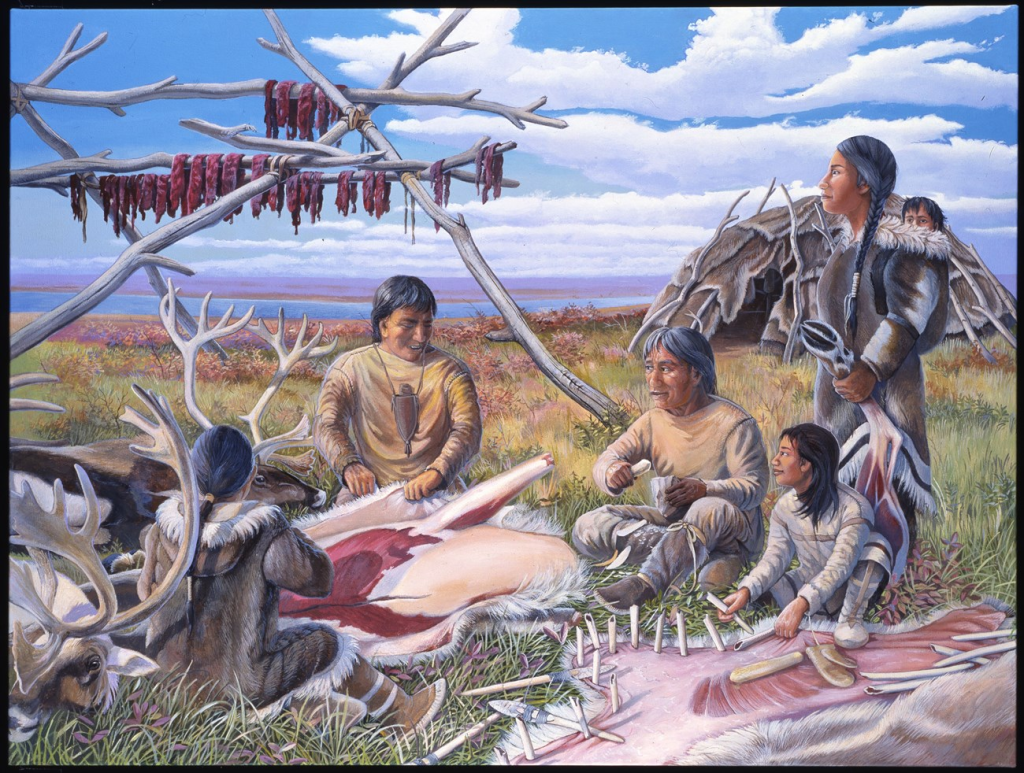
In early September, Secora and Destiny returned to Baja, but this time with Gideon and Jimmy. Their children stayed with their grandparents, and Uncle Kyah and his fiancée, Ti’i. This time, their guide, Alfonso, was feeling better and personally took them into the Sierra de San Francisco, a World Heritage site known for its “Great Murals,” which were created by Paleoindians.
(Photo Courtesy ~ scene depicting a Paleoindian family dressing caribou hides at their camp nps/gov parks)
They were famous for larger-than-life depictions of humans and animals who once inhabited the central part of the Baja California peninsula from El Rosario in the north to San Javier in the south. Many paleo sites were small, but Alfonso knew where he was taking his guests, and his wife, Pepita, brought their two children. It would only be a two-hour journey. Pepita said, “most of the illustrations were larger than life size, some as much as fifteen meters above the shelter floor.” She thought they might have been painted by giants.
“Many of the reddish outlines of some of the human figures, called ‘monos’, are with red and black paint. They were drawn facing the artists, but the animals were often painted from the side.” Destiny said, “I remember reading that a Jesuit Padre at San Ignacio thought the male monos had loose shirts with a greatcoat and breeches but no shoes.” Pepita responded, “Yeah, well… can’t say I see all that.
But, it does seem like there is often a robe or blanket of sorts.” Unusual because the people wore almost no clothing due to the heat. Secora recalled, “The Navajos I remember from my youth wore wool blankets to protect their skin from the sun. They also used the blankets to protect themselves from wildfires. They would run to the middle of a pond or river. Soak the blankets and huddle inside the wet cocoon to keep away the smoke and flames.”
The banter stopped as they came to a particularly treacherous trail made of broken rock. When they had all passed that danger, the riders stopped to eat a picnic lunch of pupusas and burritos, which were warmed over a small fire, and washed down with coffee and water.
After lunch, Secora noticed that even the horses were snoozing with droopy eyelids, swishing their tails at flies, and lazing in the thin shade of a large boojum. Alfonso whispered to Secora that she should get her camera. She snapped a couple of shots of the children who were constructing a miniature fort in the sand with driftwood and dried mesquite.
Gideon had lifted Graham crackers and marshmallows from his backpack, while Destiny liberated a few chocolate bars from a waterproof container in the small cooler. Jimmy winked and found a few driftwood branch stubs that he whittled to an appropriate thickness, then gave them to Pepita to skewer the marshmallows, roasting them. A few of the perfectly seared treats fell among the fire coals. As everyone finished eating the gooey S’mores, the children’s hands and faces were wiped clean. It was time to climb back on the horses to finish the journey.
They passed the rocky area the women had found before and were maneuvering through the rising cliffs that pushed upward from the surrounding flat valley bottom. As they picked their way through the rocks and twists deep within the rugged formation, they descended only a few hundred yards into a very narrow side canyon where the trail turned a corner and dropped so steeply that it was difficult to proceed with or without the horses.
The path became more unstable, and the side walls were closed in. No horse could fit between the boulders, so the riders dismounted, leaving the animals to rest in the splotchy shade provided by the surrounding boulders, and a single tormented juniper with ancient arms of split, gray wood spread towards the sun. As the adults gingerly moved forward, they kept their hands and watchful eyes on the children, who were protectively kept between them.
Secora was surprised to find herself looking almost straight down into a small box canyon to the left, about a hundred feet below them. It must have had a water source because there was more vegetation there than in the big valley. They paid strict attention now. There was barely room for them to stand on the irregular stony path. Secora was beginning to wonder why they were even there.
Alfonso pointed to the right, then climbed over a large flat boulder and onto a broad ledge, under a narrow rock alcove. Pepita carefully handed him the children, one by one. When it was Secora’s turn to make that leap of faith, she held her breath with awe and respect. From their vantage, they heard a voice, “Helloooo,” from below their position. At first, no one was able to discern where the hailing voice originated. Then, slowly, Secora’s eyes picked up two figures resting about a hundred feet beneath her, on another sandstone ledge. Alonso answered, “Buenos dias, amigos. Hey, cuz.”
They were soon joined by the weaver and the princess, which surprised no one by this point. As the adults moved along the shelf looking upward, the children seized the opportunity to scurry towards the back wall of the overhang, where they huddled and pretended that they were building their new home with a few pieces from an abandoned stack of old driftwood.
After an exchange of warm greetings, the adults returned their gazes to the painted overhang above the cavern. Photos recorded the moment as they caught their breaths and admired the stunning red and black figures thirty feet above their heads. In the yawning maw of the cliff overhang, there was a vast array of red, black, and white painted murals of animals and humans from long ago.
It was a pristine display of mountain sheep, several large birds, and an array of monos, human figures with arms mostly upraised as if in greeting or prayer. Some had bent legs as if they were dancing. There were lines of white dots, perhaps referencing raindrops. Secora moved closer. Destiny exclaimed, “Oh-ho, would you look at that! I was beginning to think we would never see something this awesome!” Amazed, Jimmy Lizardeye said, “This was definitely a place for painting ladders to be used.” “Or, for the long arms of giants,” snickered Pepita.
(Sample of Great Mural Rock Art ~ San Ignacio Museum.)
Jimmy noted, “Look, deer of all ages, and large flying birds. Just amazing!” Secora stood back to observe and record the panel of figures in its entirety. The princess pointed. “There’s an owl, and some smaller lizards. Oh, and two mountain sheep.” Gideon pointed to the left portion. “Look in the corner, you can see snakes, goats, dogs, and pronghorns. Do you think some of these were done at a different time?” Destiny mumbled, “Probably… oh wait. I’ll be darned; I think I see images of a string of piglet-like creatures.
Hey, look, Secora! They have whitish dots and stripes across their bodies, and see their extended noses – they’re tapirs!” Secora joined her. “Wow, I remember that Diegoaelurus may have fed on smaller Eocene tapirs and rhinos that lived here when it was lush and tropical.”
Pepita said, “What the heck is a Diego… Lars?
Secora laughed. Her heart was full of joy as she filmed everything, and took stills from every angle, some of which included the visitors, capturing their joy as Destiny, who was actually crying silently. Secora smiled at her boss. “Our dreams came true.” Destiny sniffed and said she couldn’t wait to share this experience with her new class. Suddenly, the children pointed into a corner, shouting, “Mira, Mira, Look, un gato! Over there is an ugly cat!”
Secora and the others squatted near the children’s wood stack and saw an animal about the size of a thirty-pound house cat curled up in an inset crevice. The strange saber-toothed face blinked at them from a distance. A croak of wonder escaped Destiny’s lips as she recognized something similar to the sketch of a Diegoaelurus she had seen on Secora’s desk. The weaver laughed and said, “He’s probably wondering if we are good to eat.”
Secora wagged her head. “This can’t be right. They shouldn’t be around; they should have died out around 13,000 years ago.” Gideon snarked, “Are you really that surprised, considering your track record? You’re always finding one cryptid or another. Remember the giant sloth?” “Or, the Thunderbird,” Jimmy proposed.
Secora wagged her head. “This one is on Destiny. She came out here specifically for this possibility, and darn it, here it is.” Destiny was still in shock. “Did we just find another ‘extinct’ creature living past its expiration date?” “I guess weird things happen if you hang out with Secora too long,” laughed Jimmy.
“Hallelujah, I’ve arrived!” Destiny seemed to be in ecstasy. Alonso said as he gathered the children. “He may not be dangerous to adults, but they are carnivores. Let’s get these kids home, friends.”
**********
I hope you have enjoyed reading this three-part short story and preview of the seventh book, which has not yet been published, in my “Rising Wind” series of novels! If you’re a reader or a movie enthusiast who loves the “Indiana Jones” saga and enjoys mystery, action, and adventure, you’ll find all seven books in the thrilling and gripping “Rising Wind” series to be captivating.
The Weaver and the Princess. From ‘Rays of One Light‘ Part Two of Three
While the horses picked their way through the rocks that crowded the gulch, Destiny spun a tale with a non-floral thread. “You know, it’s interesting that most of the wandering Archaic bands didn’t appear to have any farming attachments before they ran into the Spaniards. For instance, the Cochimi claimed to have lived here for more than 10,000 years as hunters and gatherers.
They added horticulture after meeting Spanish explorers in 1342 when their ships came through San Diego Harbor. Unfortunately, the Cochimi language has not been spoken since the 1800s when the last of their people died out, perhaps from disease. Their kindred, the Kumeyaay, or Diegueno of San Diego County, are the only Yuman speakers of Hokan stock whose tribes still exist. Of course, they are more focused on horticulture and farming than their archaic ancestors.”
Secora steered the bay mare around a boulder maze as she continued to listen. “It was during Spanish colonization that people like the Kumeyaay and the Hopi, called “Moki” in Mexico by the way, began raising sheep. They also grew maize, beans, squash, and melons, as well as various other vegetables and fruits.
They still hunted and even fished the rivers, or man-made canals like those produced by Hohokam speakers around the South Mountain near Phoenix. When they adapted to a sedentary life, the Hopi men tended the animals in addition to building houses. They also made the moccasins, wove garments and blankets from the wool, and performed most of the ceremonies.”
A Kumeyaay house photographed by Edward Curtis, ca. 1926.
Secora rolled her eyes and snickered. “Probably kept them out of trouble. Sounds good for the women.” “You’d think that, but women made all the baskets and pottery, tended the gardens, raised the children, and cared for the elderly. Most importantly, they were responsible for the arduous task of acquiring safe water for their families. Outside of all of that, they ground the day’s corn into a meal. You’ve seen those old manos and metates, right?
The stones broke the corn or other seeds into a sticky flour that could then be pinched into balls and cooked like bread?”
Secora nodded. “I have a mano and metate of my own.” She cleared her throat. “So, in a way, the Spanish took the lives of some of the people through subordination and plagues but then brought them the threads of a more stable existence. Gave them a livelihood.”
Destiny’s gelding sidled up. “Funny how things work.” She pointed upward. “Now I think I’m seeing someone.”
“Where?”
“There may be someone by the handholds close to that ruin.”
“Really? I’ll make a note of that for the class I hope to put together.”
“You’ve really gotten deep into this Baja thing, my friend.”
“Yeah, I’ve been thinking about adding a class on the subject next year. What do you think, Secora?”
“Sounds interesting. But weren’t you talking about cutting two classes from our curriculum because of budget shortfalls?” Secora shaded her eyes.
Destiny looked stricken and sighed. “Now, that’s a problem. I am hoping to keep all of your courses, but maybe we could offer the Pleistocene Herbivores, and the Predators classes every other year, rather than annually. Could you manage that?” Considering her boss’s suggestion, Secora acquiesced. “I’ll see if that impacts any students, but I think we can do that.” She watched Destiny’s shoulders relax significantly. “Now, let’s explore those poles at the ruins.”
They made their approach from the end of the mesa, where eroded sand and rock splayed out like a skirt. Hidden gullies and ridges between its folds increased both the distance and travel time. They followed a deer trail to the base of the cliff and left the horses tied to a shriveled juniper tree.
The scorching heat was mitigated by a breeze across the ledge inside the overhang. They scanned a stacked stone wall, part of a building that had been cleverly erected in a narrow cleft. Then they approached the poles which were still partly lashed together, resting on the rubble of a crumbled wall. Secora thought they might have been used as roofing beams, or as a door for the ancient structure. Destiny suggested that they might have been a painting ladder.
Secora shouted, “What? Can’t hear you over this wind.”
“Maybe it’s a ladder for painting?” yelled her friend.
A moment later Secora acknowledged, “I suppose, but I don’t see any figures.”
Destiny shouted, “How about any sign of those ghosts?”
Secora shook her head then hollered, “Nope, I’d hoped we would find footsteps or some other clue that might tell us if they’re human.” A feisty wind gust blew dust from the ledge into their eyes. They twisted away from the stinging grit and returned to the horses, who were tossing their heads and swishing their tails in rebellion, hoping to be free of the storm.
Disappointed, the women departed for the canyon bottom, where they noticed there wasn’t even a puff of breeze. Secora said, “That’s weird,” as she dismounted to sit on a rock. As soon as she stopped speaking, she heard the very faint sounds of mystic chanting.
Destiny said, “Are you hearing this, or is it just me?” “No, I hear it.” Spellbound, they closed their eyes, concentrating on the rhythm and tones of the song, afraid it might fade, or end, at any moment. When it did stop, they opened their eyes and found two individuals standing before them in the backdrop of bright sunlight, their faces barely distinguishable.
Destiny shaded her eyes and asked, “Are they ghosts or humans?”
Secora reached out and poked a bare arm. “I don’t think they’re ghosts.” To the visitors. she said, “I certainly hope you come in friendship since we can’t read the intentions in your eyes. Maybe you could step into the shade.”
When the people remained as they were, Destiny offered, “Our names are Destiny and Secora. Who are you?” Secora wondered if they understood English, and was about to repeat Destiny’s words in Spanish when a man responded.
“People call me “weaver”. I grew up on various reservations around here and in the Grand Canyon.”
The woman responded, “I am the princess. I’m lost – not from around here. I left South Sudan, but I am at home with this man. She looked at the weaver.”
“Turns out that we’re not from here either,” Secora chuckled. She and Destiny were in awe as a tale unfolded. The princess was a refugee from a land of abuse and threats, where her only son had been murdered when he tried to attend a white college. She looked as if she was in her mid-fifties and stood at least six feet tall, an imposing presence with her back to the sun.
Destiny tried again. “Would it be possible for the two of you to move out of the sun so we could see you better?”
As they stepped to the side, Secora’s eyes followed them, noticing that the man’s waist-length black hair shimmered in the sun. He stated, “I am looking for my cousin. I haven’t seen him since we were children, but I feel like he may be in danger, and I want to help him.” He patted a pouch on his belt. “I brought the medicine.” He then took a seat on a boulder beside the princess, who towered over him then closed his eyes. “When we were children, he was known by the Hopi phrase, ‘Hopituh Shi-nu-mu’, the peaceful boy.”
Destiny reflected, “Sounds like your cousin is a wonderful person.”
Weaver nodded, then said, “We Puebloans are all wonderful people, descendants of the ‘Ancient Ones’, you know. For a time, they lived within the cliffs and prospered by farming along the rivers. Before and after that time, we built pit houses and pueblos from logs, mud, and grass. Our history goes back many thousands of years. Our relatives lived in Asia, Africa, and the Middle East where they built multi-storied adobe apartment complexes, with beautiful roofs that provided safety, not to mention – wonderful views.”
Destiny’s face was creased in smiles. “I always believed that the Hopi’s had one of the oldest living cultures in the Americas.” Weaver again nodded. “True. But more importantly, we have been traveling these lands today, following paths that might lead us to someone who knows my cousin.”
“Interesting strategy,” Secora said under her breath. He continued, “As Marcus Aurelius tells us, ‘Entrust everything willingly to the gods, and then make your way through life—no one’s master and no one’s slave.’”
The two women looked out of the sides of their eyes at each other, respectfully wondering if he had finished. Then Secora asked if she and Destiny could offer prayers for his cousin’s well-being?”
Princess said, “You may pray now. He particularly needs your prayers.”
Secora uttered a prayer for tests and difficulties. “Is there any Remover of difficulties save God? Say: Praised be God! He is God! All are His servants, and all abide by His bidding!”
“The princess said, “I know that prayer. Baha’i, right?”
Weaver added, “Ancient Hopituh Shi-nu-mu tradition teaches us to live according to the laws of the Creator, Maasaw, who sent to us morality and ethics. We must respect all living things, and know that all beings want to know they will be okay.”
Secora responded, “Claro que si. Of course, they do.”
Destiny looked puzzled. “I didn’t know about Maasaw. I was told the Hopi believed that the gods came up from the ground, where Ant People inhabited the heart of the Earth.”
Princess then prayed, “Say God sufficeth all things above all things, and nothing in the heavens or in the earth, but God sufficeth. Verily, He is in Himself, the Knower, the Sustainer, the Omnipotent. This is a prayer from the Bab, whose name means ‘Door’ or ‘Gate’.”
When their prayers were completed, they shared water from a bottle Secora grabbed out of her russet leather backpack. She poured while Destiny held out Dixie cups. Secora and Destiny explained they were in the area to search for remnants of ancient animals and plants and also to look for the bold red and black mural art above some rock shelters and ledges. It wasn’t long before they were all conversing as old friends. Secora split peanut butter and wild plum jelly sandwiches, offering portions to everyone.
A few passing clouds temporarily blocked the sun as they continued the visit. Without the glare, Secora took note of some wicked scars on the lady’s face. Her eyes must have reflected pity, and the princess said, “Please don’t.”
Secora wasn’t sure if an apology would be appropriate, or if she should find a clever way to change the subject when her Satfon rang. She took the call explaining, “It’s from my husband, Gideon.” The weaver said softly, “Prepare yourself!” Secora did a double-take as she excused herself to answer. The princess shrugged and said to Destiny, “He knows these things”. . .
******** ********* ********
If you’re a reader or a movie enthusiast who loves the “Indiana Jones” saga and enjoys mystery, action, and adventure, you’ll love reading all seven books in the thrilling and gripping “Rising Wind” novel series.
Books are available from Amazon in paperback and Kindle. Read it free with Kindle Unlimited, & Soon they will be Available as audiobooks, too!
The Weaver and the Princess From Rays of One Light Three-Part Story…
Secora James and Destiny Hawkins arrived at the ranch just as the sun rose on the last day in the Baja desert. Soon, they would have to return to their jobs at the University in Missoula and offer summer classes. Once they parked, they found horses saddled and waiting for them inside the vertical pole corral.
“Only two horses. Guess we’ll be going in alone again,” observed Secora. Pointing to the fence, Destiny asked, “Don’t those poles look like those spindly boojum trees we ran into yesterday?” Secora nodded, “Interesting observation.” After tightening the cinches on the bay and placing the bridle over the mare’s head, she tied the halter and rope with leather strings set near the saddle horn, and her gear bag was bunched at the back of the cantle.
A young woman wearing a protective pink and gray rebozo shawl over her head and shoulders came to greet them at the corral, humbly notifying them that her husband, Alfonso, could not take them out because he was still sick. Apologizing in broken English, she suggested a trail that would lead them to the nearest painted rocks. She added that several of the large murals were more difficult to find, but these smaller ones could be found just off the trail.
She smiled, then cautioned in Spanish, “Watch out for the spirits.” “Spirits, Pepita?” Secora asked. “Yes, the blessed spirits who move silently… like ghosts.” “We will try to be respectful, thank you.” Secora and Destiny looked at each other, wondering how to interpret her words. Then, bidding Pepita and Alfonso, who waved weakly from the door a good day, the women mounted up and took the suggested trail
Destiny asked, “So, is “anima” ghost… or spirit?
Secora shrugged. After a moment, she sighed. “Perhaps she knows about some tragedy in that area. Guess it doesn’t matter.”
“Right, I suppose, spirits are everywhere.” Hooves clattered over a thin, stony trail; half hidden on the side hill. Secora drew a breath. “This is our last chance to see the place where little Diegoaelurus, the precursor to mammalian predators once roamed.”
Destiny added, “Hopefully, we’ll be lucky enough to take in a boldly painted black and red mural.” They headed for a low ridge that dropped down into a basin toward the west, where they hoped to observe some of the impressive art left by the Archaic people who lived there more than 10,000 years ago.
Destiny reflected, “I hope we don’t get lost.”
Secora said, “We won’t. I usually turn around every few hundred feet to see what the trail will look like on our way back.”
“Yeah, and I guess we could take pictures of the main features in case we get stuck.”
“Good idea.” Secora nodded and lifted her camera.
The changes and chances of weather and rainfall in the Baja Peninsula required special adaptations from the plants, animals, and people who lived there. Secora noticed a variety of vegetation unexpected in a desert with such wildly variable rainfall patterns and extensive droughts.
Life forms took advantage of hidden pools and ephemeral rain. Yet they must somehow survive the rare monsoonal deluges produced by storms that struck the peninsula and roared their way inland. Gashes caused by massive flash floods ripped through the terrain, leaving driftwood and huge gravel ridges along their paths.
The horses sauntered down a dried creek bed, while the women scanned the cliff sides. Would this be the day they’d catch a glimpse of something wonderful, striking petroglyphs, or perhaps one of the well-preserved red and black murals that had caused the region to be declared a World Heritage site comparable to European Cave Art? In the distance, they saw a few wispy pines, stunted cedars, and century plants erupting from rock, gravel, or sand along the hillsides.
As they dropped into a narrow canyon, they cleared a tight corner and ran smack into a patch of jumping cholla cactus, strategically hanging over the trail. Destiny tried to steer clear, but one spike attached itself to the chestnut gelding’s mane and neck, causing him to toss his head and sidestep toward another branch. She dismounted to control the animal. “Ouch! Dang, we got too close.”
On foot, they carefully wended through a hundred feet of the dangerous spines before escaping the last of the beautiful but wicked cacti. Destiny tried to steady the gelding, while Secora grabbed a pair of needle-nosed pliers from her backpack and began plucking the painful spines from the horse’s neck. When he jerked his head, three spines ran into Destiny’s fingers. “Blast it!”
“Yeah, but it’s hard to deny how good it feels to let them do the walking.” They topped a second ridge and saw a set of beautiful palms and several species of euphorbia sprouting from the smaller side of the canyons along the arroyo.
Destiny was moved to comment, “It’s fascinating. When you look out to the horizon, lush greenery is what you see. It hardly looks like we’re in the midst of a hot, dry desert.” She stopped to take some photographs. “Oh look, I think that modest looking succulent near your horse’s leg might even be a lady slipper.”
“Couldn’t prove it by me. It’s getting on toward noon, but it’s too hot to think about eating, let alone categorizing succulents.” Destiny arched her back in a stretch. “I thought it was supposed to be cooler today, but… oof, it feels like an inferno.”
Secora pointed and spoke in a loud whisper, “There! I saw movement. Across the basin, over to our left. I think there were two or possibly three people.” “Out here?” Destiny was silent for a while as her eyes searched up and down the terrain. “People or ghosts? I can’t see anything.”
She used the telephoto to snap a picture in that direction, but her eyes saw nothing. “Where are they? Sure you didn’t see deer.” “No, I’m pretty sure. I saw two, maybe three people walking at the base of that cliff across the basin. They were at that ruin across the way, beneath the stack of old log poles that might be remnants from a caved-in roof, but I don’t see them anymore.”
“If they were there, they probably sat down for a rest.” “That’s certainly possible, Destiny. But now I’m seriously curious about why those old poles are clumped together.” “Perhaps from a flash flood?” “Could be, or they could be repurposed from an old construction site.” Let’s go check.”
******************
These exciting mystery novels unfold in various multicultural settings around the globe across the first seven books. The series has received 5-Star Editorial Book Reviews from Book Influencers Reader’s Favorite, and it has won several awards, including the Book Excellence Award and the Christian Illumination Award, among others.
If you’re a reader or a movie enthusiast who loves the “Indiana Jones” saga and enjoys mystery, action, and adventure, you’ll love reading all seven books in the thrilling and gripping “Rising Wind” novel series.