


“TIBET“
On March 22, 1959, Dr.Sage Dalton, Dr. L.W. Baddock, and Gavin Andrews, a linguistics grad student from the university, found themselves flying a rickety plane over the Himalayas with L.W. at the controls – and avoiding the flybys of two MiG-15s.
FIVE DAYS earlier…
DR. Mitchell Braddock, the Dean of Anthropology and Archaeology at a Montana University, signed off on travel expenses for three department members to travel to Tibet after much discussion. They were eager to find the next clue in locating a priceless prize, a mysterious holy book known as the “Book of Hope,” which was reportedly left to the world by “The Weeping God,” a Prophet whose followers lived primarily in South America.
”Sage, you fell into a cave tomb while being strafed by an enemy aircraft… You were enchanted by the mural of an Olmec woman, perhaps a royal, and thought she might have been connected with the path of the holy Prophet of South America. Additionally, you brought with you a very nice golden cask from her crypt that must be returned by my niece to her colleagues in the Latin American Research Department, back in Mexico.”
L. W. interrupted, “Actually, I am the colleague in Mexico, and I will take it home myself when I am ready.”
After a rest stop in Tel Aviv, Sage reviewed in his mind what happened next, trying to understand how they wound up leaving the airport without their plane. There were a few haggard passengers who deplaned during a fuel stop to find food and drink during the stopover.
While the aircraft was being serviced and the pilots changed, he and his friends drank copious amounts of water. As he watched in surprise, a man with furtive eyes approached them. He winked at Sage and Gavin, then got way too friendly with L. W.’s behind.
“Dios mio! Perro! Knock it off, you dog.” The leering man growled, “Do not talk to me like that. I will have you removed from your flight and arrested.”
“You can’t. You have no grounds for that.”
“Who will they believe…you?”
“Why not me, and who is ‘they’?”
L. W. had slapped the jerk, and an argument ensued. While the guy signaled for backup, we ran for our lives, but when we returned to the tarmac, the stairs had been rolled back, and the door was closed—so, there was no climbing back inside.
Following that disappointment, they’d run at top speed through the streets, and when at last they could see no prying eyes, Sage found a public phone at a store beside a motel. The owner of the phone and the store waited with his palm up for ample compensation. While Sage finished the call and paid up, L. W. and Gavin hailed a makeshift cab. Sage crossed the street to join them. “My friend Hasan and his cousin, Ahmad, have an old biplane they could rent to us for a few days.” “How old?” Sage shrugged.
A few bumpy miles later, the cabby dropped them off in a bleak desert. They told him there would be two return fares if he was willing to wait. There they huddled in the breezy sun, waiting for nearly half an hour. A whine accompanied the arrival of Ahmad’s plane, which was piloted by Hasan himself. They were almost ready after a brief but fond exchange between Sage and Hasan and a monetary gift to Ahmad, who probably could have bought the plane.
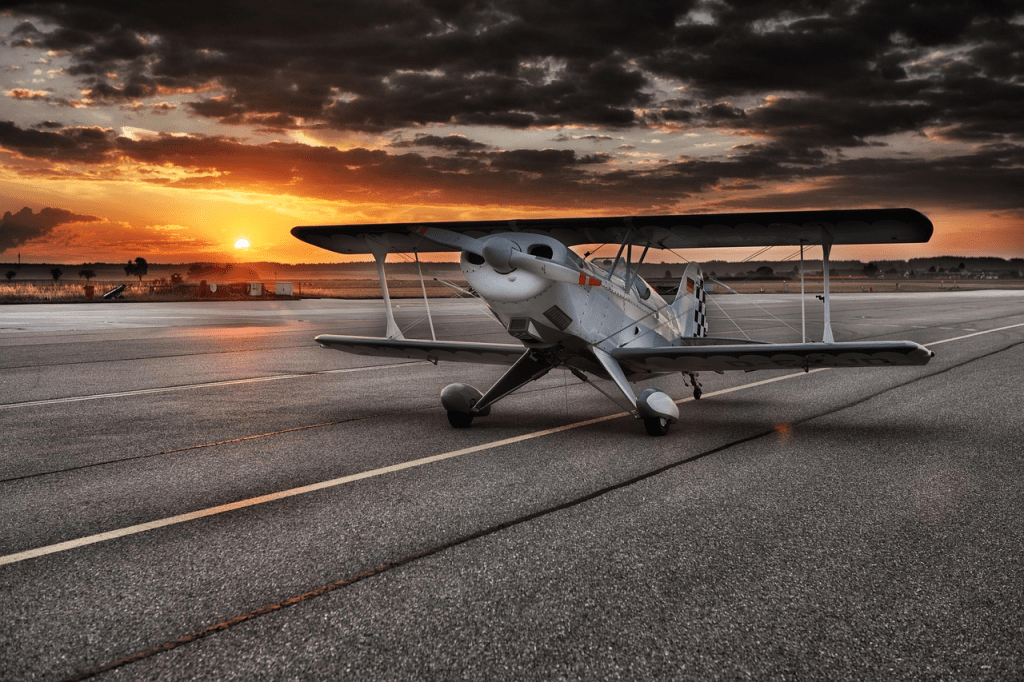
L. W. exchanged information with the pilot. The cabby, who had been sulking and smoking, dug his tires out of the sand and took Ahmad and Hasan away. The biplane was backlit by the sun as the three companions ran to the relic.
Sage asked L. W. about the rickety craft, “You think you can fly this?”
“As you must know, I flew my husband from meeting to meeting in planes much like this one.
I’ll be fine.” Then she noticed and sorted through the equipment. Both Gavin and L. W. would fit inside the two-seater.
“Thank God, they left us protective gear.
Guys, put on the jackets.”
After they put on hats, wrapped scarves, and overlaid their clothing with parachutes.
Sage grabbed the last face mask and asked, “Don’t mean to be rude, but did his heart attack occur while you were flying?” She snapped, “How does that not sound rude to you?”
Then she hopped into the pilot’s seat and put on her headphones.
Gavin Andrews tucked himself in the back seat while she flipped switches and yelled, “Okay, now.” Sage jump-started the propeller, then ran to the belly of the craft. Reluctantly, he took his place beneath them by crawling into an elaborate rope harness strapped to the belly. “Hang on. Here we go.”
Sage pleaded, “Please be gentle.” They began their run down the track. He wore goggles, and his flapping hat argued with the strap under his chin. Only then did they see two trucks pulling onto the airstrip to impede the plane from taking off. Because the strong thermal wind allowed for a quick ascent, L. W. ignored the vehicles and deftly rose from the sand after a brief taxi. Sage exhaled once they were airborne. Thank God.

Twice, they stopped at airports for fuel, bathroom breaks, and procuring food and water.
Eventually, the craft rose over the Himalayas and traveled north along the road through Tengri, toward the Potala in Lhasa, Tibet.
With only a few miles to go, half-frozen Sage turned out of the wind and yelled, “I can’t take this much longer.” L. W. seemed oblivious. Then Gavin yelled, “I have to pee!”
L. W. hollered over the edge to Sage, “This is your fault!” “How could it be my fault?
You’re the one who lost us the comfortable plane!”
“You should have backed me up!”
“How could I possibly know you were going to slap him?” He turned his head, and after a breath said, “We were lucky my friend’s cousin had any plane to rent out.” Sage reflected, then momentarily, he removed his face mask to yell, “We could be rotting in jail, now, or worse.”
It was March of 1959.
Unexpectedly, two Chinese MiG-15s formed streaking blurs against the sunset as they passed over the biplane. Sage thought, What are the Chinese doing here? Okay, I get it. We’re stuck in an unregistered aircraft, flying over enemy-occupied territory in an antique rental—and it’s almost nighttime.
L. W. dipped in their wakes but recovered. She was gesturing and hollering. “Get down!”
Everyone flattened as the planes approached to look them over one more time. She yelled, “They know we are not Tibetan or Chinese.”
“They’ll think we are Western Imperialists,” yelled Gavin. The jet pilots pulled back the controls, diving in pursuit. The guns chattered. “Faster!” yelled Andrews, “Faster!”
“Lower!” yelled Sage simultaneously. “Lower!”
Bullets tore through the skin of the plane. L. W. screamed, “The writing is on the wall, boys. You have your chutes. Jump while you still can.” Sage was incredulous as he struggled with the wind and the shuddering plane, which was now irreparably crippled by machine gunfire.
It was difficult to breathe, let alone escape the plummeting transport. He could hear Gavin yell, “Uh-uh.
No way. Get back in the plane, L. W., and fly us down!”
L. W. stood on the edge of the wing to help Sage. “I’ll cut the rope.”
“Toss me the knife.” She did, but lost her balance. The knife sailed past Sage, who made a grab for it. He couldn’t reach it, but the stress on the bullet-ridden plane caused the wing assembly to break apart, releasing his rigging anyway.
“I’m not jumping,” hollered Andrews. L. W. struggled to grab hold of something, which turned out to be Gavin’s arm and shoulder. Her weight in the wind pulled him out of his seat, headfirst.
They barely escaped a new barrage of bullets as their plane twisted into pieces. Sage, still tied to a chunk of the wing, struggled to free himself from the rest of the rope harness.
He bashed the strut with his boot, finally releasing himself from the net, and was in free fall…
****************

 Diane Olsen Author, Books, & Stories